
John Adams
The first president to lose reelection — and the first to hand over power peacefully to the political rival who beat him.
Facts are stubborn things.
Argument in defense of British soldiers, 1770
A Presidency Squeezed Between Giants
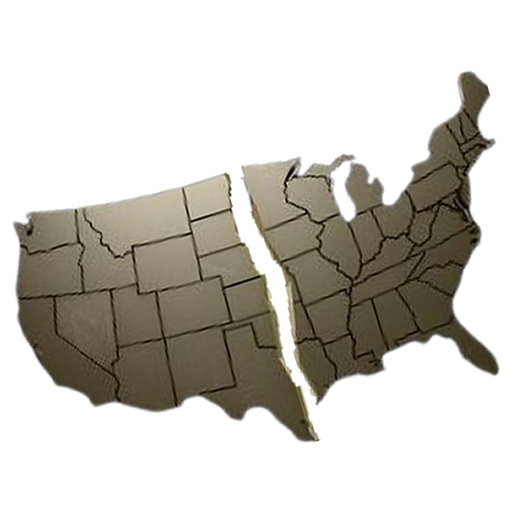
Following Washington was never going to be easy, and Adams inherited a country already splitting into real political factions — his own Federalists, and the Democratic-Republicans led by his own Vice President, Thomas Jefferson, under a system that hadn't yet been changed to let a president and vice president run as a ticket.
The XYZ Affair and an Undeclared War at Sea
French agents demanding bribes from American diplomats before they'd even begin trade negotiations — the XYZ Affair — pushed the U.S. into an undeclared naval conflict with France known as the Quasi-War. Adams resisted pressure from within his own party to seek a full declared war, a choice that cost him political support but that he considered, by his own account, among his proudest decisions.
The Alien and Sedition Acts
Adams signed a set of laws making it a crime to publish "false, scandalous, and malicious" criticism of the federal government — a direct, serious tension with the First Amendment that his own political opponents used against him immediately, and that history has generally judged harshly as a genuine overreach, not just a partisan dispute.
Losing, and Handing Over Power Anyway
Adams lost his 1800 reelection bid to Jefferson, his own Vice President and by then a bitter political rival, in an election so contentious it nearly threw the country into constitutional crisis when Jefferson and his running mate Aaron Burr tied in the Electoral College. Adams left office peacefully regardless — the first genuine test of whether power would actually transfer between rival factions, not just between allies, and it held.
All Presidents
 1. George Washington
2. John Adams
1. George Washington
2. John Adams
 3. Thomas Jefferson
 4. James Madison
 5. James Monroe
 6. John Quincy Adams
 7. Andrew Jackson
 8. Martin Van Buren
 9. William Henry Harrison
 10. John Tyler
 11. James Knox Polk
 12. Zachary Taylor
 13. Millard Fillmore
 14. Franklin Pierce
 15. James Buchanan
 16. Abraham Lincoln
 17. Andrew Johnson
 18. Ulysses S. Grant
 19. Rutherford B. Hayes
 20. James Abram Garfield
 21. Chester A. Arthur
 22. Grover Cleveland (First Term)
 23. Benjamin Harrison
24. Grover Cleveland (Second Term)
23. Benjamin Harrison
24. Grover Cleveland (Second Term)
 25. William McKinley
 26. Theodore Roosevelt
 27. William Howard Taft
 28. Woodrow Wilson
 29. Warren G. Harding
 30. Calvin Coolidge
 31. Herbert Clark Hoover
 32. Franklin D. Roosevelt
 33. Harry S Truman
 34. Dwight D. Eisenhower
 35. John Fitzgerald Kennedy
 36. Lyndon B. Johnson
 37. Richard M. Nixon
 38. Gerald R. Ford
 39. James Earl Carter
 40. Ronald Reagan
 41. George H. W. Bush
 42. William J. Clinton
 43. George W. Bush
 44. Barack Obama
 45. Donald Trump (First Term)
 46. Joe Biden
 47. Donald Trump (Second Term)