The Idea That Came from the Back Row
Citizens often know where systems fail because they meet the failure first; the challenge is building channels that turn lived knowledge into public action.

In 1994, fewer than a quarter of people in either party felt that way (Pew Research Center, 2022).
Several ways into the same story. Pick whichever angle makes the most sense to you first — none of them is “the real one,” they’re facets of the same trend.
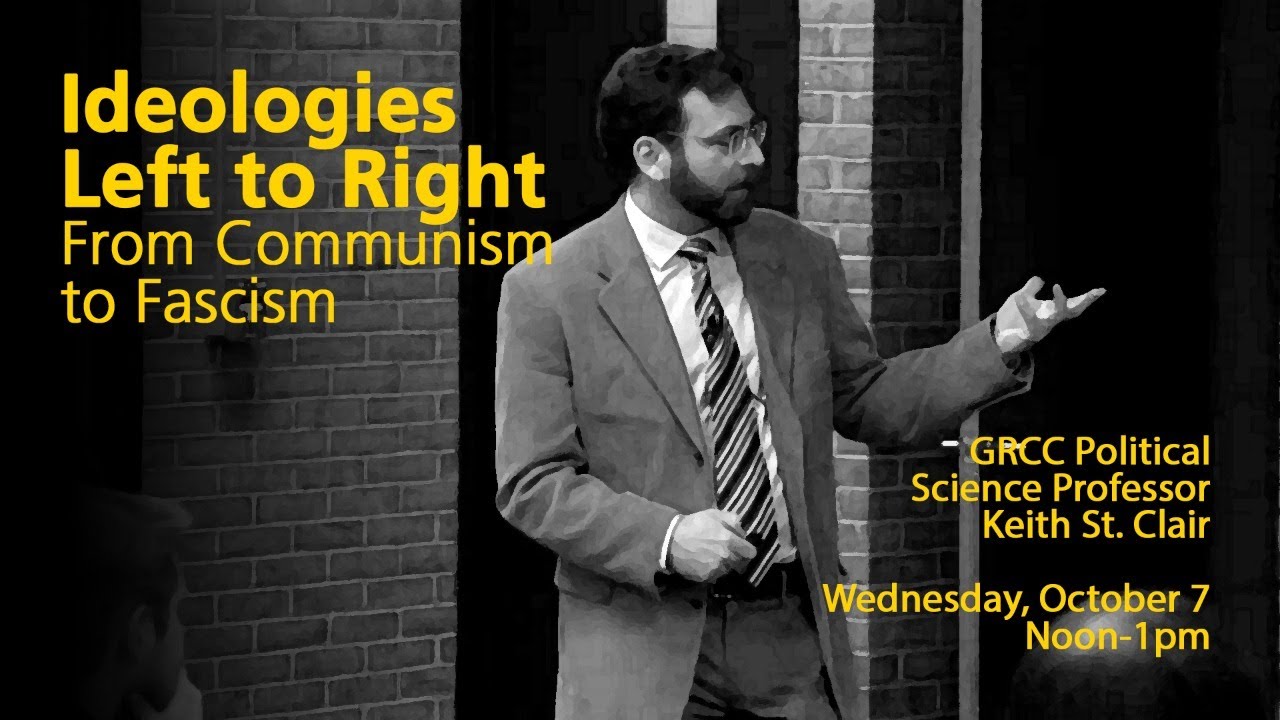
Professor Keith St. Clair from Grand Rapids Community College provides a comprehensive exploration of political ideologies, focusing on their philosophical underpinnings, historical roots, and contemporary expressions. He explains that an ideology is a coherent philosophy about how government should govern, offering predictability in political behavior. The lecture traces the origins of the “left” and “right” political spectrum back to the 19th-century French National Assembly seating arrangements. The traditional American ideological divide is between liberals (left) and conservatives (right), but there are also more extreme ideologies on both ends, including communism and fascism.
St. Clair contrasts the core beliefs of conservatives and liberals on economic and lifestyle issues. Conservatives favor minimal government intervention in the economy (laissez-faire) and advocate government involvement in promoting traditional social values, such as marriage between a man and a woman and restricting abortion and drug use. Liberals, conversely, support active government roles in regulating the economy to reduce inequality and provide a social safety net, while advocating minimal government interference in personal lifestyle choices like marriage equality, abortion rights, and drug use.
Other ideologies discussed include libertarianism, which combines conservative economic views with liberal social policies, and populism, which calls for strong government intervention in both economic and social matters to protect the “little guy” and maintain social order. More extreme left ideologies, like socialism and communism, emphasize state control or overthrow of capitalist systems to achieve economic equality, whereas extreme right ideologies, such as nationalism and fascism, focus on a unified cultural identity, authoritarian leadership, and xenophobia.
Professor St. Clair highlights the historical antagonism between communists and fascists, their use of violence, and contrasts them sharply despite superficial similarities in tactics. He stresses that political parties are not synonymous with ideologies, noting the shifting ideological affiliations of American Democratic and Republican parties over time, and the increasing polarization and loss of ideological overlap.
The lecture also touches on the role of the internet in amplifying extremism, the dangers of identity politics in undermining democratic discourse, and the importance of trust in elections and free press in maintaining democracy. St. Clair critiques recent developments within the Republican Party, characterizing it as increasingly populist and nationalist under Donald Trump’s leadership, diverging from traditional conservatism. He concludes by urging the condemnation of all political violence and emphasizing the importance of understanding ideologies to predict political behavior while recognizing individual nuances.
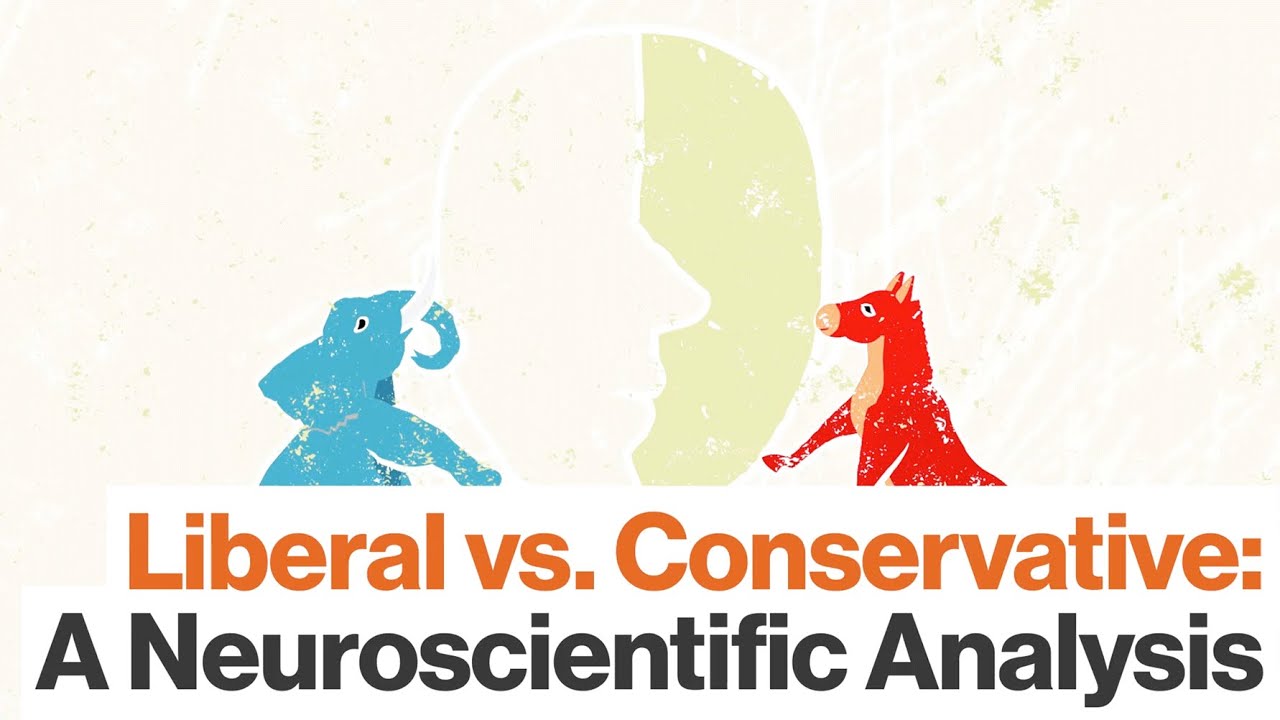
This video features psychiatrist Dr. Gail Saltz discussing neuroscience research on structural brain differences between self-identified liberals and conservatives — specifically studies finding that liberals tend to have a larger anterior cingulate gyrus (associated with processing new information) while conservatives tend to have a larger right amygdala (associated with fear processing). Dr. Saltz explains that one study could predict political identification from brain structure alone with about 72% accuracy, and a separate functional-MRI study measuring brain activity during risk-based tasks improved on that to roughly 83%.
Dr. Saltz is careful to frame this as a spectrum, not a binary — noting the findings don’t account for people who identify as independent, and that the brain’s plasticity leaves open whether these differences shape political views or the reverse. She connects the neuroscience to communication strategy, arguing that appeals to conservatives tend to land better when framed around stability and tradition, while appeals to liberals tend to land better through novel, data-driven framing — illustrating the point with contrasting examples on gun policy and marriage.
Note: some of the video’s specific claims — including its characterization of why CDC gun-violence research funding has been restricted — reflect the speaker’s own framing and aren’t independently verified by this site.

The video transcript explores the question: how feasible is it to steal the 2024 U.S. presidential election, focusing specifically on Pennsylvania, a crucial swing state. The host investigates various potential fraud methods including impersonating voters, voting multiple times, hacking voting machines, and manipulating mail-in ballots. To get an informed perspective, the host interviews Kathy Boockvar, former Secretary of the Commonwealth of Pennsylvania (a Democrat), and Seth Bluestein, a longtime Republican election official in Philadelphia.
The video follows a fictional voter, Sylvester, through the in-person voting process in a small Pennsylvania county, illustrating the safeguards in place—from voter registration and ID checks to bipartisan poll workers and observers who monitor for irregularities. It highlights the rarity of voter impersonation fraud, citing stringent registration requirements and severe penalties. The video also explains the role of voting machines, emphasizing that while vulnerabilities exist, modern systems use voter-verifiable paper ballots and rigorous audits to ensure accuracy.
The mail-in voting process is also detailed, showing the security measures such as barcoded envelopes tied to voters, signature verification, and legal prohibitions against pre-processing ballots before Election Day. The narrative dispels myths about widespread mail ballot fraud and describes how the election results undergo multiple layers of verification, including risk-limiting audits that randomly check ballots by hand.
The video concludes that stealing an election is extraordinarily difficult due to decentralization, multiple checks, bipartisan oversight, and the paper trail. However, it stresses that the real threat is not fraud itself but the spread of misinformation and disinformation, which erodes public trust and fuels polarization, potentially destabilizing democracy. The host reflects that if someone wanted to interfere with elections, sowing doubt and confusion would be more effective than actual vote tampering.

The video explores the mechanisms by which democracies can remove elected leaders before the end of their terms, focusing on post-war experiences from eight stable democracies: the United Kingdom, United States, France, Germany, Japan, Israel, Brazil, and South Africa. It begins by questioning what constitutes valid grounds for early removal—whether criminal acts or other serious offenses—and discusses the legal and political challenges associated with each. Many countries provide immunity to sitting leaders against criminal prosecution, complicating efforts to hold them accountable through the judiciary. Instead, removal often hinges on political processes such as impeachment or votes of no confidence, which are governed by legislatures rather than courts.
The video highlights the ambiguity and political nature of these removal processes, noting that constitutional language around impeachable offenses or confidence votes is often vague and subject to partisan interpretation. Consequently, whether a leader can be removed often depends more on the political makeup of the legislature and party loyalty than on objective assessments of wrongdoing. Examples such as the impeachment trials of U.S. Presidents Bill Clinton and Donald Trump, Brazil’s impeachment of Dilma Rousseff, and no-confidence votes in parliamentary democracies illustrate how political calculations dominate these processes.
Parliamentary systems like those in Germany, Israel, Japan, and the UK allow relatively straightforward removal of leaders via no-confidence votes, often triggering emergency elections to maintain democratic legitimacy. However, the political incentives behind such votes can lead to frequent attempts driven by party interests rather than genuine concerns over competence or morality.
Ultimately, the video argues that while theoretically it makes sense for legislatures to have the power to remove bad leaders, partisanship often prevents fair and impartial decisions. Instead, the power of public opinion and media scrutiny often proves more effective at pressuring leaders to resign in disgrace. The video ends by inviting viewers to consider which democratic system they believe offers the best way to remove a bad leader.
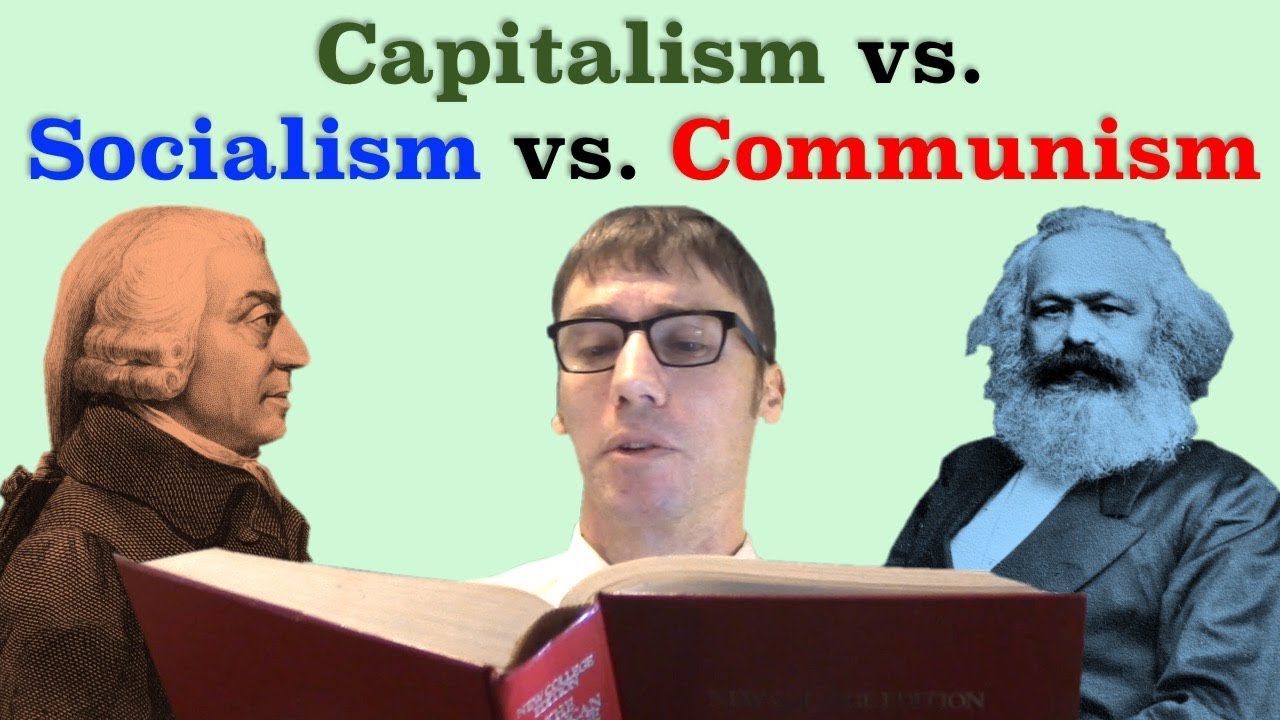
The video provides a comprehensive exploration of the often misunderstood and politically charged terms capitalism, socialism, and communism. It opens by highlighting the polarized debates and criticisms surrounding these economic systems, with various commentators and critics weighing in on their perceived successes and failures. Capitalism is presented as an economic system characterized by private ownership and competition in a free market, though critics emphasize its associated social inequalities and human costs. Socialism is described both as a theory and system advocating community ownership of production, with historical ties to Marxist ideology; however, its practical implementations, such as in Venezuela, are criticized for economic failure and hardship. Communism is introduced as a radical theory promoting a stateless, classless society with communal ownership of all goods, but its real-world attempts have often led to authoritarian regimes and mass suffering.
The video stresses the confusion and misuse of these terms in contemporary discourse, where they are frequently weaponized or conflated incorrectly with political systems like fascism or totalitarianism. To clarify, the video turns to dictionary definitions and economic theory, breaking down capitalism, socialism, and communism as economic systems and political ideologies. It further expands on the four primary types of economic systems: traditional, command, market, and mixed economies, emphasizing that most modern economies are mixed, combining elements from each system.
The video also touches on the economic concepts of goods—private, club, common, and public—and highlights how debates over whether services like healthcare should be classified as public goods often spark accusations of socialism. Ultimately, the video encourages viewers to ask for clear definitions when these terms are used in discussions, acknowledging their evolving meanings and the complexity behind them.
Create a free account and we'll remember your address, so your representatives and next election are here every time you visit.


No upcoming public elections are listed right now. Past election dates are hidden. Try again closer to the next cycle, or use official state links.
Enter your home address to see your polling place, early voting sites and hours, and your official election office. Your address is used only for this lookup.

Every way to get involved on this issue, from a few minutes to ongoing.
The next round of redistricting follows the 2030 census, and some states redraw sooner after court rulings.
Poll workers are paid, trained by their county or city, and often recruited from both parties so each polling place is staffed in a balanced way.
Campaigns, parties and PACs file regular reports with the Federal Election Commission; states publish their own for state races.
In 2022, 21.3% of eligible voters cast a primary ballot (Bipartisan Policy Center). In a safe district, that small group picks the winner.
Campaigns, parties and PACs file regular reports with the Federal Election Commission; states publish their own for state races.
Citizens often know where systems fail because they meet the failure first; the challenge is building channels that turn lived knowledge into public action.
Real solutions start by naming the repair, the tool, the tradeoff, and the people responsible for making it work.
Democracy renews itself not through slogans but through the hard public rooms where anger has to become a decision.
Getting involved often starts with an awkward public moment, then grows into a habit of knowing where decisions happen and showing up prepared.
Better government often begins with a simple promise: people should not need to understand the bureaucracy before they can use the service.