
John Quincy Adams
Won the presidency through a contested House vote his opponents called a "corrupt bargain" — then became the only former president to return to Congress and serve there for nearly two decades.
Always vote for principle, though you may vote alone.
Attributed
An Election Decided in the House
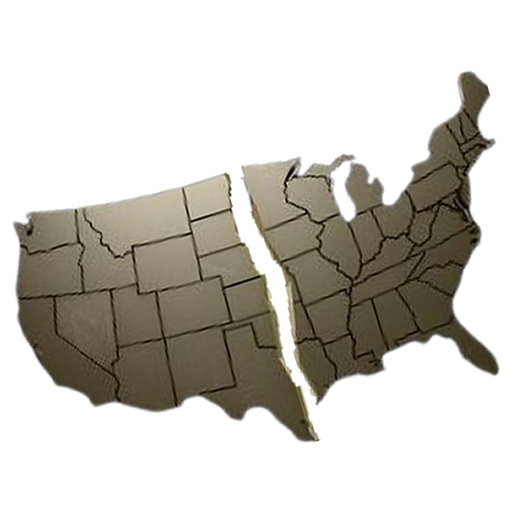
The 1824 election was a genuine mess by modern standards: four regional candidates split the vote, and Andrew Jackson won the most popular and electoral votes but fell short of a majority. Under the Constitution, the decision went to the House of Representatives, where Adams — with the political support of fellow candidate Henry Clay — won on the first ballot. When Adams then named Clay his Secretary of State, Jackson's supporters branded it a "corrupt bargain," a charge that shadowed Adams's entire presidency and fueled Jackson's decisive victory four years later.
A Difficult Term, Widely Considered More Successful in Hindsight
Adams's actual presidency struggled against a hostile Congress that blocked much of his agenda — infrastructure investment, a national university, scientific research funding — proposals that were, by most modern assessments, ahead of their time rather than genuinely unpopular.
A Remarkable Second Act
What makes Adams genuinely unusual among presidents is what happened after he lost reelection to Jackson in 1828: rather than retiring, he ran for and won a seat in the House of Representatives, where he served for the next 17 years until his death — becoming a fierce anti-slavery voice in Congress decades before the Civil War, a role many historians consider more consequential than his actual presidency.
All Presidents
 1. George Washington
 2. John Adams
 3. Thomas Jefferson
 4. James Madison
 5. James Monroe
6. John Quincy Adams
5. James Monroe
6. John Quincy Adams
 7. Andrew Jackson
 8. Martin Van Buren
 9. William Henry Harrison
 10. John Tyler
 11. James Knox Polk
 12. Zachary Taylor
 13. Millard Fillmore
 14. Franklin Pierce
 15. James Buchanan
 16. Abraham Lincoln
 17. Andrew Johnson
 18. Ulysses S. Grant
 19. Rutherford B. Hayes
 20. James Abram Garfield
 21. Chester A. Arthur
 22. Grover Cleveland (First Term)
 23. Benjamin Harrison
24. Grover Cleveland (Second Term)
23. Benjamin Harrison
24. Grover Cleveland (Second Term)
 25. William McKinley
 26. Theodore Roosevelt
 27. William Howard Taft
 28. Woodrow Wilson
 29. Warren G. Harding
 30. Calvin Coolidge
 31. Herbert Clark Hoover
 32. Franklin D. Roosevelt
 33. Harry S Truman
 34. Dwight D. Eisenhower
 35. John Fitzgerald Kennedy
 36. Lyndon B. Johnson
 37. Richard M. Nixon
 38. Gerald R. Ford
 39. James Earl Carter
 40. Ronald Reagan
 41. George H. W. Bush
 42. William J. Clinton
 43. George W. Bush
 44. Barack Obama
 45. Donald Trump (First Term)
 46. Joe Biden
 47. Donald Trump (Second Term)