
Abraham Lincoln
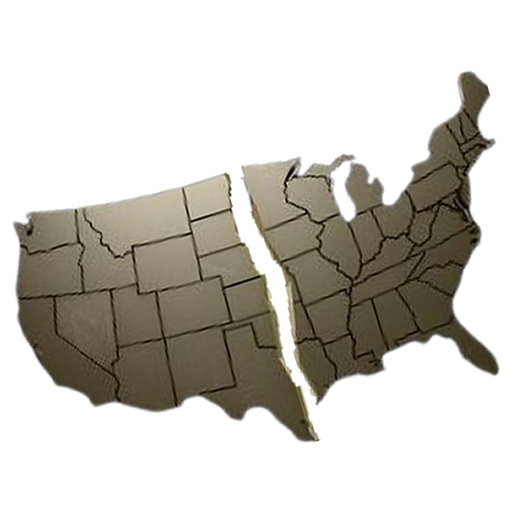
When Abraham Lincoln was elected President in 1860, seven slave states left the Union to form the Confederate States of America, and four more joined when hostilities began between the North and South. A bloody civil war then engulfed the nation as Lincoln vowed to preserve the Union, enforce the laws of the United States, and end the secession. The war lasted for more than four years with a staggering loss of more than 600,000 Americans dead. Midway through the war, Lincoln issued the Emancipation Proclamation, which freed all slaves within the Confederacy and changed the war from a battle to preserve the Union into a battle for freedom. He was the first Republican President, and Union victory ended forever the claim that state sovereignty superseded federal authority. Killed by an assassin's bullet less than a week after the surrender of Confederate forces, Lincoln left the nation a more perfect Union and thereby earned the admiration of most Americans as the country's greatest President.
With malice toward none, with charity for all, with firmness in the right as God gives us to see the right, let us strive on to finish the work we are in, to bind up the nation's wounds, to care for him who shall have borne the battle and for his widow and his orphan, to do all which may achieve and cherish a just and lasting peace among ourselves and with all nations. Second Inaugural Address
Second Inaugural Address
Legacy
Lincoln fully understood the challenges he faced as president of a nation divided over slavery when he took office. Eleven southern states seceded upon his election and formed the Confederate States of America. In April 1861 Confederate soldiers fired upon Fort Sumter in South Carolina, starting the Civil War.
Lincoln is universally revered for his steadfast dedication to ending slavery and saving the Union. On January 1, 1863, he issued the Emancipation Proclamation, which freed all slaves in Confederate states and committed the Union to ending slavery. In his legendary “Gettysburg Address,” Lincoln passionately declared his belief that those who had died in the war did so “not in vain,” but to help safeguard American democracy for future generations. Lincoln was re-elected to a second term in 1864 and was dedicated to healing the nation. On April 9, 1865 the Confederate Army Commander Robert E. Lee surrendered to Union General Ulysses Grant at the Appomattox Courthouse. Unfortunately, Lincoln did not live to see the “new birth of freedom” he had proclaimed in his “Gettysburg Address” fully realized. Just five days after the surrender, on April 15, 1865, John Wilkes Booth assassinated Lincoln while he was watching a play at Ford’s Theater in Washington, D.C. Booth shot Lincoln point-blank in the back of his head, then jumped to the stage to make his escape, shouting, “Sic semper Tyrannis! [Thus always to Tyrants] The South is avenged!” ”
All Presidents
 1. George Washington
 2. John Adams
 3. Thomas Jefferson
 4. James Madison
 5. James Monroe
 6. John Quincy Adams
 7. Andrew Jackson
 8. Martin Van Buren
 9. William Henry Harrison
 10. John Tyler
 11. James Knox Polk
 12. Zachary Taylor
 13. Millard Fillmore
 14. Franklin Pierce
 15. James Buchanan
16. Abraham Lincoln
15. James Buchanan
16. Abraham Lincoln
 17. Andrew Johnson
 18. Ulysses S. Grant
 19. Rutherford B. Hayes
 20. James Abram Garfield
 21. Chester A. Arthur
 22. Grover Cleveland (First Term)
 23. Benjamin Harrison
24. Grover Cleveland (Second Term)
23. Benjamin Harrison
24. Grover Cleveland (Second Term)
 25. William McKinley
 26. Theodore Roosevelt
 27. William Howard Taft
 28. Woodrow Wilson
 29. Warren G. Harding
 30. Calvin Coolidge
 31. Herbert Clark Hoover
 32. Franklin D. Roosevelt
 33. Harry S Truman
 34. Dwight D. Eisenhower
 35. John Fitzgerald Kennedy
 36. Lyndon B. Johnson
 37. Richard M. Nixon
 38. Gerald R. Ford
 39. James Earl Carter
 40. Ronald Reagan
 41. George H. W. Bush
 42. William J. Clinton
 43. George W. Bush
 44. Barack Obama
 45. Donald Trump (First Term)
 46. Joe Biden
 47. Donald Trump (Second Term)