
Zachary Taylor
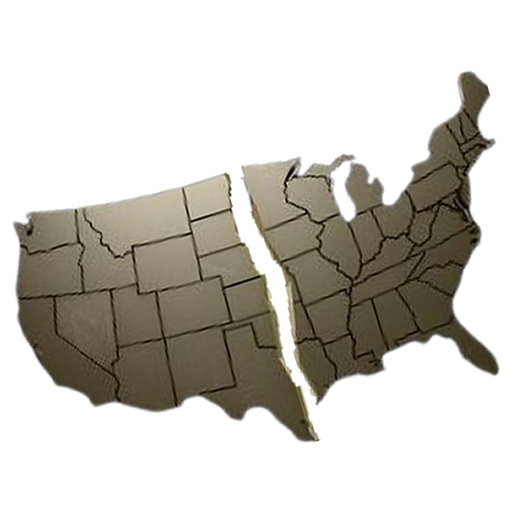
At the time he became President, Zachary Taylor was the most popular man in America, a hero of the Mexican-American War. However, at a time when Americans were confronting the explosive issue of slavery, he was probably not the right man for the job. Taylor was a wealthy slave owner who held properties in the plantation states of Louisiana, Kentucky, and Mississippi. During his brief time in office—he died only sixteen months after his election—his presidency foundered over the question of whether the national government should permit the spread of slavery to the present-day states of California, New Mexico, and Utah, then newly won from Mexico. His sudden death put Vice President Millard Fillmore into the White House, and Fillmore promptly threw his support behind the Compromise of 1850, canceling out much of the impact of Taylor's presidency.
So far as it is possible to be informed, I shall make honesty, capacity, and fidelity indispensable prerequisites to the bestowal of office, and the absence of either of these qualities shall be deemed sufficient cause for removal. Inaugural Address
Inaugural Address
Legacy
Taylor’s brief presidency was consumed with the ongoing discord over slavery and its potential expansion into the new territories acquired from Mexico. The crisis was escalating as many sought to extend slavery into what is now California, New Mexico, and Utah. Taylor himself was a slave owner who believed existing slave-owning states should be able to maintain their slaves, but he did not support the expansion of slavery into the west. Henry Clay and Daniel Webster sponsored the Compromise of 1850 (a series of five laws that attempted to resolve the territorial and slavery controversies by balancing the interests of the southern slave states with the northern free states), but Taylor opposed it. Taylor also opposed secession as a way to solve the nation’s differences and was firm in his stance that he would prevent any states from seceding by implementing a blockade of their harbors, imposing taxes on all goods transported in, and blocking any export of their goods out.
In 1850 Taylor became extremely sick after attending a July 4 celebration at the Washington Monument and died five days later, only sixteen months after his election. The country remained deeply divided upon his death. With the ascension of Taylor’s vice president, Millard Fillmore, to the presidency, the Compromise passed.
All Presidents
 1. George Washington
 2. John Adams
 3. Thomas Jefferson
 4. James Madison
 5. James Monroe
 6. John Quincy Adams
 7. Andrew Jackson
 8. Martin Van Buren
 9. William Henry Harrison
 10. John Tyler
 11. James Knox Polk
12. Zachary Taylor
11. James Knox Polk
12. Zachary Taylor
 13. Millard Fillmore
 14. Franklin Pierce
 15. James Buchanan
 16. Abraham Lincoln
 17. Andrew Johnson
 18. Ulysses S. Grant
 19. Rutherford B. Hayes
 20. James Abram Garfield
 21. Chester A. Arthur
 22. Grover Cleveland (First Term)
 23. Benjamin Harrison
24. Grover Cleveland (Second Term)
23. Benjamin Harrison
24. Grover Cleveland (Second Term)
 25. William McKinley
 26. Theodore Roosevelt
 27. William Howard Taft
 28. Woodrow Wilson
 29. Warren G. Harding
 30. Calvin Coolidge
 31. Herbert Clark Hoover
 32. Franklin D. Roosevelt
 33. Harry S Truman
 34. Dwight D. Eisenhower
 35. John Fitzgerald Kennedy
 36. Lyndon B. Johnson
 37. Richard M. Nixon
 38. Gerald R. Ford
 39. James Earl Carter
 40. Ronald Reagan
 41. George H. W. Bush
 42. William J. Clinton
 43. George W. Bush
 44. Barack Obama
 45. Donald Trump (First Term)
 46. Joe Biden
 47. Donald Trump (Second Term)