Blog

  • How Did We Create the Housing Crisis?

    How Did We Create the Housing Crisis?

    [embedyt] https://www.youtube.com/watch?v=7HQXQR76jUg[/embedyt]

    Summary

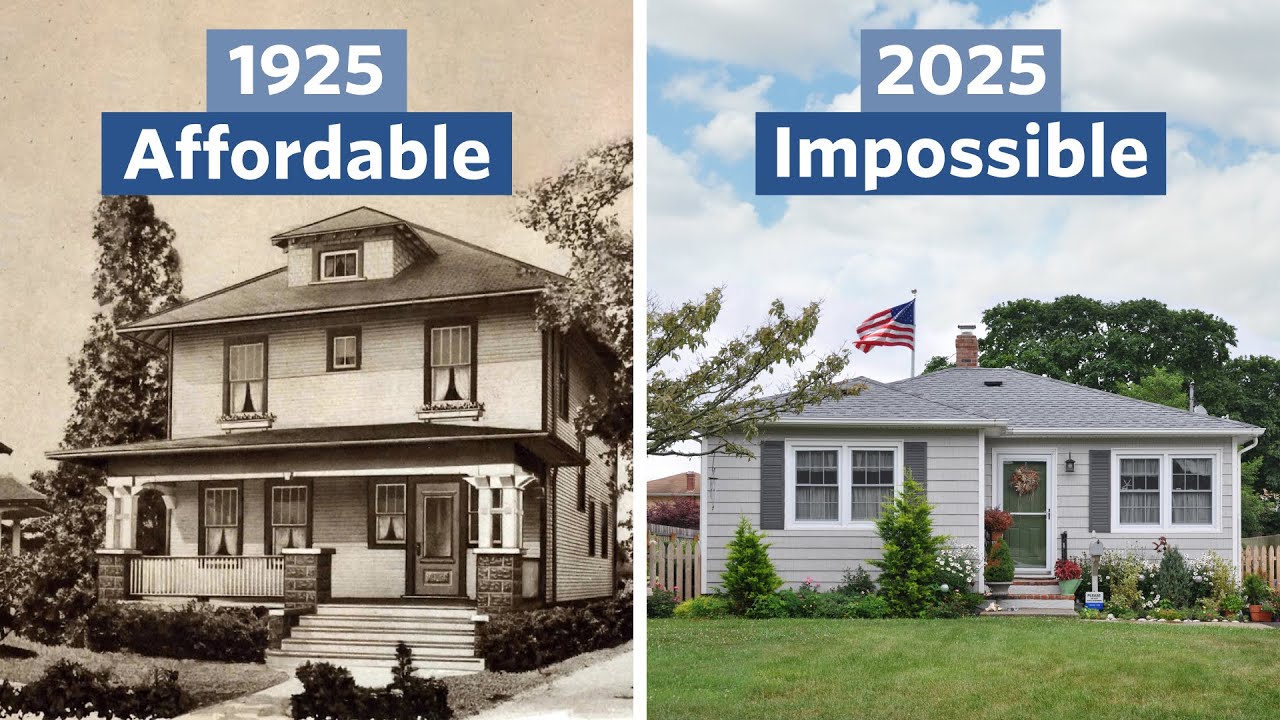
    The video provides a comprehensive historical perspective on the U.S. housing affordability crisis, tracing its roots back over a century to understand how supply, financing, and policy have shaped the current landscape. It begins by examining the housing boom of the 1920s, fueled by the rise of automobiles, lax regulations, and expanding credit, which allowed widespread suburban development. The introduction of zoning laws in the 1920s established regulatory frameworks that would later restrict housing supply. The Great Depression and World War II halted private sector housing construction, prompting the federal government to intervene with loan guarantees and public housing programs—though these efforts had mixed outcomes, often focusing on slum clearance rather than increasing affordable housing stock.

    Post-World War II, returning veterans faced severe housing shortages, leading to mass production of affordable suburban homes like Levittowns. The expansion of 30-year mortgages and low interest rates made homeownership widely attainable, increasing ownership rates dramatically. However, public housing policies continued to emphasize urban renewal and slum clearance, often displacing low-income residents and concentrating poverty.

    The 1970s marked a turning point with the rise of exclusionary zoning and ‘NIMBYism’ (Not In My Backyard activism), which restricted multifamily and affordable housing development, often reinforcing racial and economic segregation despite the Fair Housing Act of 1968. During this period, housing began to be increasingly financialized—viewed as an investment vehicle rather than merely a home—attracting corporate investors and real estate investment trusts (REITs) that bought and sold residential properties on a large scale.

    The modern era was defined by the 2008 subprime mortgage crisis, a direct consequence of financialization, which triggered a housing market collapse and stalled construction. Meanwhile, household formation increased due to population growth and shrinking household sizes, exacerbating the shortage of affordable homes. Rising rents and home prices outpaced wages, increasing cost burdens on renters and buyers alike. Institutional investors have been blamed for increasing rents by purchasing single-family homes to rent at higher prices, although they represent a small portion of the market.

    Modern NIMBYism continues to impede housing supply by opposing new development projects, citing concerns about traffic, noise, and property values. Unlike earlier suburban expansions, today’s urban infill projects face significant local opposition, complicating efforts to address housing shortages.

    Looking forward, the video suggests cautious optimism: builders are exploring “missing middle” housing that fits smaller lots and urban infill needs; progressive policies are emerging to ease restrictions on accessory dwelling units and other housing types; however, financing conditions are unlikely to become more favorable, and the financialization trend is expected to continue. Public housing construction remains unlikely to expand significantly without strong federal support. The video closes by promoting Eastern Washington University’s urban planning programs as a way to equip new professionals to tackle these housing challenges, highlighting Spokane’s progressive zoning reforms as a real-world example of innovative urban planning.

  • How American conservatives turned against the vaccine

    How American conservatives turned against the vaccine

    [embedyt] https://www.youtube.com/watch?v=sv0dQfRRrEQ[/embedyt]

    The video transcript explores the complex dynamics of the COVID-19 pandemic in the United States, particularly highlighting the sharp division between vaccinated and unvaccinated populations, which maps strongly onto political affiliations. Over 900,000 Americans lost their lives during the pandemic’s first two years, but vaccination efforts beginning in spring 2021 introduced a significant divide: unvaccinated individuals faced dramatically higher death risks, especially during waves driven by the Delta and Omicron variants. Personal stories like those of Philly Baird and Phil Valentine underscore the real human cost of vaccine hesitancy and misinformation.

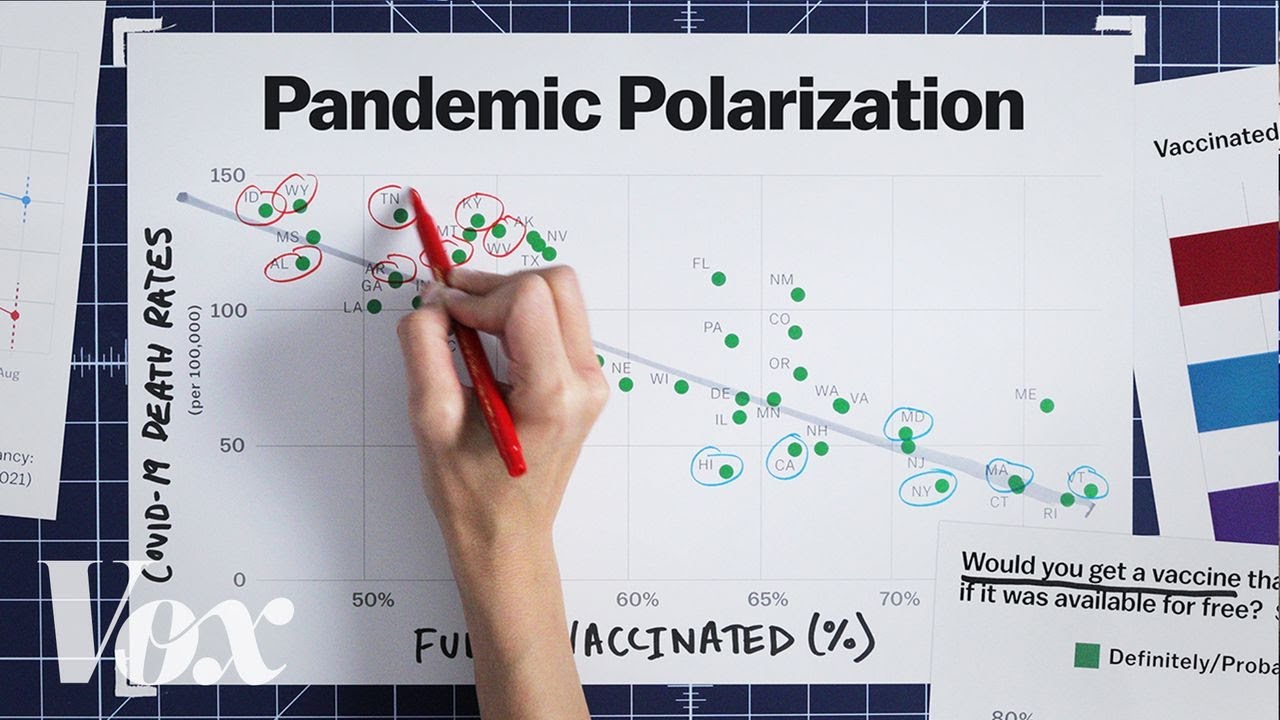
    Crucially, the transcript reveals that vaccine hesitancy is deeply intertwined with political identity. While a majority of Republicans have received at least one vaccine dose, most unvaccinated Americans identify as Republican, which correlates with higher COVID-19 death rates in Republican-leaning states after vaccine rollout. This political polarization around COVID-19 vaccines did not exist before vaccines were available; initially, the pandemic impacted states relatively evenly.

    The politicization of the virus, amplified by conflicting messages from political leaders and media outlets, created an environment where many Republicans distrusted COVID-19 severity data and vaccine information. The early pandemic period saw widespread misinformation, including false beliefs that the government exaggerated COVID-19 death counts. This skepticism hardened months before vaccines were available and before anti-vaccine content proliferated on social media and conservative news outlets like Fox News.

    The transcript also highlights how media consumption shaped vaccine attitudes. Conservative audiences relied heavily on a single network and social media, which often presented contradictory or misleading vaccine messages. This polarization was exacerbated by political leaders who, despite many Republicans being vaccinated, hesitated to strongly endorse vaccines for fear of alienating their base.

    Experts in the transcript argue that a unified, bipartisan public health message early on could have mitigated much of the polarization and vaccine resistance. The ongoing division poses risks beyond COVID-19, as declining trust in vaccines could spill over into other immunizations, threatening broader public health outcomes.

  • How to Argue with Conspiracy Theorists (And Win)

    How to Argue with Conspiracy Theorists (And Win)

    [embedyt] https://www.youtube.com/watch?v=KLfL1Gm9QDM[/embedyt]

    This video explores the complex world of conspiracy theories, examining what they are, why they appeal even to reasonable people, and how to effectively engage with those who believe in them. The presenter begins by defining conspiracies as secret actions by powerful groups that harm the public good, while conspiracy theories are unproven explanations attributing events to such secret groups. Importantly, conspiracy theorists are not portrayed as crazy, stupid, or mentally ill; rather, they are intellectually curious individuals seeking answers to uncomfortable realities. The video delves into psychological and social reasons behind conspiracy thinking, such as feelings of powerlessness (loser theory), the need for community (social theory), and the discomfort caused by uncertainty (uncertainty theory). It highlights that conspiracy theories have been part of human culture for centuries and are not exclusive to any political or social group.

    The video critiques common approaches to debunking conspiracy theories—mockery, overwhelming with facts, or relying on experts—which often fail because they alienate believers or overwhelm them with abstract information. Instead, the presenter recommends a respectful, patient, and empathetic approach: listening carefully, understanding the specific beliefs of the person, using tangible and observable evidence, and gently challenging the foundational assumptions of their theories. Changing minds is a slow process that requires time and compassion.

    The video also explores the challenge conspiracy theorists face if they abandon their beliefs—they risk losing their social group, which often functions as a surrogate family. Thus, offering an alternative community and support is crucial. Ultimately, the video advocates for fostering respect and compassion, encouraging curiosity and skepticism to be redirected toward truth rather than falsehoods. The goal is not to silence questioning but to guide inquisitiveness toward constructive ends, emphasizing that conspiracy theorists are not fundamentally different from the rest of us—they just chose a different path to make sense of a confusing world.

  • Thom Hartman On The Racist History Of American Healthcare

    Thom Hartman On The Racist History Of American Healthcare

    [embedyt] https://www.youtube.com/watch?v=49yIskpe1rs[/embedyt]

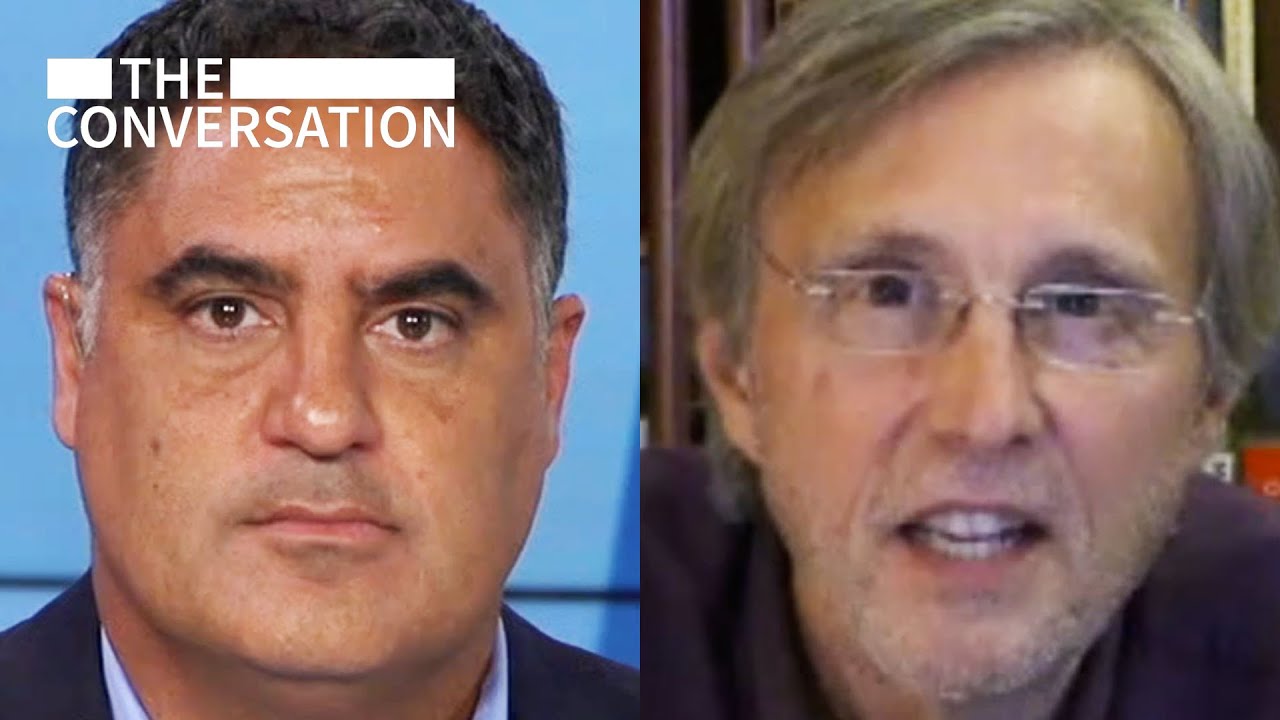
    The conversation with Tom Hartman, host of the Tom Hartman Program and New York Times bestselling author of The Hidden History of American Healthcare, delves into the origins and ongoing challenges of the U.S. healthcare system. Hartman traces the divergence of American healthcare from other developed nations back to the late 19th and early 20th centuries, highlighting how deeply embedded racism shaped the refusal to adopt a national health insurance system. The early influence of scientific racism, propagated by figures like Frederick Ludwig Hoffman, justified excluding Black Americans from healthcare access, a pattern that persisted through major healthcare reform attempts until the mid-1960s.

    Hartman explains how racism morphed into a capitalist-driven healthcare industry, where deregulation under Reagan in the 1980s allowed large insurance companies to monopolize the market and prioritize profits over public good. This neoliberal ideology elevated market forces above democracy, reinforcing inequality and undermining public services. The conversation also touches on how media complicity and corporate influence distort public understanding of healthcare reform, particularly Medicare for All, by suppressing facts and framing costs misleadingly.

    Hartman underscores the concept of the commons—the shared resources society must collectively manage—and argues that healthcare should be part of this commons, similar to fire departments or utilities. Implementing Medicare for All is hindered by political corruption rooted in money’s influence on elections and legislation, as well as legal barriers like federal Medicaid and Medicare rules designed to prevent states from fully implementing single-payer systems. Despite these obstacles, Hartman points to examples like Canada’s provincial-led implementation of universal healthcare as a model for U.S. states to follow if legislative barriers are removed. The key to transforming American healthcare thus lies in addressing systemic racism’s legacy, dismantling neoliberal capitalism’s grip, reforming media narratives, and ultimately removing money’s corrupting influence from politics.

  • Homelessness: Last Week Tonight with John Oliver

    Homelessness: Last Week Tonight with John Oliver

    [embedyt] https://www.youtube.com/watch?v=liptMbjF3EE[/embedyt]

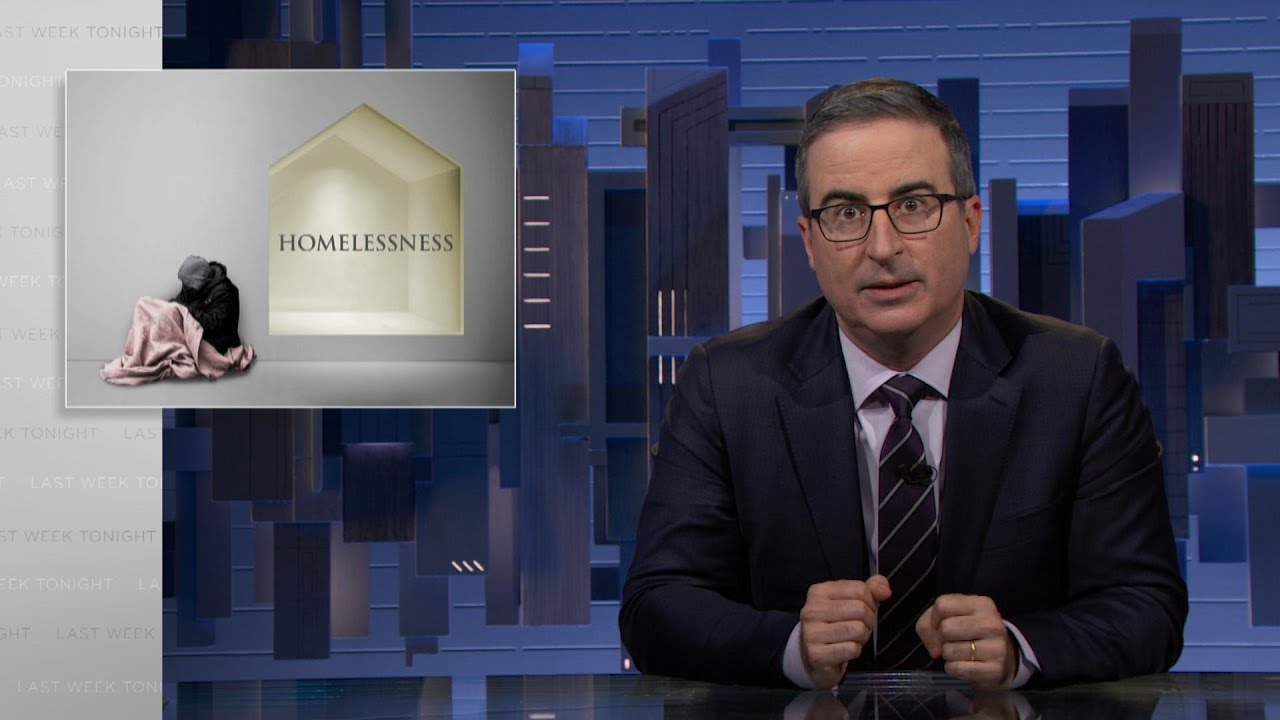
    The video transcript presents an in-depth exploration of homelessness in the United States, emphasizing the lived realities of unhoused individuals and the systemic failures that perpetuate the crisis. It critiques the often alarmist and dehumanizing portrayal of homeless people in media and public discourse, highlighting how such narratives focus disproportionately on the discomfort or fears of housed residents rather than the urgent needs of the homeless community themselves. The discussion traces the roots of modern homelessness back to policy decisions from the Reagan era, which drastically cut funding for affordable housing and social programs, thereby exacerbating the problem.

    The transcript dismantles common misconceptions that homelessness is primarily caused by personal failings such as addiction or mental illness, instead framing it as a multifaceted issue driven by economic pressures, housing shortages, and insufficient social safety nets. It provides personal stories illustrating how easily stable housing can be lost due to rent hikes or job loss, and how shelters often fail to provide a dignified or effective solution.

    The video advocates for the “Housing First” model, which prioritizes providing permanent housing as a foundation before addressing other issues like substance abuse or employment. This approach has shown measurable success in reducing veteran homelessness and is argued to be more cost-effective than current cycles of incarceration and emergency care. However, the transcript also underscores significant obstacles to this solution, particularly the “Not In My Backyard” (NIMBY) attitude among many communities, which resists affordable housing developments near them due to stigma and fear.

    Ultimately, the video calls for a shift in public perception—from viewing homelessness as a personal choice or moral failing to recognizing it as a systemic issue needing compassionate, structural solutions. It stresses that real progress requires both policy change and a collective change in attitudes towards the unhoused, urging viewers to reject stereotypes and support humane housing initiatives.

  • Is it easy to steal an election?

    Is it easy to steal an election?

    [embedyt] https://www.youtube.com/watch?v=oa7tcuE2TP0[/embedyt]

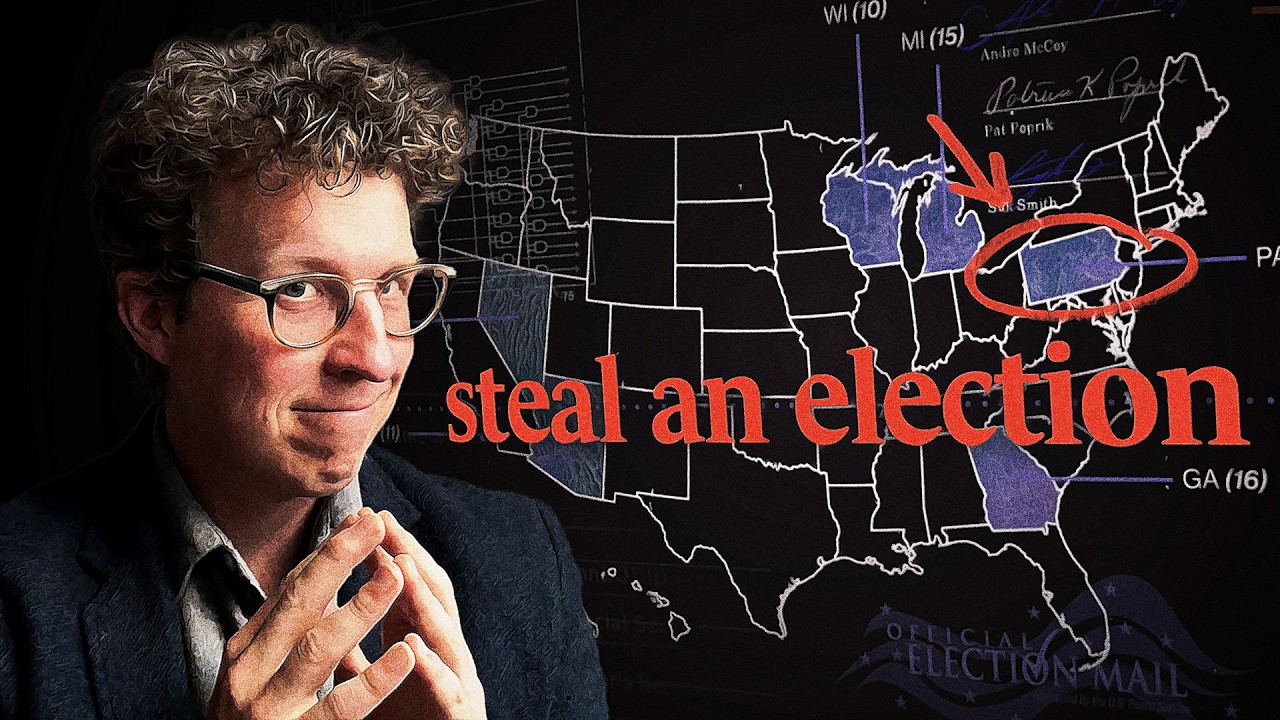
    The video transcript explores the question: how feasible is it to steal the 2024 U.S. presidential election, focusing specifically on Pennsylvania, a crucial swing state. The host investigates various potential fraud methods including impersonating voters, voting multiple times, hacking voting machines, and manipulating mail-in ballots. To get an informed perspective, the host interviews Kathy Boockvar, former Secretary of the Commonwealth of Pennsylvania (a Democrat), and Seth Bluestein, a longtime Republican election official in Philadelphia.

    The video follows a fictional voter, Sylvester, through the in-person voting process in a small Pennsylvania county, illustrating the safeguards in place—from voter registration and ID checks to bipartisan poll workers and observers who monitor for irregularities. It highlights the rarity of voter impersonation fraud, citing stringent registration requirements and severe penalties. The video also explains the role of voting machines, emphasizing that while vulnerabilities exist, modern systems use voter-verifiable paper ballots and rigorous audits to ensure accuracy.

    The mail-in voting process is also detailed, showing the security measures such as barcoded envelopes tied to voters, signature verification, and legal prohibitions against pre-processing ballots before Election Day. The narrative dispels myths about widespread mail ballot fraud and describes how the election results undergo multiple layers of verification, including risk-limiting audits that randomly check ballots by hand.

    The video concludes that stealing an election is extraordinarily difficult due to decentralization, multiple checks, bipartisan oversight, and the paper trail. However, it stresses that the real threat is not fraud itself but the spread of misinformation and disinformation, which erodes public trust and fuels polarization, potentially destabilizing democracy. The host reflects that if someone wanted to interfere with elections, sowing doubt and confusion would be more effective than actual vote tampering.

  • The Truth About U.S. Taxes

    The Truth About U.S. Taxes

    [embedyt] https://www.youtube.com/watch?v=-XZZtxkHcMU[/embedyt]

    The video transcript provides a detailed critique and analysis of the United States tax system in comparison with other advanced economies, specifically those in the Organization for Economic Cooperation and Development (OECD).

    The speaker highlights a common misconception perpetuated by Republicans since the 1980s that American taxes are excessively high. Contrary to this narrative, the U.S. actually has one of the lowest tax burdens among developed countries, with a tax-to-GDP ratio of approximately 25.2%, significantly below the OECD average of 33.9%.

    This discrepancy implies that if the U.S. were to align its tax revenue with the OECD average, it could generate an additional $26 trillion over the next decade, which would be enough to eliminate the current budget deficit of $1.7 trillion recorded in 2023. The transcript also contextualizes the deficit and national debt, noting that the U.S. was in surplus during the Clinton administration but shifted into deficit due to tax cuts under George W. Bush and Donald Trump, as well as unfunded military engagements.

    The discussion serves as a foundation to critique the Republican “One Big Beautiful Bill” omnibus legislation, underscoring the importance of revisiting tax policy as a solution rather than defaulting to spending cuts.

  • Liberal vs. Conservative: A Neuroscientific Analysis with Gail Saltz | Big Think

    Liberal vs. Conservative: A Neuroscientific Analysis with Gail Saltz | Big Think

    [embedyt] https://www.youtube.com/watch?v=kI-un8rHP14[/embedyt]

    Gail Saltz: So I think what’s really fascinating is that there have been a number of recent studies looking at brain structural differences between liberals and conservatives. And what’s been found in several studies is that liberals tend to have a larger anterior cingulate gyrus. That is an area that is responsible for taking in new information and that impact of the new information on decision making or choices. Conservatives tended on the whole to have a larger right amygdala. Amygdala being a deeper brain structure that processes more emotional information – specifically fear based information. So it’s really responsible for the flight or fright response. And this isn’t everybody. It’s not black and white and of course then, you know, what about all of the people in the middle? But basically the study showed that if you just based it on brain structural size different you could predict who would be a conservative and who would be a liberal with frequency of 71.6 percent.

    71.6 percent is a pretty high ability to predict who is a conservative and who is a liberal just from brain structure. When you look at what your parents were in terms of predicting what you might be in terms of conservative versus liberal, that enabled you to predict in studies at a rate of 69.5 percent. So very close. Not quite as good and why is that interesting? It’s because the brain is plastic. So the question as to whether you have a brain structure to start with that informs whether you will be a liberal or conservative or whether the formation of certain thoughts from your parents for example shapes your brain structure. Because the brain is plastic and ever changing, particularly in youth. So does thinking certain thoughts or predominantly let’s say utilizing your right amygdala versus your anterior cingulate gyrus inform the growth of those areas and therefore help you predict later who is liberal and who is conservative.

    So in terms of interpreting the meaning of different sized structures for a liberal versus a conservative I think you have to look at what that area is predominantly responsible for. So for instance for conservatives if you’re right amygdala is enlarged and that’s the fear processing area you would expect maybe choices or decisions or character and personality to be more informed by a response to a fearful situation. So for example conservatives in fact in personality studies do tend to rate higher in areas of stability, loyalty, not liking change, being more religiously involved in terms of decision making, having that rate higher for them in making certain choices. And if you look at liberals from a personality character standpoint you’re going to find stronger ratings in terms of liking change wanting to actually base decision making on new information, on science information. And so those differences are not surprising in light of these brain structural differences.

    Being a liberal or being a conservative really is not black and white. It’s really a bell shaped curve where, you know, someone who considers themselves conservative may be far less conservative so to speak than someone else who still calls themselves a conservative. And that bell shaped curve continues all the way through where in the middle there may be a large group that calls themselves independents.

    What we don’t know is whether that has to do with differences in brain structure and so would we see in independents, no one’s does that study to say oh, independents don’t show any differences in brain structure or any differences in say risk taking reaction. So we don’t know for sure what that means but I think it’s fair to say that even when we looked at differences in brain structure with a reliability of 71.6 percent that still leaves, you know, a very larger number that don’t fit into that category. So, you know, where do they fall out? Are they more likely to be independents in their mind? We don’t know the answer to that but certainly, you know, these are not hard and fast rules. This is not diagnostic science and people who are independent obviously have certain characteristics I’ll say of both sides are somewhere just like they sound in the middle.

    I think by understanding what’s going on structurally in the brain and functionally in the brain we can better understand what informs people’s very strong opinions that ultimately inform our political system, right. Because it’s one person, one vote. And in trying to change people’s minds I think everybody has to look at what’s behind the ability to change a mind. Is it really changeable?

    When we look at voting and changing minds and say political advertising you have to recognize that all of that new information always comes in through the prism of your brain. Which means that what I say to you versus you may be heard differently even though I’ve said the same thing. So it comes in through the prism of does what you said make me nervous and afraid and therefore I’m going to resort to my old standby I don’t want to change my decision? Or am I going to hear the same information and say oh, that’s novel. I have a receptivity to novel information. Therefore that’s interesting to me and I’m going to think about whether I might change my mind based on that new information.

    I think that’s what the science is basically saying to us that there are going to be some people who are going to hear the information and retreat to their original thinking. And other people are going to hear new information and say that really does change my mind.

    If we’re trying to have a society that will work in its own best interest let’s say then we do want to be able to communicate with one another. And so if you’re a liberal and say you want to talk to a conservative about gay marriage you want to have in your mind how it might still speak to loyalty, stability and religious belief in some way. You want to have those ideas inform your communication as opposed to simply saying but, you know, this percentage of the population is homosexual and therefore, you know, we should consider whether everybody should have those same rights. And, you know, science shows it’s not a choice. It’s simply a fact you’re gay or not gay. And therefore shouldn’t those people have the same rights? That’s not the best way to appeal perhaps to a conservative on this issue.

    You want to appeal to them in terms of how for example marital rules or history might be maintained and not really altered for those who are in let’s say a “traditional marriage.” How it won’t interrupt the fabric for example of their lives, of the rules that they adhere to. Those kinds of things would be more appealing to them whether or not that might be the most appealing argument to you as a liberal.

    The truth is a conservative is more likely to be able to appeal to a liberal using novel new information that is science based and showing certain facts and allowing for it not necessarily to be purely religiously based. That not be the rule system so to speak. By being empathically understanding. And by that I don’t mean sympathetically understanding. I mean truly being able to stand in the other person’s shoes and have some insight into where their brain is directing them and appealing to that argument. So if you are a conservative you will want to appeal with new information because liberals are more novelty seeking potentially. And often science based is a good way to present new information.

    Part of what’s difficult in terms of what I’m seeing now is that actually people are tending to double down on their own style and what appeals to their own group of thinkers. And that is increasingly preventing the kind of communication that would be important to our future so that we can’t so to speak cross the aisle because it would require trying on for size the thought pattern of the other group. And that’s hard to do. Let me say that is difficult to do. So if your amygdala is screaming at you, you know, run for the hills or double down and fight it’s hard to say well, let me take a step back and not have a fear based reaction but instead present the science or present the new information.

    A good example would be that of gun ownership. If I speak about gun ownership to a liberal group they automatically have thoughts probably about, particularly if they’re in an urban area, crime and danger because statistically that is what they have been privy to. The information has been given to them about how many homicides are committed, who is, you know, dying by gun violence, et cetera.

    If I speak about gun ownership to a conservative group they are more likely in their loyal stable way to think about a sportsmanship, hunting with family particularly again if they’re in a rural area. Because that is what they grew up with, that is what has been stable for them, that is the memory that they have about guns. And so you can see how that’s coming from two completely different directions perhaps the same word, gun. And that it is hard to stand in the shoes for example of the other group so that you can come to make decisions about it.

    So, for example, the CDC has been prevented from doing any research so that we could have new science about gun violence as a public health issue by actually the conservative political group has said, you know, you can’t do research on this area. We won’t call it a public health issue and therefore you’re prevented from getting dollars and prevented from having research into gun violence per se. And that comes probably from a fear position that if there is any new information that sways opinion we will lose our loyal standing to something that we firmly believe in and harks back to very pleasurable comforting memories from earlier life. So it’s very complicated in a certain kind of way. You know the liberal group is wanting there to be this research not necessarily to take guns away but to say we’d like to see the science to validate whether or not certain things about guns are good for us or not good for us.

    The most recent study looking at what is going on in the brain in terms of politics predicted with the greatest value being able to identify a conservative versus a liberal 82.6 percent. And this was a look at brain activity which is different. You put someone in a functional MRI which his different than just taking a picture. It picks up activity in a certain area of the brain. And found that when you have them do a risky behavior and look at their activity in their brain conservatives were more likely to light up in the fright and flight response area, the amygdala, and liberals were more likely to light up in areas that have to do with social awareness.

    Again you could see how therefore this difference would inform what comes to the mind of either a liberal or a conservative while either involved in a risky behavior or even something that’s happening external to them but feels like it might impact them in a risky way. And that was actually even more predictive than looking at structure of the brain or what your parents were in terms of liberal versus conservative.
  • If You Think Biden and Harris Were Weak on the Border, Think Again

    If You Think Biden and Harris Were Weak on the Border, Think Again

    [embedyt] https://www.youtube.com/watch?v=HyzGkEV3p2g[/embedyt]

    The video transcript explores the complex and nuanced approach the Biden-Harris administration has taken to secure the U.S. southern border, contrasting it with the rhetoric and policies of the Trump administration. Despite public perception and political attacks claiming Biden and Harris have ignored or failed on border security, the video reveals a multi-faceted strategy that has made significant progress in controlling illegal immigration through diplomatic efforts, administrative policy changes, and expanded legal pathways for migrants.

    The narrative begins by debunking the myth that Biden and Harris “ignored” the border crisis. While publicly the administration sounded more open to immigration, behind the scenes they implemented a variety of measures to tighten border control. One key element was Vice President Kamala Harris’s diplomatic efforts throughout Central and South America, aimed at addressing root causes of migration by fostering cooperation with multiple countries. This diplomatic push included the 2022 Summit of the Americas, where Biden and Harris secured commitments from nations like Mexico, Colombia, Costa Rica, and Ecuador to regulate migration flows more effectively, including offering legal status to Venezuelan migrants to reduce pressures on the U.S. border.

    Secondly, the administration undertook a series of administrative policies that restricted asylum eligibility, effectively deterring many migrants from attempting to cross illegally. Because the asylum system is overwhelmed and broken—a problem attributed largely to Congress’s inaction—Biden and Harris have imposed new rules making it harder for migrants crossing unlawfully to claim asylum, which led to a notable decline in illegal crossings.

    Finally, the administration expanded legal immigration pathways, allowing certain migrants to enter the U.S. legally after rigorous vetting processes, sponsorship requirements, and background checks. This strategy aims to reduce illegal immigration by providing viable, lawful alternatives, which conservative analysts have even praised for its effectiveness.

    The video concludes by emphasizing that while Biden and Harris’s approach may lack the dramatic messaging of Trump’s “invasion” rhetoric, their gradual, multi-layered strategy has in fact achieved significant results in securing the border without compromising American values or economic needs.

  • The Moral Majority: How Evangelicals Took Over American Politics

    The Moral Majority: How Evangelicals Took Over American Politics

    [embedyt] https://www.youtube.com/watch?v=yDQjPvFljSU[/embedyt]

    Summary

    The video explores the origins, rise, and lasting impact of the Moral Majority, a conservative Christian political movement founded in the late 1970s by Reverend Jerry Falwell. It traces how the Moral Majority emerged as a reaction to the social and cultural upheavals of the 1960s and 70s, including the civil rights movement, feminism, LGBTQ+ visibility, and secularism, which many conservative Christians viewed as a moral decline. Falwell and his associates recognized the untapped political potential of evangelical Christians, many of whom were not politically active, and sought to organize them into a powerful voting bloc to restore what they saw as traditional Christian values in America.

    The Moral Majority was not merely a loose coalition of religious conservatives but a highly organized, strategic political force that mobilized millions of voters, built extensive grassroots networks, and leveraged media and lobbying to influence elections and public policy. It championed causes such as opposition to abortion, feminism, gay rights, secular education, pornography, and the promotion of school prayer and creationism. The movement aligned itself closely with the Republican Party and played a significant role in the election of Ronald Reagan in 1980.

    The video highlights how the Moral Majority blurred the lines between religion and politics, transforming Christian faith into a political identity tied to conservative ideology. This fusion pressured individuals within evangelical communities to conform politically as a demonstration of faith, often equating political dissent with spiritual betrayal. Their strategy heavily relied on fear-mongering about moral decay, which created a culture of anxiety, suspicion, and exclusion.

    Additionally, the Moral Majority’s tax-exempt nonprofit status allowed it to raise large sums of money while engaging in politically charged activities, raising ethical and legal questions about the separation of church and state. Despite disbanding in 1989 as an organization, its ideals, rhetoric, and political influence persist today in new forms and groups, such as Focus on the Family and Moms for Liberty. The video argues that current culture wars, political rhetoric, and Christian nationalist movements are direct continuations of the Moral Majority’s legacy, merely updated for today’s digital and social media landscape.

    The video concludes by emphasizing the importance of understanding the Moral Majority’s history to grasp the present-day interplay of religion and politics in the United States and invites viewers to reflect on how this legacy shapes American political and cultural life.