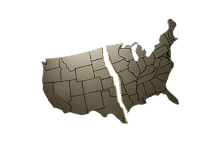
The Line That Disappears
The line at the office divides people before anyone reaches the counter. One side has paperwork. Another has questions. A parent whispers to a child to stay close. Someone worries about being recognized. Someone else leaves because the documents are wrong. Across town, a universal service works differently. No one proves poverty to enter the library, drive on the road, attend the public school, or call the fire department. The door opens because the service belongs to the public.
Universal benefits start from that idea: some supports work better when they are simple, broad, and treated as civic infrastructure rather than charity. The benefit may be universal child allowances, basic health coverage, free school meals, paid leave, public college pathways, or other designs that reduce eligibility gates. The common promise is not that everyone needs the same amount. It is that some foundations should not require people to prove desperation before receiving them.
The strongest case for universal benefits is administrative honesty. Means-tested programs target resources, but targeting creates boundaries. Boundaries require forms, verification, policing, updates, and appeals. People near the line may churn in and out as income changes. Eligible people may fail to apply. Staff may spend time sorting rather than serving. Fraud prevention can become friction for everyone. Universal programs remove many of those gates.
They also reduce stigma. A child eating lunch at school should not need a public label. A parent caring for a newborn should not have to become poor enough for help. A worker facing illness should not need to prove moral worth. When everyone participates, benefits can feel less like rescue and more like the floor of citizenship.
The objections are serious. Universal benefits cost money. They may send resources to people who do not need them. Poorly designed programs can crowd out targeted help or create political backlash. A universal benefit that is too small may look elegant while failing the people with deepest need. A program funded irresponsibly can weaken public trust.
Good design answers those concerns instead of waving them away. Universality at the door can be paired with progressive taxation on the back end. A broad child benefit can reach families automatically while the tax system recaptures more from high-income households. Universal school meals can feed every child while reducing administrative burden. Universal paid leave can pool risk across employers and workers rather than making one small business carry a crisis alone.
The question is where universality adds the most value. It works best when need is widespread, stigma blocks participation, administration is costly, and the public benefit extends beyond the recipient. Children eating, parents bonding, workers recovering, people accessing basic care, and citizens receiving a simple public service all create social value beyond one household.
Universal benefits can also rebuild trust. People are more likely to support programs they understand and use. When public help exists only for other people, resentment grows. When a benefit forms part of ordinary life, citizens may see government as a shared tool rather than a distant judge. That does not guarantee support, but it changes the relationship.
A practical reform path would not make everything universal. Some needs require targeted intensity: disability support, homelessness services, complex medical care, and crisis assistance. The smartest systems combine broad foundations with deeper help where need is greater. Universal floors and targeted ladders can work together.
Before rejecting or embracing a universal benefit, ask four questions. Does the problem touch enough people to justify a common system? Does eligibility paperwork block the people who need help? Can funding be fair? Will the benefit be strong enough to matter? The line should disappear only when removing it makes the public stronger, not merely when it makes a proposal sound simple.
The public question behind Universal Benefits is not merely whether people feel strongly about the issue. They do. The better question is where the pressure enters ordinary life and which institution has the power to relieve or worsen it. In The Line That Disappears, that pressure appears through a scene rather than a slogan because civic problems become clearest when someone has to make a decision with imperfect choices.
A reader can use the same lens locally. Look for the office, employer, market rule, public habit, or private contract that narrows the available options. Then ask who benefits from the present arrangement, who absorbs the risk, and what information remains hidden from the person making the hardest choice. That question turns Universal Benefits from an argument about attitude into an inquiry about design.
The solutions profile format matters in The Line That Disappears because it keeps the focus on cause and consequence. A purely moral argument might produce applause, but it rarely shows where repair begins. A purely technical argument may identify a lever and forget the person standing next to it. The best public writing has to do both: preserve the human stakes and clarify the machinery that shapes them.
In The Line That Disappears, that machinery usually contains tradeoffs. Better rules can create costs. Faster help can require better verification. More local control can protect community voice or preserve exclusion. More market freedom can encourage innovation or deepen imbalance. The useful move is not to pretend tradeoffs disappear. It is to name them early enough that citizens can decide which burden belongs where.
The practical invitation is to carry one sharper question into the next conversation about Universal Benefits: what would have to change for the person in this story to have a real option, not just a different form of pressure? The answer may be a policy, a habit, a public record, a workplace rule, a local meeting, or a better-designed doorway. Whatever the tool, the first step is locating the point where life and power meet.
The practical lesson in Universal Benefits is not to reduce public life to one argument. The better habit is to follow the pressure to the place where someone must make a choice, then ask which rule, price, office, employer, institution, or missing option shaped that choice. That discipline turns frustration into a clearer public question and gives citizens something more useful than blame.