Blog

  • Who Holds the Megaphone?

    Who Holds the Megaphone?

    The microphone looks neutral until you notice who gets handed it. At the press conference, the official calls on familiar outlets first. Online, the platform lifts one clip and buries another. In a boardroom, a communications team decides which facts become the statement. In a living room, a viewer mistakes the loudest story for the most important one. The megaphone has owners, rules, habits, and incentives.

    Power, media, and institutions meet in the space between events and public understanding. Something happens. Then institutions describe it, frame it, investigate it, defend it, exploit it, ignore it, or monetize it. The public rarely encounters raw reality. It encounters reality processed through newsrooms, platforms, agencies, corporations, campaigns, courts, schools, think tanks, and social networks.

    That processing is not automatically corrupt. Institutions can verify, organize, and explain. A newsroom can uncover abuse. A court can publish a record. An agency can release data. A university can test claims. A platform can connect witnesses. Without institutions, citizens drown in rumor. The problem is not mediation itself. The problem is power without enough accountability.

    Media institutions decide what counts as news. They face deadlines, audience metrics, ownership pressures, professional norms, staffing limits, and competition. A story with conflict travels better than a story with slow repair. A dramatic exception can outrun a boring pattern. A national fight can crowd out local consequences. These choices shape what citizens believe their country is.

    Platforms add another layer. Algorithms do not merely show what people want. They shape wanting by rewarding attention. The content that provokes, confirms, frightens, or entertains may travel farther than the content that informs. Users experience this as the world becoming obvious. In reality, the feed has narrowed the doorway.

    Other institutions influence the megaphone before journalists arrive. Corporations fund studies, lobby, advertise, and frame issues. Government agencies release data or bury it in formats few can use. Advocacy groups package stories for maximum effect. Wealthy donors build institutions that make their priorities sound like common sense. Experts can clarify public debate, but expertise can also become a credentialed shield against lived reality.

    Citizens need a better anatomy of credibility. Who gathered the information? Who paid for it? What document supports it? What does the source gain if people believe it? What evidence would change the claim? Is the story describing one incident or a pattern? Are affected people quoted as decoration or treated as sources of knowledge?

    Institutional distrust can become too blunt. If citizens decide every institution lies, they do not become free thinkers. They become vulnerable to the institution that flatters their distrust most effectively. The answer is not blind trust or blanket cynicism. It is traceable trust: a habit of following claims back to records, methods, incentives, and corrections.

    Power becomes healthier when the megaphone is plural and accountable. Local journalism matters. Public records matter. Independent courts matter. Transparent agencies matter. Diverse ownership matters. Civic education matters. So do ordinary citizens who refuse to share claims they have not checked simply because the claim injures the right enemy.

    Before accepting the next loud story, ask who holds the megaphone and who is missing from the room. Then look for the record underneath the performance. Public understanding depends not on finding a voice with no bias, but on learning which voices can show their work and which ones only know how to turn the volume up.

    The public question behind Power, Media, and Institutions is not merely whether people feel strongly about the issue. They do. The better question is where the pressure enters ordinary life and which institution has the power to relieve or worsen it. In Who Holds the Megaphone?, that pressure appears through a scene rather than a slogan because civic problems become clearest when someone has to make a decision with imperfect choices.

    A reader can use the same lens locally. Look for the office, employer, market rule, public habit, or private contract that narrows the available options. Then ask who benefits from the present arrangement, who absorbs the risk, and what information remains hidden from the person making the hardest choice. That question turns Power, Media, and Institutions from an argument about attitude into an inquiry about design.

    The institutional anatomy format matters in Who Holds the Megaphone? because it keeps the focus on cause and consequence. A purely moral argument might produce applause, but it rarely shows where repair begins. A purely technical argument may identify a lever and forget the person standing next to it. The best public writing has to do both: preserve the human stakes and clarify the machinery that shapes them.

    In Who Holds the Megaphone?, that machinery usually contains tradeoffs. Better rules can create costs. Faster help can require better verification. More local control can protect community voice or preserve exclusion. More market freedom can encourage innovation or deepen imbalance. The useful move is not to pretend tradeoffs disappear. It is to name them early enough that citizens can decide which burden belongs where.

    The practical invitation is to carry one sharper question into the next conversation about Power, Media, and Institutions: what would have to change for the person in this story to have a real option, not just a different form of pressure? The answer may be a policy, a habit, a public record, a workplace rule, a local meeting, or a better-designed doorway. Whatever the tool, the first step is locating the point where life and power meet.

    The practical lesson in Power, Media, and Institutions is not to reduce public life to one argument. The better habit is to follow the pressure to the place where someone must make a choice, then ask which rule, price, office, employer, institution, or missing option shaped that choice. That discipline turns frustration into a clearer public question and gives citizens something more useful than blame.

    One last test for Who Holds the Megaphone? is whether the reader can name a next move without being told to feel optimistic. In Power, Media, and Institutions, that move may be as ordinary as finding the responsible office, asking who holds the record, comparing the visible problem with the rule behind it, or inviting someone affected by the issue into the conversation before the decision hardens.

  • Sales Page Test

    Public Square Membership

    Sample what we offer for free, or step into something deeper.

    Divided We Fail began with a simple belief: people need better ways to understand the problems we argue about, the systems that shape those problems, and the practical choices available to ordinary citizens. Community membership gives you a free way to sample the project and join the conversation. Solution Builder gives you the full online book experience, chapter-related resources, premium explainers, member-first content, and a stronger way to help build what comes next.

    Be part of what comes after.

    We are building more than a book page. We are building a practical resource center for people who want to understand government, follow public decisions, compare ideas, and help move the conversation toward something more useful than outrage.

    Premium

    Solution Builder

    $49

    Get full digital access to the Divided We Fail experience, including the online book, chapter-related resources, premium Public Square content, member-first updates, and selected website resources as they become available.

    • Full online book access
    • Chapter hubs, resources, and PDFs
    • Premium explainers and member-first content
    • Immediate access to new premium material

    Free

    Community Member

    Free

    Join free to receive Public Square updates, comment and participate, sample selected book content, and use the public civic resources that help more people understand and engage with government.

    • Selected chapters and previews
    • Comment and participate
    • Access our Guide To Government
    • Limited daily page views on selected content

    Compare membership options

    Which level of access is right for you?

    A project that started as a way to give readers added insight into the topics discussed in Divided We Fail has grown into a rapidly expanding online resource guide with even more resources than the book itself.

    What you get Community Member Solution Builder
    Public Square newsletter and site updates Receive project updates, new-feature notices, and selected Public Square announcements. Included Included
    Comment and participate Join the conversation when community features are open on selected posts, resources, and discussion pages. Included Included
    Member-exclusive content Members-only content created for our community rather than for search engines. Included Included
    Access our Guide To Government Use the plain-language civic guide that helps visitors understand branches, powers, checks, records, courts, agencies, elections, budgets, and public resources. Included Included
    Online Divided We Fail book access Read the book online and connect the chapters to the larger Public Square experience. Selected content Full online access
    Chapter hubs and related resources Use the companion hubs, background resources, links, and context that connect each chapter to practical civic action. Not included Included
    Chapter PDFs and member downloads Download chapter files and premium resource documents when member downloads are available. Not included Included
    Issue guides and deeper explainers Use longer-form explainers that connect the book, public policy, civic resources, and practical next steps. Selected access Full access
    Premium Public Square resources Access member-only research resources, issue explainers, and deeper materials created for people who want more than headlines. Not included Included
    Early access to new premium content See selected premium articles, issue resources, presidential-action explainers, and Public Square updates before they open to free members. Available one week later Immediate access
    Daily member-content access limits Free membership can include daily view limits on selected member content so the free level remains useful without becoming the full experience. Limited daily page views Full access to included premium content
    Future premium member content New member-first resources can be added without changing the basic membership path. Delayed or selected access Included when released

    What you can use here

    Simple tools to follow Congress, the President, and more.

    Each part of the site is meant to help visitors understand one piece of public life more clearly, then take a practical next step.

    Voting

    Learn where, when, and how to vote.

    Use voting pages to check registration, find official voting links, look up polling-place information when available, understand ballot resources, and prepare before deadlines arrive.

    Representatives

    Learn about who represents you and how they do it.

    Representative pages help visitors identify members of Congress, understand basic roles, review public activity, and find official contact and source links.

    Guide To Government

    Understand the system behind the news.

    Our Guide To Government explains branches, powers, courts, agencies, budgets, elections, records, and public resources in plain language.

    Divided We Fail

    Read the book with more context.

    The online book connects to chapter-related resources, issue explainers, and practical follow-up material so readers can keep learning after each chapter.

    Presidential Actions

    Follow official presidential records.

    Presidential action pages help visitors find and understand executive orders, proclamations, memoranda, determinations, notices, and other official records.

    Public Square

    Move from argument to understanding.

    Public Square resources are designed to help people compare ideas, understand tradeoffs, and talk about public problems with more substance.

    Choose Solution Builder if you want the whole project, not just the preview. It is the clearest way to support Divided We Fail while getting full online access to the book, chapter-related resources, premium explainers, and access to premium content a week before anyone else.
  • A History Of The Minimum Wage

    A History Of The Minimum Wage

    [embedyt] https://www.youtube.com/watch?v=tQE0ldkiKo0[/embedyt]

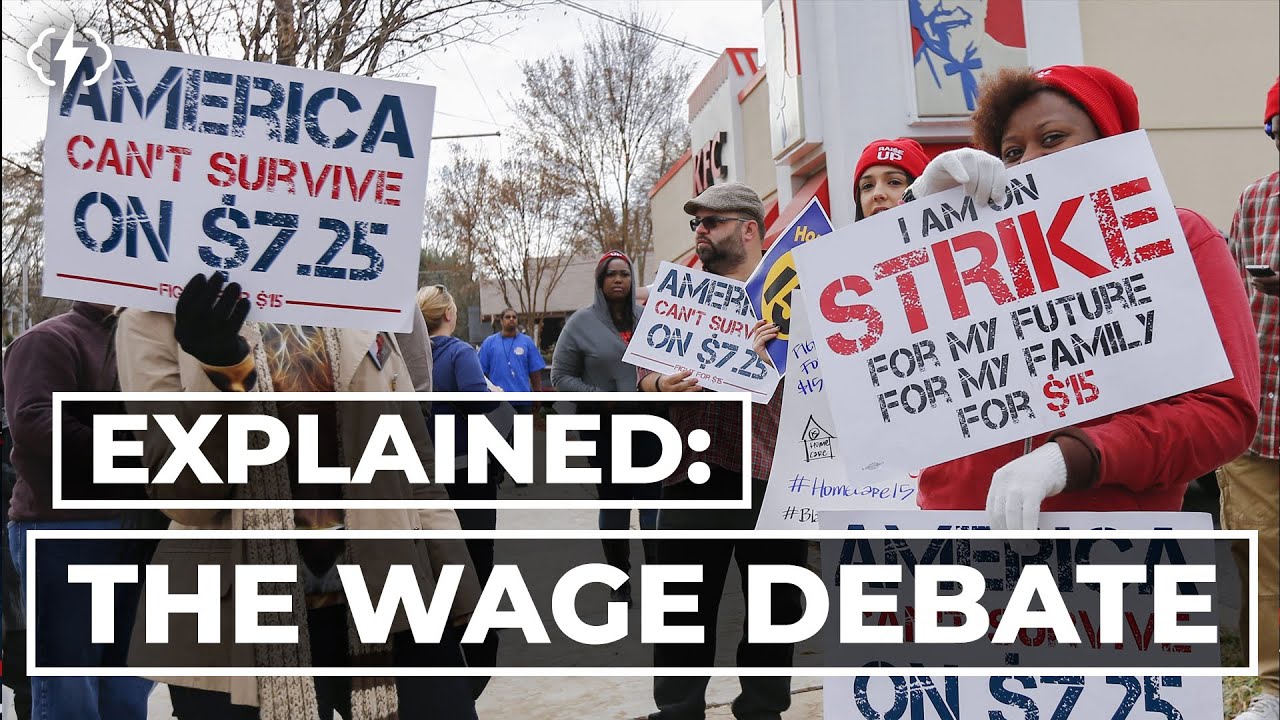
    The video provides a historical overview of the federal minimum wage in the United States, beginning with its establishment in 1938 when President Franklin Roosevelt signed the Fair Labor Standards Act, setting the wage at 25 cents per hour.

    Importantly, the minimum wage is not automatically indexed to inflation; it only increases through congressional and presidential action. Since its inception, the wage has been raised 22 times by the government.

    The video also highlights the changing real value of the minimum wage over time by adjusting past wages to today’s dollars, revealing how its purchasing power has fluctuated. Notably, the peak real value of the minimum wage was in 1968, equivalent to $10.75 in today’s currency, a time when earning minimum wage could cover a full week’s groceries. In contrast, the current minimum wage falls short of that purchasing power, meaning minimum wage workers today can afford fewer essentials than those in the past.

    The video underscores the disconnection between nominal wage increases and true economic value for workers over decades.

  • History of the U.S. Minimum Wage (Not a Living Wage?)

    History of the U.S. Minimum Wage (Not a Living Wage?)

    [embedyt] https://www.youtube.com/watch?v=3G3OmCMc1H4[/embedyt]

    The video transcript presents an in-depth historical and economic analysis of the minimum wage in the United States, its origins, evolution, and contemporary challenges. It begins by addressing common misconceptions about minimum wage laws, such as the belief that raising the minimum wage necessarily leads to job loss or economic downturn. It then traces the roots of wage struggles back to the Gilded Age, a period marked by rapid industrialization, extreme wealth inequality, and exploitative labor conditions like sweatshops. The narrative moves through the Roaring Twenties, the Great Depression, and the New Deal era, highlighting how Franklin D. Roosevelt’s administration introduced the Fair Labor Standards Act and the nation’s first minimum wage to combat poverty and stimulate economic recovery.

    The transcript emphasizes that the minimum wage was originally intended as a living wage, designed to ensure workers could meet basic needs and participate fully in the economy. Despite this, the minimum wage has not kept pace with inflation or the rising cost of living, stagnating since 2009 at the federal level. This stagnation has led to growing economic hardship for minimum wage earners, particularly in housing affordability, as exemplified by the 2023 data showing that multiple full-time minimum wage jobs are required to rent modest apartments in many U.S. cities.

    The video also discusses current debates around raising the minimum wage, highlighting state-level initiatives like California’s progressive wage policies, while acknowledging the complexity of factors influencing cost of living and poverty. It concludes with critical questions about economic inequality, legislative responsibility, and the moral imperative for wages to cover basic human needs in a wealthy nation. The overall tone is reflective, encouraging viewers to think critically about the minimum wage’s future and its role in social justice.

  • The Minimum Wage Debate Explained

    The Minimum Wage Debate Explained

    [embedyt] https://www.youtube.com/watch?v=hL5VOorY9pw[/embedyt]

    The video presents a comprehensive analysis of the U.S. federal minimum wage debate, exploring historical context, economic realities, common objections, and societal implications. It begins by outlining the origins of minimum wage legislation in the early 20th century, highlighting the exploitative conditions workers faced before laws like the Fair Labor Standards Act of 1938, which introduced the first federal minimum wage and banned child labor. The video emphasizes that despite periodic nominal increases, when adjusted for inflation and productivity, the real value of the minimum wage today is significantly lower than it was in the 1960s. This decline means minimum wage workers earn far less purchasing power than previous generations.

    The discussion challenges common narratives that the minimum wage is only for inexperienced workers or that raising it will lead to higher prices or business failures. It refutes the claim that raising minimum wages causes housing price inflation, noting that housing costs have risen dramatically despite stagnant minimum wages. The video also cites a 2020 study on the 1966 minimum wage increase, which found no negative impact on employment, but rather an increase in earnings and a reduction in racial wealth gaps.

    The speaker critiques the division among workers—those earning slightly above minimum wage often oppose raises for lower-paid workers—arguing this undermines collective worker power and benefits the wealthy capitalist class. The video calls for a shift in mindset from hyper-individualism and “pull yourself up by your bootstraps” attitudes to greater class consciousness. It advocates for a living wage indexed to inflation, like systems in other developed countries where minimum wages are adjusted annually.

    Finally, the video connects the minimum wage debate to broader societal issues such as wealth inequality, corporate profits, military spending, and political corruption, asserting that the struggle is between the working class and the wealthy owners who prioritize profits over fair compensation. It ends with a call for solidarity among workers and for a renewed understanding of class struggle as essential to achieving economic justice.

  • The Myth of a Free Press: Media Bias Explained

    The Myth of a Free Press: Media Bias Explained

    [embedyt] https://www.youtube.com/watch?v=v-8t0EfLzQo[/embedyt]

    The video transcript provides a comprehensive analysis of media bias, focusing on how mainstream media in Western capitalist democracies, particularly the UK and the US, do not merely report events neutrally but actively shape the interpretation and meaning of those events. Using the BBC’s 2020 Newsnight report on the English Channel migrant crossings as a case study, the discussion draws heavily on the works of Edward S. Herman and Noam Chomsky’s Manufacturing Consent (1988) and cultural theorist Stuart Hall’s theories of media representation. The presenter challenges the assumption that media simply reflects reality, highlighting that news reporting is inherently biased due to economic, institutional, and political influences on media organizations.

    The analysis explains how the BBC report frames asylum seekers as a threat and a problem rather than as vulnerable people in need of sympathy, largely omitting voices sympathetic to migrants or critical of government policy. This framing is attributed to various factors, including the BBC’s governance structure, political pressures from the Conservative government, and selective sourcing of interviewees predominantly hostile to migrants. The video further explains Herman and Chomsky’s five “filters” of media bias—ownership, advertising, sourcing, flak, and anti-communism—and applies these to the UK context, noting that while the BBC lacks advertising pressure, it remains influenced by government control and political appointments.

    The transcript also explores the concept of “worthy” versus “unworthy” victims, showing how displaced Iraqis are framed differently depending on whether their suffering aligns with UK foreign policy interests. The video concludes by emphasizing that media bias is pervasive and systemic rather than random, serving the interests of economic and political elites, and encourages viewers to critically interrogate media coverage and the meanings it constructs rather than accepting it at face value.

  • What Does U.S. Health Care Look Like Abroad? | NYT Opinion

    What Does U.S. Health Care Look Like Abroad? | NYT Opinion

    [embedyt] https://www.youtube.com/watch?v=EBklyksgbco[/embedyt]

    This video transcript effectively critiques the American healthcare system by juxtaposing it with international models. It challenges the narrative that healthcare is fundamentally a market commodity and instead frames it as a social good necessary for a functioning, equitable society. The personal stories woven into the discussion bring a human face to abstract policy debates, showcasing the real-world consequences of systemic failures.

    The complexity of U.S. insurance plans is a significant barrier to care, with confusing acronyms and hidden costs that deter people from seeking treatment or lead to financial ruin. Countries like Canada demonstrate that a simpler, single-payer-like model can reduce this burden and improve health outcomes. This suggests that reform efforts should focus not only on expanding coverage but also on streamlining the system.

    Universal healthcare is portrayed as a form of freedom—freedom from fear of financial catastrophe due to illness, and freedom to pursue meaningful work without sacrificing health coverage. This contrasts with the American model, where many are trapped in jobs solely to maintain insurance, stifling innovation and personal growth.

    The pricing of pharmaceuticals, especially life-saving drugs like insulin, exemplifies the consequences of deregulated markets in healthcare. Government negotiation and price controls in other countries keep costs manageable and prevent rationing. The U.S.’s failure in this regard leads to tragic outcomes and raises ethical questions about access, equity, and capitalism’s role in healthcare.

    The transcript also highlights the paradox of the U.S. healthcare system: it is the most expensive globally but does not deliver commensurate health outcomes. This disconnect suggests systemic inefficiencies, such as excessive administrative costs, high prices, and fragmented care delivery. It challenges policymakers to rethink incentives and structure to align spending with value.

    Finally, the video addresses the ideological argument against universal healthcare as communism, showing that this is a political framing rather than an economic reality. Other wealthy nations successfully provide universal healthcare without sacrificing economic vitality, indicating that the U.S. resistance is more about political will and entrenched interests than feasibility.

    In conclusion, the transcript advocates for a healthcare system that prioritizes human dignity, affordability, and universal access. It calls for regulatory reforms, simplification, and a shift in societal values towards seeing healthcare not as a privilege but as a fundamental right essential to freedom and well-being.

  • How Evangelicals became Republicans

    How Evangelicals became Republicans

    [embedyt] https://www.youtube.com/watch?v=zpLCIc5PvQw[/embedyt]

    The video explores the deep and evolving relationship between evangelical Christians and the Republican Party in the United States, tracing its historical roots, theological foundations, political motivations, and cultural impact. Evangelicals, a subset of Protestant Christianity emphasizing a born-again experience, personal relationship with Jesus, evangelism, and biblical authority, have become a powerful and loyal political bloc within the GOP. This alliance, which solidified during the late 20th century, especially under Ronald Reagan and George W. Bush, has shaped American politics by intertwining evangelical religious identity with conservative political ideology.

    The video outlines how evangelical Christianity, once marginalized and ridiculed in American society, surged into mainstream political influence through charismatic leaders like Billy Graham and televangelists, and how the Moral Majority, founded by Jerry Falwell Sr., mobilized evangelical voters. The movement’s core concerns—opposition to abortion, defense of traditional family values, resistance to secularism, and support for Israel—aligned closely with the Republican platform, enabling a mutually beneficial partnership.

    The summary highlights how the evangelical political coalition helped shift the Republican Party into a dominant conservative force, influencing key policy debates around abortion, gay rights, religious liberties, and foreign policy. Despite setbacks in the 1990s due to televangelist scandals and cultural shifts, evangelicals reasserted themselves politically during the George W. Bush era, professionalizing their political activism. In recent years, evangelical support for Donald Trump has been particularly notable, marked by strong personal loyalty beyond mere issue alignment.

    The video concludes by raising critical questions about the interplay between evangelical faith and political identity, asking whether evangelical Christians’ political views stem from their religious beliefs or if their faith has become an expression of their political commitments.

  • Ideologies Left to Right, from Communism to Fascism

    Ideologies Left to Right, from Communism to Fascism

    [embedyt] https://www.youtube.com/watch?v=A6JD3v2A048[/embedyt]

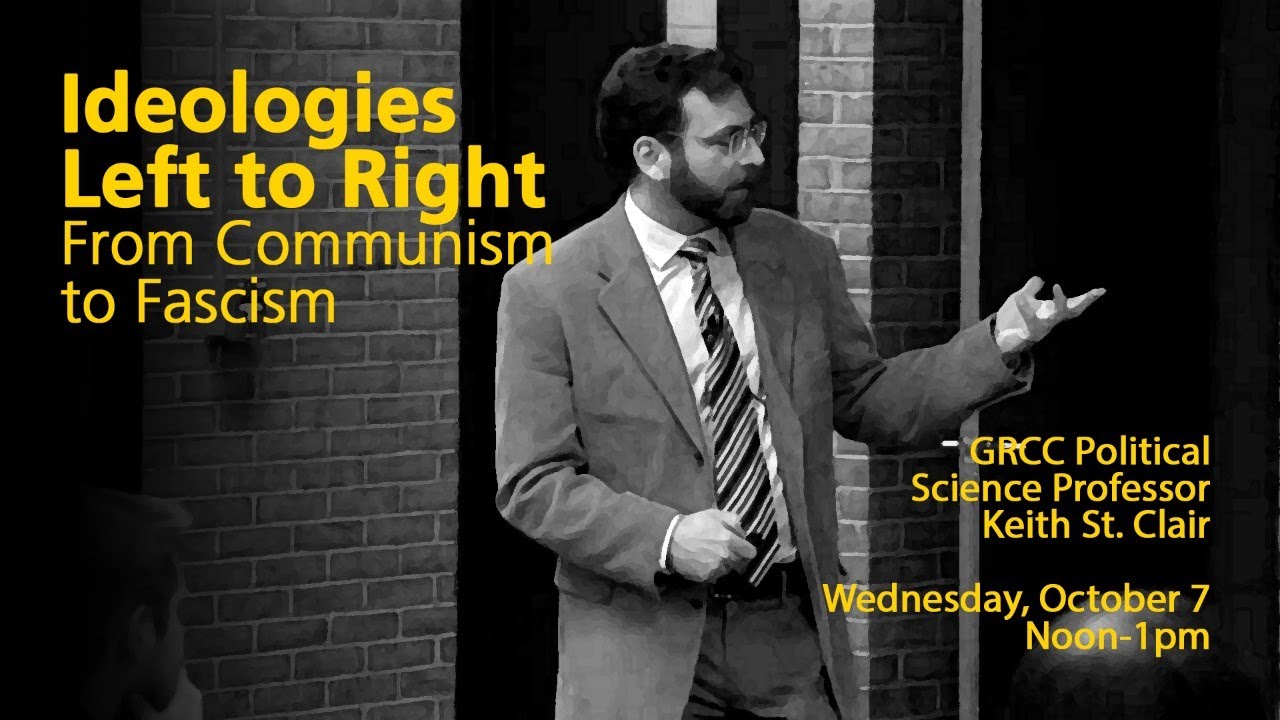
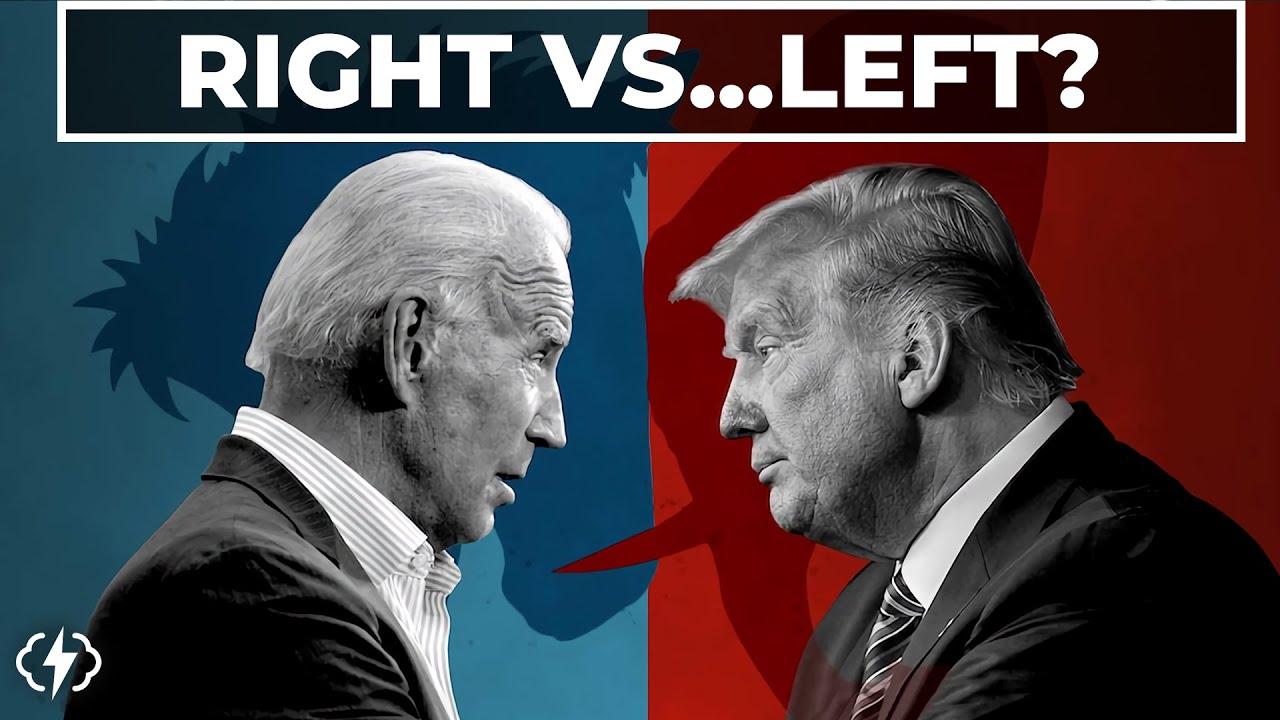
    Professor Keith St. Clair from Grand Rapids Community College provides a comprehensive exploration of political ideologies, focusing on their philosophical underpinnings, historical roots, and contemporary expressions. He explains that an ideology is a coherent philosophy about how government should govern, offering predictability in political behavior. The lecture traces the origins of the “left” and “right” political spectrum back to the 19th-century French National Assembly seating arrangements. The traditional American ideological divide is between liberals (left) and conservatives (right), but there are also more extreme ideologies on both ends, including communism and fascism.

    St. Clair contrasts the core beliefs of conservatives and liberals on economic and lifestyle issues. Conservatives favor minimal government intervention in the economy (laissez-faire) and advocate government involvement in promoting traditional social values, such as marriage between a man and a woman and restricting abortion and drug use. Liberals, conversely, support active government roles in regulating the economy to reduce inequality and provide a social safety net, while advocating minimal government interference in personal lifestyle choices like marriage equality, abortion rights, and drug use.

    Other ideologies discussed include libertarianism, which combines conservative economic views with liberal social policies, and populism, which calls for strong government intervention in both economic and social matters to protect the “little guy” and maintain social order. More extreme left ideologies, like socialism and communism, emphasize state control or overthrow of capitalist systems to achieve economic equality, whereas extreme right ideologies, such as nationalism and fascism, focus on a unified cultural identity, authoritarian leadership, and xenophobia.

    Professor St. Clair highlights the historical antagonism between communists and fascists, their use of violence, and contrasts them sharply despite superficial similarities in tactics. He stresses that political parties are not synonymous with ideologies, noting the shifting ideological affiliations of American Democratic and Republican parties over time, and the increasing polarization and loss of ideological overlap.

    The lecture also touches on the role of the internet in amplifying extremism, the dangers of identity politics in undermining democratic discourse, and the importance of trust in elections and free press in maintaining democracy. St. Clair critiques recent developments within the Republican Party, characterizing it as increasingly populist and nationalist under Donald Trump’s leadership, diverging from traditional conservatism. He concludes by urging the condemnation of all political violence and emphasizing the importance of understanding ideologies to predict political behavior while recognizing individual nuances.

  • How Left Is The American Left…And Why Didn’t Socialism Catch On Here?

    How Left Is The American Left…And Why Didn’t Socialism Catch On Here?

    [embedyt] https://www.youtube.com/watch?v=FYbtHGt2Zco[/embedyt]

    The video explores why socialism and a strong left-wing political movement have never fully taken root in the United States, especially compared to other Western countries like the UK and much of Europe. It begins by defining the American left primarily as the Democratic Party, which, despite popular belief, aligns more closely with center-right policies when compared internationally. This relative positioning arises because political labels like “left” and “right” are fluid and context-dependent rather than absolute. The video contrasts the American Democratic Party with parties in other countries, such as the British Labour Party and the Conservative Party, showing that policies considered left-wing or socialist in the U.S. are often mainstream or even center-right elsewhere.

    The reasons behind the absence of a strong socialist movement in the U.S. are multifaceted. The American electoral system, characterized by first-past-the-post voting and the Electoral College, structurally inhibits third parties and reinforces a two-party system. The historical legacy of the Red Scare and anti-socialist propaganda has stigmatized leftist ideologies in American culture, associating them with un-American and even evil forces. Organizational weaknesses within American socialist movements also contributed to their lack of long-term success, as they struggled to unify support and survive in a hostile environment. Additionally, capitalism’s adaptability has constantly evolved to neutralize socialist challenges, making systemic change difficult.

    Despite these challenges, the video ends on an optimistic note, encouraging viewers to believe that socialism can eventually flourish in the United States. It stresses the importance of education, activism, and resisting capitalist propaganda to prepare for a future when systemic change becomes possible, drawing inspiration from historical revolutions that seemed unlikely until they happened.