by Eric Wood
Share
The federal minimum wage in the United States has remained at $7.25 an hour since 2009, marking the longest period without an increase since its inception. This stagnation has significantly diminished the real value of the minimum wage, making it insufficient for workers to afford basic living expenses, such as a two-bedroom rental anywhere in the country. Despite growing productivity, minimum wage workers have not seen proportional wage increases; if wages had kept pace since 1968, the minimum wage would be $24 an hour today. The video argues strongly for raising the minimum wage to at least $15 an hour, presenting this as both a moral imperative and an economic necessity.
It addresses and debunks four common myths opposing minimum wage increases: the fear of job losses, the inability of small businesses to afford higher wages, the risk of runaway inflation, and the misconception that most minimum wage earners are teenagers who don’t need higher pay. Research consistently shows that raising the minimum wage does not reduce employment levels, but rather improves worker productivity, reduces turnover, and benefits businesses by attracting and retaining motivated employees. Furthermore, price increases due to wage hikes are minimal and temporary, and raising wages would stimulate economic growth by increasing consumer spending.
The video also highlights the social implications of a low minimum wage, noting that many minimum wage workers are adults supporting families, including a significant number of Black, Hispanic, and female workers whose economic disparities could be reduced through wage increases. It underscores the taxpayer burden of subsidizing low wages through social safety nets, costing an estimated $107 billion annually. Ultimately, raising the minimum wage is presented as a necessary step toward economic justice, fairness, and respect for workers in the wealthiest nation on earth.
Leave A Comment

[embedyt] https://www.youtube.com/watch?v=tQE0ldkiKo0[/embedyt] The video provides a historical overview of the federal minimum wage in the United States, beginning with its establishment in 1938 when President Franklin Roosevelt signed the Fair Labor Standards Act, setting the wage at 25 cents per hour. Importantly, the minimum wage is not automatically indexed to inflation; it only increases through
-
[embedyt] https://www.youtube.com/watch?v=3G3OmCMc1H4[/embedyt] The video transcript presents an in-depth historical and economic analysis of the minimum wage in the United States, its origins, evolution, and contemporary challenges. It begins by addressing common misconceptions about minimum wage laws, such as the belief that raising the minimum wage necessarily leads to job loss or economic downturn. It then
-
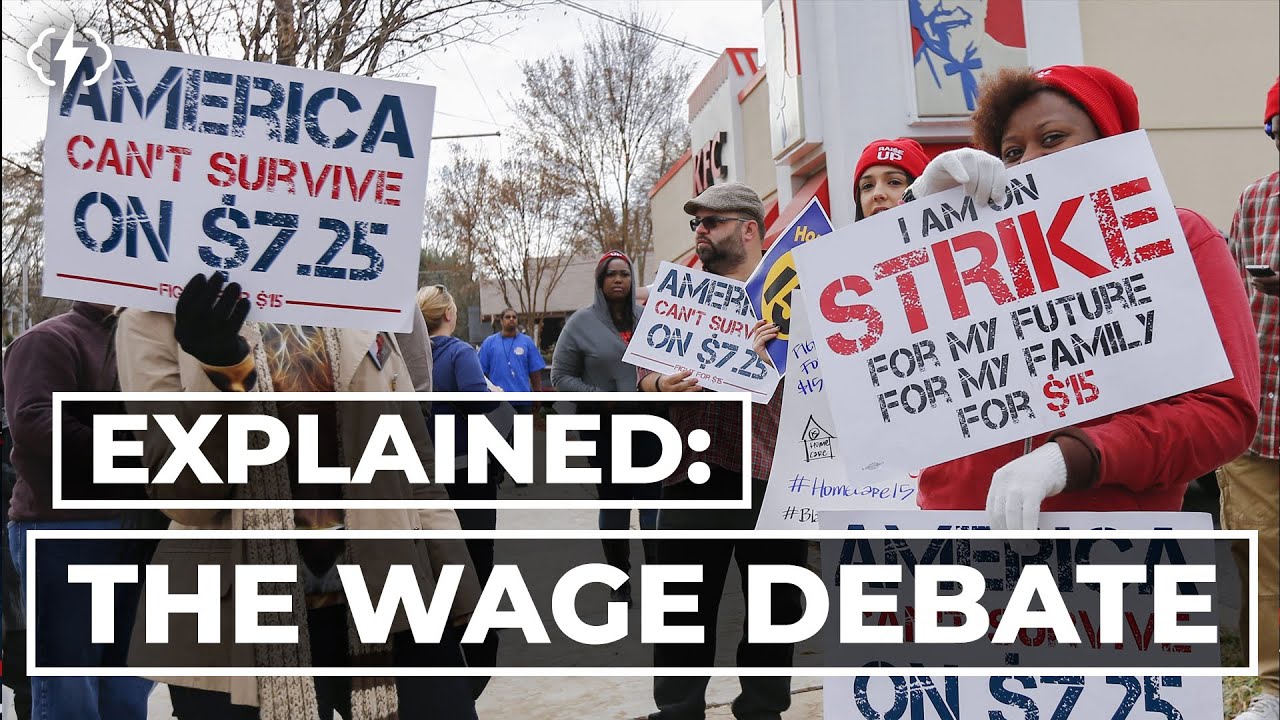
[embedyt] https://www.youtube.com/watch?v=hL5VOorY9pw[/embedyt] The video presents a comprehensive analysis of the U.S. federal minimum wage debate, exploring historical context, economic realities, common objections, and societal implications. It begins by outlining the origins of minimum wage legislation in the early 20th century, highlighting the exploitative conditions workers faced before laws like the Fair Labor Standards Act of
-
[embedyt] https://www.youtube.com/watch?v=v-8t0EfLzQo[/embedyt] The video transcript provides a comprehensive analysis of media bias, focusing on how mainstream media in Western capitalist democracies, particularly the UK and the US, do not merely report events neutrally but actively shape the interpretation and meaning of those events. Using the BBC’s 2020 Newsnight report on the English Channel migrant crossings