by Eric Wood
Share
The video explores the mechanisms by which democracies can remove elected leaders before the end of their terms, focusing on post-war experiences from eight stable democracies: the United Kingdom, United States, France, Germany, Japan, Israel, Brazil, and South Africa. It begins by questioning what constitutes valid grounds for early removal—whether criminal acts or other serious offenses—and discusses the legal and political challenges associated with each. Many countries provide immunity to sitting leaders against criminal prosecution, complicating efforts to hold them accountable through the judiciary. Instead, removal often hinges on political processes such as impeachment or votes of no confidence, which are governed by legislatures rather than courts.
The video highlights the ambiguity and political nature of these removal processes, noting that constitutional language around impeachable offenses or confidence votes is often vague and subject to partisan interpretation. Consequently, whether a leader can be removed often depends more on the political makeup of the legislature and party loyalty than on objective assessments of wrongdoing. Examples such as the impeachment trials of U.S. Presidents Bill Clinton and Donald Trump, Brazil’s impeachment of Dilma Rousseff, and no-confidence votes in parliamentary democracies illustrate how political calculations dominate these processes.
Parliamentary systems like those in Germany, Israel, Japan, and the UK allow relatively straightforward removal of leaders via no-confidence votes, often triggering emergency elections to maintain democratic legitimacy. However, the political incentives behind such votes can lead to frequent attempts driven by party interests rather than genuine concerns over competence or morality.
Ultimately, the video argues that while theoretically it makes sense for legislatures to have the power to remove bad leaders, partisanship often prevents fair and impartial decisions. Instead, the power of public opinion and media scrutiny often proves more effective at pressuring leaders to resign in disgrace. The video ends by inviting viewers to consider which democratic system they believe offers the best way to remove a bad leader.
Leave A Comment

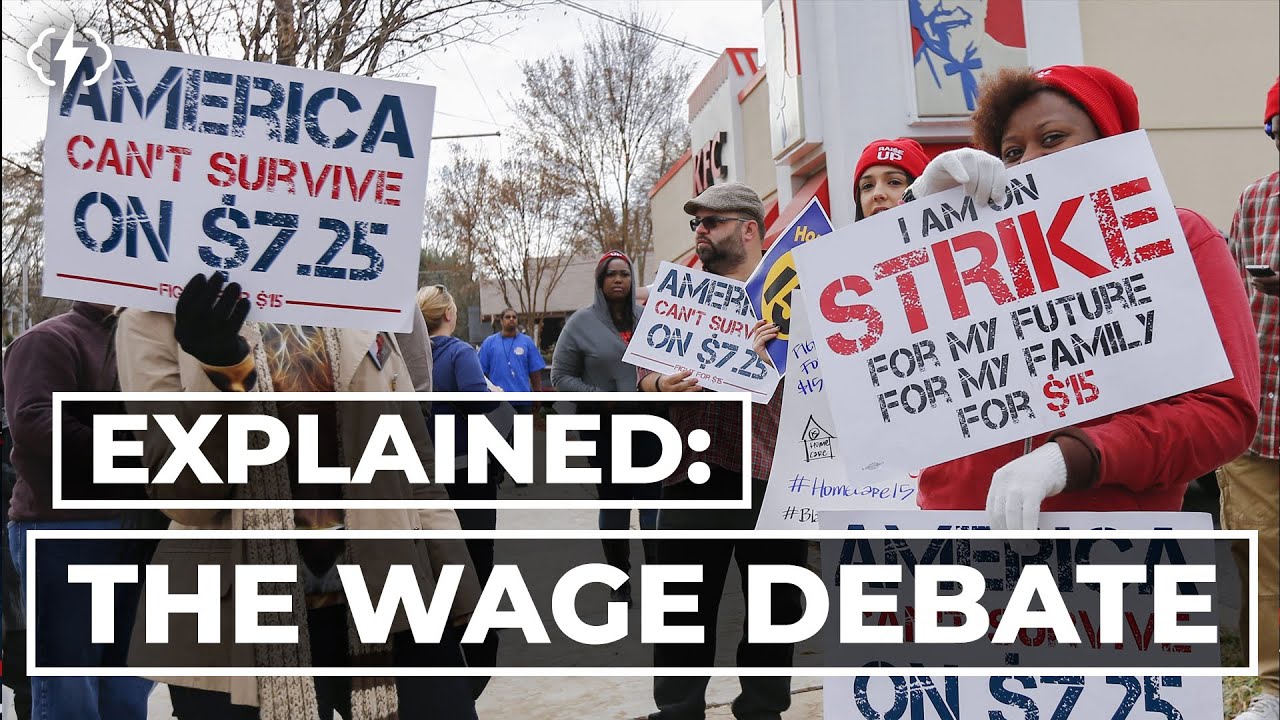
[embedyt] https://www.youtube.com/watch?v=tQE0ldkiKo0[/embedyt] The video provides a historical overview of the federal minimum wage in the United States, beginning with its establishment in 1938 when President Franklin Roosevelt signed the Fair Labor Standards Act, setting the wage at 25 cents per hour. Importantly, the minimum wage is not automatically indexed to inflation; it only increases through
-
[embedyt] https://www.youtube.com/watch?v=3G3OmCMc1H4[/embedyt] The video transcript presents an in-depth historical and economic analysis of the minimum wage in the United States, its origins, evolution, and contemporary challenges. It begins by addressing common misconceptions about minimum wage laws, such as the belief that raising the minimum wage necessarily leads to job loss or economic downturn. It then
-
[embedyt] https://www.youtube.com/watch?v=hL5VOorY9pw[/embedyt] The video presents a comprehensive analysis of the U.S. federal minimum wage debate, exploring historical context, economic realities, common objections, and societal implications. It begins by outlining the origins of minimum wage legislation in the early 20th century, highlighting the exploitative conditions workers faced before laws like the Fair Labor Standards Act of
-
[embedyt] https://www.youtube.com/watch?v=v-8t0EfLzQo[/embedyt] The video transcript provides a comprehensive analysis of media bias, focusing on how mainstream media in Western capitalist democracies, particularly the UK and the US, do not merely report events neutrally but actively shape the interpretation and meaning of those events. Using the BBC’s 2020 Newsnight report on the English Channel migrant crossings