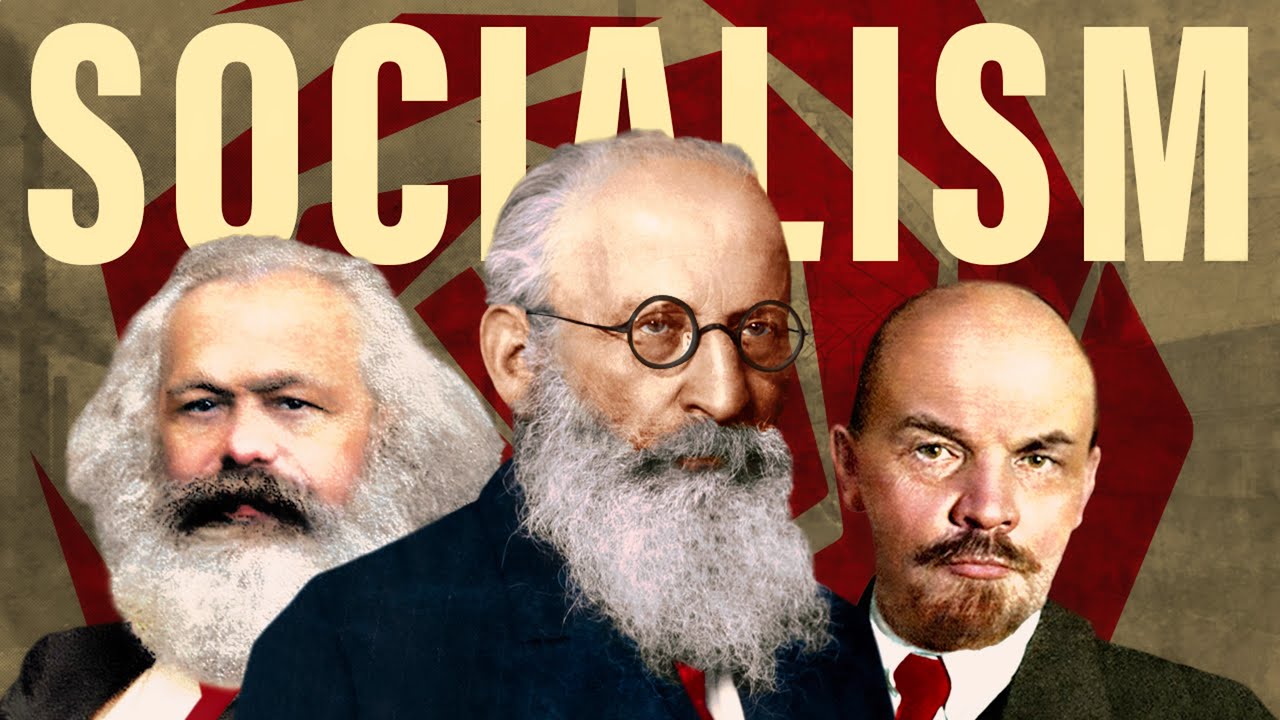
How Left Is The American Left…And Why Didn’t Socialism Catch On Here?

The video explores why socialism and a strong left-wing political movement have never fully taken root in the United States, especially compared to other Western countries like the UK and much of Europe. It begins by defining the American left primarily as the Democratic Party, which, despite popular belief, aligns more closely with center-right policies when compared internationally. This relative positioning arises because political labels like “left” and “right” are fluid and context-dependent rather than absolute. The video contrasts the American Democratic Party with parties in other countries, such as the British Labour Party and the Conservative Party, showing that policies considered left-wing or socialist in the U.S. are often mainstream or even center-right elsewhere.

The reasons behind the absence of a strong socialist movement in the U.S. are multifaceted. The American electoral system, characterized by first-past-the-post voting and the Electoral College, structurally inhibits third parties and reinforces a two-party system. The historical legacy of the Red Scare and anti-socialist propaganda has stigmatized leftist ideologies in American culture, associating them with un-American and even evil forces. Organizational weaknesses within American socialist movements also contributed to their lack of long-term success, as they struggled to unify support and survive in a hostile environment. Additionally, capitalism’s adaptability has constantly evolved to neutralize socialist challenges, making systemic change difficult.

Despite these challenges, the video ends on an optimistic note, encouraging viewers to believe that socialism can eventually flourish in the United States. It stresses the importance of education, activism, and resisting capitalist propaganda to prepare for a future when systemic change becomes possible, drawing inspiration from historical revolutions that seemed unlikely until they happened.
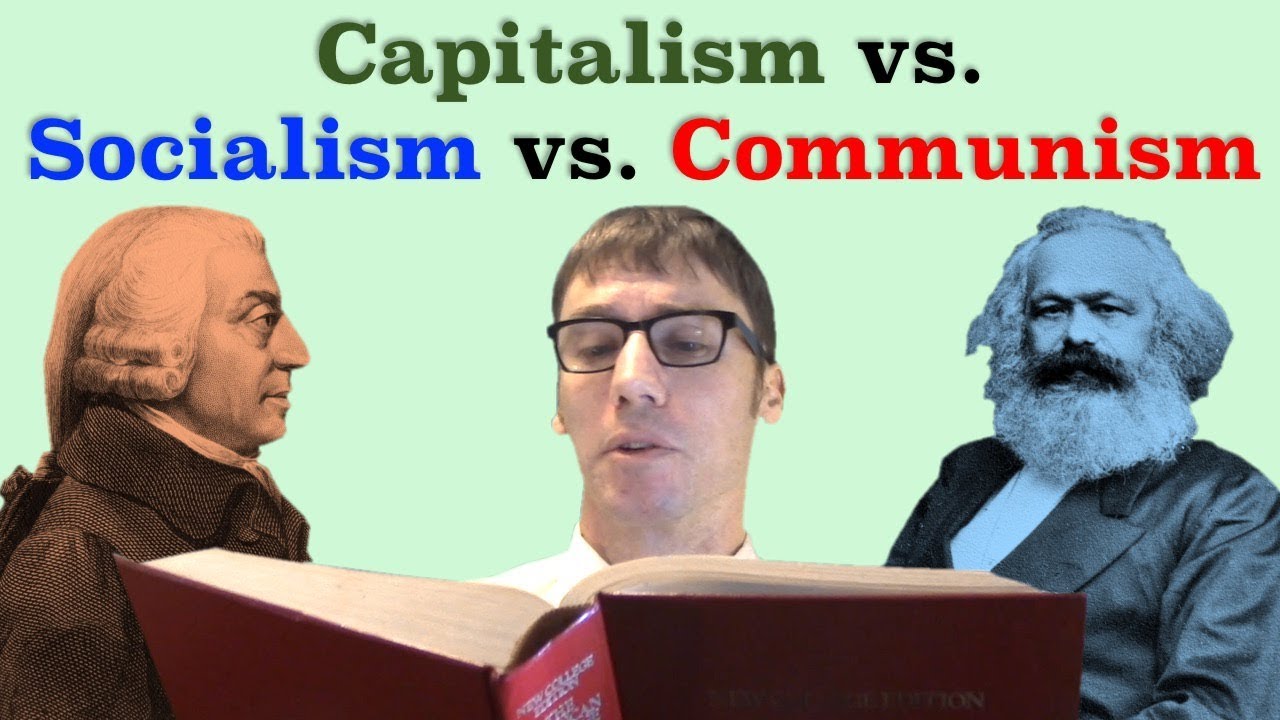

Capitalism, Socialism, and Communism Compared

The video provides a comprehensive exploration of the often misunderstood and politically charged terms capitalism, socialism, and communism. It opens by highlighting the polarized debates and criticisms surrounding these economic systems, with various commentators and critics weighing in on their perceived successes and failures. Capitalism is presented as an economic system characterized by private ownership and competition in a free market, though critics emphasize its associated social inequalities and human costs. Socialism is described both as a theory and system advocating community ownership of production, with historical ties to Marxist ideology; however, its practical implementations, such as in Venezuela, are criticized for economic failure and hardship. Communism is introduced as a radical theory promoting a stateless, classless society with communal ownership of all goods, but its real-world attempts have often led to authoritarian regimes and mass suffering.

The video stresses the confusion and misuse of these terms in contemporary discourse, where they are frequently weaponized or conflated incorrectly with political systems like fascism or totalitarianism. To clarify, the video turns to dictionary definitions and economic theory, breaking down capitalism, socialism, and communism as economic systems and political ideologies. It further expands on the four primary types of economic systems: traditional, command, market, and mixed economies, emphasizing that most modern economies are mixed, combining elements from each system.

The video also touches on the economic concepts of goods—private, club, common, and public—and highlights how debates over whether services like healthcare should be classified as public goods often spark accusations of socialism. Ultimately, the video encourages viewers to ask for clear definitions when these terms are used in discussions, acknowledging their evolving meanings and the complexity behind them.

SOCIALISM: An In-Depth Explanation

The video provides a comprehensive exploration of socialism, tracing its evolution from early critiques of liberalism and capitalism through its various ideological developments up to the present day. It begins by addressing the difficulty of defining socialism due to its broad and sometimes conflicting interpretations, emphasizing the need to understand socialism historically and contextually. The narrative situates socialism as a reaction against the inequalities produced by liberalism and the Industrial Revolution, highlighting its foundational principle of equalitarianism— the belief in the fundamental equality of all human beings and the moral imperative to mitigate social and economic hierarchies.

The video discusses early socialist thinkers such as Saint-Simon, Charles Fourier, and Robert Owen, who proposed communal and cooperative alternatives to unregulated capitalism. It then moves to the revolutionary socialism of Babeuf during the French Revolution, who demanded absolute equality and the abolition of private property, laying the groundwork for modern communism.

The discussion then advances to 19th-century socialism, focusing on the rise of class-consciousness and the proletariat, with significant emphasis on Karl Marx. Marx integrated German philosophy, particularly Hegelian dialectics, with critiques of political economy to develop a materialist theory of history centered on class struggle, historical progress, and the inevitable overthrow of capitalism by the proletariat. Marx’s vision of communism involved the abolition of private property (in terms of means of production) and the eventual disappearance of class distinctions.

The video follows the evolution of socialism post-Marx, explaining the split between orthodox Marxists who awaited revolutionary upheaval, and revisionists like Eduard Bernstein who advocated for gradual reforms within democratic systems. This division gave rise to democratic socialism, which accepts capitalism with social welfare and regulation rather than outright abolition.

The narrative culminates in an examination of Leninism, which posited that the revolution must be led by a vanguard of elite intellectuals rather than the proletariat itself, leading to an authoritarian form of socialism characterized by centralized control, repression of dissent, and one-party rule.

Finally, the video contrasts authoritarian socialist regimes with democratic socialism, which emerged prominently after World War II, embracing welfare states and market economies with social protections. It concludes by redefining socialism as a socioeconomic philosophy primarily concerned with shaping economic institutions according to various interpretations of equalitarianism, emphasizing that socialism’s core motivation is to mitigate the inequalities and injustices arising from unregulated capitalism.

Socialism for Absolute Beginners

This video explores the meaning of socialism, addressing common misconceptions and contextualizing socialism within historical and modern economic frameworks. It begins by acknowledging the growing interest in socialism among American millennials and the prevalent negative perceptions of the term. The presenter emphasizes that socialism fundamentally revolves around maximizing freedom for all people by ensuring rights such as education, healthcare, housing, and democratic participation, not just in theory but in practice.

The video contrasts socialism with previous economic systems, particularly feudalism and capitalism. Feudalism restricted freedom to a small noble class, with most people living under coercive control. Capitalism expanded freedom to more people by creating a class of free merchants and employers but maintained significant power imbalances between employers and workers. Today’s capitalism, while historically improving living standards, is increasingly failing many workers, as wealth is concentrated among a few while wages stagnate and economic security erodes.

Socialists argue that the problem lies in who owns and controls productive enterprises. Under capitalism, a few owners prioritize profit, often at the expense of workers’ wages and conditions. Socialism proposes collective, democratic ownership and decision-making, so that everyone affected by economic decisions has a voice. This approach aims to preserve capitalism’s benefits, like innovation and rising living standards, while eliminating exploitation and inequality.

The video also tackles misconceptions about socialism equating to government control or inefficiency, explaining that socialism means democratic control over production, which may or may not involve government structures. It highlights how current governments are shaped by capitalist interests and often fail ordinary people, and contrasts this with socialist goals of genuine democracy and equitable resource distribution.

Historical socialist experiments, such as Salvador Allende’s Chile, are examined to demonstrate that socialist policies can improve living conditions, though they have faced severe opposition, particularly from capitalist powers like the United States. The video acknowledges the challenges socialism faces in practice, including hostile global capitalism and geopolitical interference, but encourages imagining and working toward a better future. It concludes by inviting viewers to reconsider socialism beyond stereotypes and to engage in conversations about viable economic alternatives.