
Category: Videos

  • If You Think Biden and Harris Were Weak on the Border, Think Again

    If You Think Biden and Harris Were Weak on the Border, Think Again

    The video transcript explores the complex and nuanced approach the Biden-Harris administration has taken to secure the U.S. southern border, contrasting it with the rhetoric and policies of the Trump administration. Despite public perception and political attacks claiming Biden and Harris have ignored or failed on border security, the video reveals a multi-faceted strategy that has made significant progress in controlling illegal immigration through diplomatic efforts, administrative policy changes, and expanded legal pathways for migrants.

    The narrative begins by debunking the myth that Biden and Harris “ignored” the border crisis. While publicly the administration sounded more open to immigration, behind the scenes they implemented a variety of measures to tighten border control. One key element was Vice President Kamala Harris’s diplomatic efforts throughout Central and South America, aimed at addressing root causes of migration by fostering cooperation with multiple countries. This diplomatic push included the 2022 Summit of the Americas, where Biden and Harris secured commitments from nations like Mexico, Colombia, Costa Rica, and Ecuador to regulate migration flows more effectively, including offering legal status to Venezuelan migrants to reduce pressures on the U.S. border.

    Secondly, the administration undertook a series of administrative policies that restricted asylum eligibility, effectively deterring many migrants from attempting to cross illegally. Because the asylum system is overwhelmed and broken—a problem attributed largely to Congress’s inaction—Biden and Harris have imposed new rules making it harder for migrants crossing unlawfully to claim asylum, which led to a notable decline in illegal crossings.

    Finally, the administration expanded legal immigration pathways, allowing certain migrants to enter the U.S. legally after rigorous vetting processes, sponsorship requirements, and background checks. This strategy aims to reduce illegal immigration by providing viable, lawful alternatives, which conservative analysts have even praised for its effectiveness.

    The video concludes by emphasizing that while Biden and Harris’s approach may lack the dramatic messaging of Trump’s “invasion” rhetoric, their gradual, multi-layered strategy has in fact achieved significant results in securing the border without compromising American values or economic needs.

  • How Republicans Pulled Off a Massive Voter Purge

    How Republicans Pulled Off a Massive Voter Purge

    17 million American voters have vanished from electoral rolls. Why? Because states purge electoral rolls of ineligible voters just before elections. Yet Greg Palast, an investigative reporter who has been digging into vanishing votes for years, tells AJ+ that eligible voters have been struck from the rolls too.

    Often, people have had their votes purged without them even knowing.

    The video transcript exposes the systematic and illegal purging of hundreds of thousands of voters from voter rolls across the United States, disproportionately affecting voters of color and young people. Investigative journalist Greg Palast reveals how states like Georgia have wrongfully removed voters by falsely claiming they have moved, died, or been imprisoned—often based on flawed or unverifiable data.

    These purges are part of a broader strategy primarily orchestrated by Republican officials to suppress Democratic-leaning voters, particularly African American, Hispanic, and Asian American citizens. The transcript highlights mechanisms such as the Interstate Crosscheck system and “use it or lose it” policies, which penalize voters for inactivity or minor discrepancies in registration information.

    Palast argues that voter fraud is extremely rare—less likely than being struck by lightning—and that these purges are not about preventing fraud but about disenfranchising specific voter demographics. The video calls for a fundamental change: recognizing voting as an inherent right of every American citizen and ending voter purges and restrictive ID laws to protect the integrity of democracy.

  • “McJob” USA vs. GERMANY: Hourly Wages, Taxes, Contributions & More of Minimum Wage Workers

    “McJob” USA vs. GERMANY: Hourly Wages, Taxes, Contributions & More of Minimum Wage Workers

    This video offers a detailed comparison of wages, taxes, social contributions, and living standards between minimum-wage McDonald’s workers and their families in the United States and Germany. The analysis begins by contextualizing McDonald’s as a global employer with a franchise business model, highlighting its presence in both countries and the nuances in wages due to local economic factors. It explores entry-level crew member wages and progresses to family scenarios where one partner is a shift manager and the other a general manager. Key differences emerge not only in gross earnings but also in benefits such as paid time off, healthcare, unemployment insurance, and childcare costs.

    The video carefully accounts for taxes, social contributions, and mandatory benefits that influence net income and overall quality of life. While U.S. McDonald’s workers may earn slightly higher gross wages in some states, German workers benefit from comprehensive social safety nets including universal healthcare, paid holidays, and stronger unemployment insurance. Childcare costs and education expenses are also factored in, revealing significantly lower burdens for German families compared to their American counterparts.

    Ultimately, the video argues that evaluating wages without considering social benefits and living costs provides an incomplete picture. Although Americans may take home more cash, Germans enjoy greater financial security and peace of mind due to the social market economy. The video concludes by teasing an upcoming discussion on housing and food insecurity, which are critical to understanding the true living standards of minimum-wage workers.

  • Capitalism, Socialism, and Communism Compared

    Capitalism, Socialism, and Communism Compared

    The video provides a comprehensive exploration of the often misunderstood and politically charged terms capitalism, socialism, and communism. It opens by highlighting the polarized debates and criticisms surrounding these economic systems, with various commentators and critics weighing in on their perceived successes and failures. Capitalism is presented as an economic system characterized by private ownership and competition in a free market, though critics emphasize its associated social inequalities and human costs. Socialism is described both as a theory and system advocating community ownership of production, with historical ties to Marxist ideology; however, its practical implementations, such as in Venezuela, are criticized for economic failure and hardship. Communism is introduced as a radical theory promoting a stateless, classless society with communal ownership of all goods, but its real-world attempts have often led to authoritarian regimes and mass suffering.

    The video stresses the confusion and misuse of these terms in contemporary discourse, where they are frequently weaponized or conflated incorrectly with political systems like fascism or totalitarianism. To clarify, the video turns to dictionary definitions and economic theory, breaking down capitalism, socialism, and communism as economic systems and political ideologies. It further expands on the four primary types of economic systems: traditional, command, market, and mixed economies, emphasizing that most modern economies are mixed, combining elements from each system.

    The video also touches on the economic concepts of goods—private, club, common, and public—and highlights how debates over whether services like healthcare should be classified as public goods often spark accusations of socialism. Ultimately, the video encourages viewers to ask for clear definitions when these terms are used in discussions, acknowledging their evolving meanings and the complexity behind them.

  • Do We Really Need a Border Wall?

    Do We Really Need a Border Wall?

    The narrative that illegal immigration caused the border wall is reversed by historical evidence: the wall and other border fortifications emerged as a reaction to the criminalization of migration, not as a preventative measure before illegal crossings began. For much of U.S. history, the border was a loosely controlled zone facilitating economic exchange, especially in agriculture. The Bracero Program exemplifies this, allowing legal, circular migration that supported both Mexican laborers and American farmers. This symbiotic relationship was disrupted when immigration laws imposed strict quotas on Mexico, ignoring agricultural labor demands.

    The result was a paradox: illegal immigration increased because legal options disappeared, even as demand for labor remained constant. Border enforcement ramped up in response, but the policy failed to adapt to migrant strategies. Migrants shifted their crossing points to avoid detection, which increased their risk but allowed them to continue migrating. The rise in border deaths is a tragic byproduct of these enforcement tactics. The growth of smuggling networks further criminalized the process, inflating costs and dangers for migrants.

    Perhaps the most profound consequence was the end of circular migration. With crossing becoming more dangerous and costly, migrants chose to stay in the U.S. year-round, bringing families and establishing permanent residency without documentation. This phenomenon created the undocumented population that dominates immigration debates today. Ironically, the policies aimed at reducing illegal immigration contributed directly to the growth of the undocumented community.

    In recent years, the number of undocumented Mexican immigrants has fallen, due to socio-economic shifts in Mexico rather than stricter border policies. Mexico’s demographic transition—lower birth rates and an aging population—has reduced the pool of potential migrants. Economic factors, including the 2008 recession, also played a role by reducing U.S. labor demand and encouraging return migration. This reveals that external factors beyond policy enforcement significantly influence migration flows.

    Moreover, the profile of undocumented immigrants has evolved. Most now enter legally on visas and overstay, a process unaffected by border walls or patrols. This nuance is crucial for crafting effective immigration policies, as focusing solely on border security ignores the predominant source of undocumented immigration.

    Calls to build more walls and increase border patrols persist, driven largely by political symbolism rather than evidence-based assessments. These measures are expensive, ineffective, and ignore the root economic and demographic causes of migration. More comprehensive solutions would involve reforming visa programs, addressing labor market needs, and cooperating with source countries to manage migration flows humanely and efficiently.

    In conclusion, the history and dynamics of U.S.-Mexico migration highlight the limitations of militarized border policies and the unintended consequences of criminalizing economic migrants. A nuanced understanding of migration patterns, economic demands, and demographic shifts is essential for developing immigration policies that are both humane and effective. The border wall, while politically visible, represents a largely symbolic response to a complex issue that requires multidimensional solutions beyond physical barriers and enforcement escalation.

  • Political Spectrums Explained — Why is there a left wing and right wing?

    Political Spectrums Explained — Why is there a left wing and right wing?

    The video, hosted by Mr. Beat, explores the origins, meanings, and complexities of the political spectrum, particularly the labels “left wing” and “right wing.” It begins by highlighting the simplistic and often repetitive nature of current political discourse as seen in media outlets, before diving into the historical roots of these political terms. The concept of left versus right originated during the French Revolution in 1789 when members of the National Constituent Assembly physically sat on different sides depending on their stance toward the king’s veto power—those favoring tradition and monarchy sat on the right, while radicals seeking reform sat on the left. This seating arrangement evolved into the ideological division between conservatism and liberalism.

    The video then explains how this binary categorization expanded globally over the 19th and 20th centuries, becoming a shorthand for political ideologies during periods of intense social and political upheaval. However, it stresses that these labels are often oversimplified, as people’s views rarely fit neatly into left or right categories. Various alternative political spectrum models have been developed, including multi-axis charts like the Nolan Chart, Vosem Chart, and the Pournelle Chart, which consider dimensions beyond the traditional economic left-right divide, encompassing social attitudes, government role, and personal freedoms.

    Throughout the video, the host emphasizes the fluidity of political beliefs and the limitations of the left-right dichotomy. He recommends tools like the Political Compass and Isidewith.com to better understand individual political stances. The video concludes by questioning the utility of the “left” and “right” labels, suggesting they may do more harm than good in political understanding, and invites viewers to reflect on their own political positions beyond simplistic classifications.

  • The Capitol Riot Explained

    The Capitol Riot Explained

    The video provides a comprehensive, nuanced analysis of the January 6, 2021 Capitol riot, dissecting what happened, who participated, why it occurred, and its broader implications for American politics and society. It starts by debunking false narratives, such as the claim that Antifa orchestrated the riot, and clarifies the correct use of the term “fascism,” emphasizing that true fascism involves violent ultranationalism and not just authoritarian tendencies. The video details the chaotic events of the day: thousands of Trump supporters, motivated by the false “stop the steal” slogan, stormed the Capitol building, disrupting the certification of Joe Biden’s electoral victory. While much of the crowd appeared aimless, some had violent intentions, including kidnapping and harming politicians.

    The video then profiles the participants, revealing a diverse but disturbing mix that included wealthy elites, QAnon cultists, white supremacists, neo-Nazis, off-duty police officers, military personnel, and Republican elected officials. It highlights the irony of Confederate flags being displayed as a symbol of patriotism and exposes the deep infiltration of extremist ideologies within Trump’s base. The discussion moves to the motivations behind the riot, concluding that the event lacked cohesive planning or meaningful demands beyond retaining Trump’s presidency, a goal that would bring no material benefit to most rioters.

    The aftermath is dissected critically, showing how the government’s response—social media crackdowns, expanded surveillance, anti-terror legislation, and no-fly lists—raises serious concerns about civil liberties and the potential misuse of power against political dissent. The video warns that such measures will likely be more harmful to left-wing activists than to right-wing extremists. The proposed second impeachment of Trump is seen as symbolic but insufficient to address the systemic issues within the Republican Party, which the video argues has become a reactionary, white supremacist, and authoritarian force.

    Finally, the video addresses the broader political landscape, rejecting calls for a “strong Republican Party” and instead advocating for a genuine left-wing alternative. It stresses that the riot was a misguided and counterproductive expression of political frustration, lacking clear goals that could improve people’s lives, unlike uprisings elsewhere motivated by demands for meaningful reform. The video closes by cautioning that America faces a dangerous future marked by increased division, authoritarianism, and a broken political system unable to address real social and economic needs.

  • Every Type of Government Explained

    Every Type of Government Explained

    The video by Mr. Beat, featuring Dr. David Miano from World of Antiquity, provides a comprehensive overview of what government is, the various types of governments, and their historical origins. It begins by defining government simply as the people who run society and create rules that are enforced to maintain order. Politics is described as the way power is distributed within a government. The fundamental purpose of government is to protect society, resolve conflicts, defend against external threats, and provide public services.

    Governments fall into two broad categories: democratic and undemocratic (authoritarian). Democratic governments are those where power belongs to the people, exercised either directly or through elected representatives. The origins of democracy trace back to prehistoric tribal consensus and the classical Greek city-state of Athens, which practiced a direct democracy where male citizens could vote and hold office. Modern democracies are mostly representative, where elected officials make decisions on behalf of the citizens, with republics being the most common form. The video also explains parliamentary and presidential democracies, as well as less common forms like demarchies and nonpartisan democracies.

    In contrast, undemocratic governments, or authoritarian regimes, deny people a voice in governance. Autocracies, ruled by one person, include monarchies (power inherited) and dictatorships (power seized). The video explores the Roman origins of the terms dictator and republic, emphasizing how power was concentrated or shared among magistrates and assemblies. Oligarchies, where power is held by a few, are discussed as historically the most prevalent form of government, with aristocracies (rule by nobility), plutocracies (rule by the wealthy), stratocracies (rule by the military), and theocracies (rule by religious leaders) as specific examples. Most oligarchies tend toward kleptocracy, where rulers enrich themselves at the expense of the populace.

    Anarchy, the absence of government, usually arises after revolutionary turmoil but is also a political philosophy advocating for no government at all. The video concludes by noting that governments often combine multiple types and qualifiers, such as constitutional monarchies, and that the United States is an example of a constitutional democratic republic. Mr. Beat shares his personal preference for a parliamentary, nonpartisan republic and encourages viewers to engage in discussion.

  • European Political Parties EXPLAINED

    European Political Parties EXPLAINED

    The video provides an accessible overview of the main political parties typically found in a generic European parliamentary system, explaining their ideological stances and how they differ from the more binary political landscape seen in the United States.

    It highlights seven primary political groups: the Workers’ Party (center-left, originally radical but now moderate, focused on worker solidarity and redistribution within capitalism), the Peoples’ Party (center-right, conservative on moral and economic issues but rooted in Christian benevolence), the Liberals (advocates of minimal state intervention and economic freedom), the Greens (environmentally focused, socially progressive, ranging from left-wing eco-socialists to moderate ecologists), the National Conservatives (right-wing, nationalist, Eurosceptic, tough on crime), the Far Left (radical anti-capitalists pushing for a large state and equality through redistribution), and the Right-Wing Populists (nationalist, anti-immigration, critical of globalization, often accused of fear-mongering).

    The video emphasizes the complexity of European politics, where multiple parties compete on various issues beyond the simple left-right divide familiar in the US, resulting in diverse coalitions and shifting alliances depending on the topic.

    It stresses that understanding European politics requires recognizing this multiparty dynamic and the nuanced positions parties take on a wide array of policy matters.

  • Germany’s “NON-CAPITALISM SOLUTION” to the Housing Crisis

    Germany’s “NON-CAPITALISM SOLUTION” to the Housing Crisis

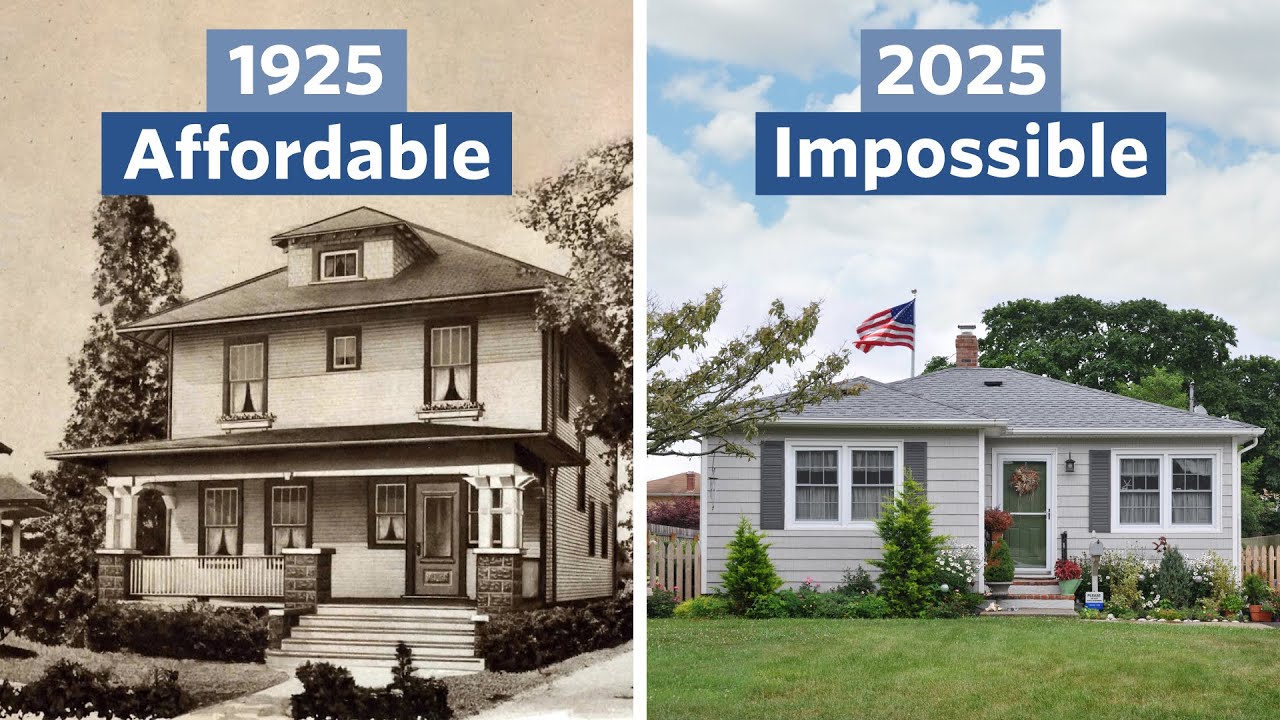
    The video explores the concept of housing cooperatives (co-ops) as a compelling solution to the affordable housing crisis in the United States and beyond. It begins by highlighting the severe shortage of affordable housing in the U.S., where millions of renters spend an unsustainable portion of their income on housing costs, exacerbated further by high interest rates and inflated home prices. Against this backdrop, the video introduces housing cooperatives—collective legal entities where members buy shares to access housing units, blending the benefits of renting and owning without traditional mortgages or landlords.

    Originating from a German term for cooperative housing, co-ops offer residents lifelong tenancy, democratic governance, and affordability well below market rates. Unlike renting or owning individual condominiums, co-op members jointly own the property and have a direct say in community decisions. This model fosters a strong sense of community and shared responsibility, with some co-ops requiring members to contribute time to maintenance or communal activities.

    The video further explains how co-ops function financially, including the distribution of dividends from invested pooled funds. It draws parallels between co-ops in housing and familiar retail cooperatives like REI or Costco, showing how collective purchasing power reduces costs. The German model, in particular, serves as a successful example: over 3 million people belong to housing cooperatives, comprising more than 5% of all apartments in the country. These co-ops have a long history, especially flourishing post-World War II to address housing shortages.

    In the U.S., multifamily housing construction is low, and financing for condos and co-ops is challenging, limiting their development. Yet, co-ops require less upfront capital than condos, making them an attractive option, especially for first-time buyers and smaller households. Despite their benefits, cultural preferences for single-family homes and zoning restrictions hamper co-op growth in the U.S. The video discusses how deep-rooted American ideals about homeownership and wealth accumulation through home equity contrast with the cooperative model’s communal approach.

    Finally, the video stresses the urgent need to expand cooperative housing as an affordable, sustainable, and community-oriented alternative to traditional housing markets. It encourages viewers to consider co-ops as a viable option for alleviating housing crises and invites discussion on their potential role in the U.S. housing landscape.