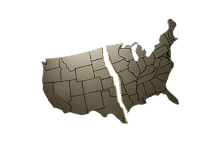
The Day Everything Becomes Political
The first alert lands before anyone understands the event. A phone lights up on a desk. Another buzzes in a locker. A television in an airport changes tone. People stop mid-sentence and look for the newest line of text, the newest video, the newest official statement, the first explanation that seems to hold. For a few minutes, the country inhabits the same uncertainty.
Then the sorting begins. One person wants to wait. Another wants a name. A pundit wants a frame. A politician wants blame. A platform wants engagement. A frightened public wants meaning before the facts can bear the weight. By nightfall, the event has become more than an event. It has become a test of loyalty, a battlefield of assumptions, and a preview of the next national argument.
Major events do not divide Americans simply because people are callous or foolish. They divide us because crisis compresses time. In ordinary life, a citizen can compare sources, sleep on a claim, ask a local official, or read the document. During a crisis, people reach for familiar interpreters. They trust the voices that have explained previous dangers. They suspect the institutions they already suspect. They fit new facts into old injuries.
History shows the pattern. Wars, attacks, pandemics, police killings, economic crashes, storms, school shootings, court decisions, and election disputes all begin with some concrete disruption. A building falls. A city floods. A market freezes. A video spreads. A hospital fills. A court releases an opinion. The public needs facts, competence, and care. Instead, it often receives a race to own the story.
Institutions matter most at that moment. A clear public agency can slow panic. A trusted local official can translate national uncertainty into practical steps. A responsible newsroom can separate confirmed facts from rumor. A court, election office, school district, health department, or emergency manager can explain what it knows, what it does not know, and when it will update the public. Trust does not require perfection. It requires visible honesty under pressure.
But institutions enter crises with reputations already formed. If people have experienced government as distant, confusing, or dishonest, they will not suddenly grant it authority when the stakes rise. If media outlets have trained audiences to expect betrayal from everyone else, the audience will treat caution as cover-up. If leaders have spent years turning opponents into enemies, a shared emergency will not magically produce a shared public.
The worst crisis narratives offer instant certainty. They identify a villain before the evidence arrives, flatten tradeoffs, erase local details, and turn grief into ammunition. They make citizens feel informed while narrowing what they can see. A person who shares the first satisfying explanation may feel useful. In truth, they may be helping panic harden into false memory.
A better civic habit is not passive skepticism. It is disciplined attention. Ask what has been confirmed. Ask who confirmed it. Ask what remains unknown. Ask whether the clip shows the whole event, whether the statistic compares the right things, whether the official source has authority over the question, and whether the person demanding immediate outrage benefits from confusion.
Major events reveal the condition of the public square before the event occurred. A society with weak trust, thin local news, cynical leaders, and isolated citizens will process crisis badly. A society with habits of verification, durable local institutions, and citizens willing to wait for facts has a better chance. The difference shows up not only in what people believe but in what they do next.
The next alert will come. It may come as weather, violence, markets, courts, elections, or war. Before that day, choose a crisis rule. Wait for confirmation before sharing. Prefer primary sources when practical. Notice who wants you furious before you know enough. In a crisis, citizenship begins with the rarest public act: refusing to become useful to confusion.
The public question behind Major Events is not merely whether people feel strongly about the issue. They do. The better question is where the pressure enters ordinary life and which institution has the power to relieve or worsen it. In The Day Everything Becomes Political, that pressure appears through a scene rather than a slogan because civic problems become clearest when someone has to make a decision with imperfect choices.
A reader can use the same lens locally. Look for the office, employer, market rule, public habit, or private contract that narrows the available options. Then ask who benefits from the present arrangement, who absorbs the risk, and what information remains hidden from the person making the hardest choice. That question turns Major Events from an argument about attitude into an inquiry about design.
The historical lens format matters in The Day Everything Becomes Political because it keeps the focus on cause and consequence. A purely moral argument might produce applause, but it rarely shows where repair begins. A purely technical argument may identify a lever and forget the person standing next to it. The best public writing has to do both: preserve the human stakes and clarify the machinery that shapes them.
In The Day Everything Becomes Political, that machinery usually contains tradeoffs. Better rules can create costs. Faster help can require better verification. More local control can protect community voice or preserve exclusion. More market freedom can encourage innovation or deepen imbalance. The useful move is not to pretend tradeoffs disappear. It is to name them early enough that citizens can decide which burden belongs where.
The practical invitation is to carry one sharper question into the next conversation about Major Events: what would have to change for the person in this story to have a real option, not just a different form of pressure? The answer may be a policy, a habit, a public record, a workplace rule, a local meeting, or a better-designed doorway. Whatever the tool, the first step is locating the point where life and power meet.
The practical lesson in Major Events is not to reduce public life to one argument. The better habit is to follow the pressure to the place where someone must make a choice, then ask which rule, price, office, employer, institution, or missing option shaped that choice. That discipline turns frustration into a clearer public question and gives citizens something more useful than blame.