by Eric Wood
Share
Ten sentences. That’s really what the Bill of Rights is - ten short passages, none longer than a paragraph, added to the Constitution just two years after it took effect. They protect the freedoms Americans reach for most often without thinking about where they come from: the right to say what you think, to practice your faith or none at all, to not have soldiers move into your house, to not be searched without reason, to get a lawyer if you’re accused of a crime. This page is the starting point - a short history of why these amendments exist, what each one actually says, and where to go to read any of them in full.
A bill of rights is what the people are entitled to against every government on earth.
Thomas Jefferson, letter to James Madison, 1787
Why the Constitution needed a Bill of Rights
The original Constitution, signed in 1787, didn’t have one. That was deliberate - its drafters believed a federal government with only specifically listed powers had no need to separately promise it wouldn’t abuse powers it was never given in the first place. Not everyone agreed. During the state ratification debates, a group of critics who became known as the Anti-Federalists argued that leaving rights unwritten left them unprotected - that a future Congress, given enough incentive, could reinterpret “necessary and proper” to mean whatever it wanted, and the states would have nothing specific to point to in response.
Virginia had already tested the idea a decade earlier. George Mason’s 1776 Virginia Declaration of Rights spelled out protections for speech, religion, and due process well before the federal Constitution existed, and it drew directly on England’s own 1689 Bill of Rights - a document written in response to a king who had suspended laws, packed juries, and disarmed his opponents without any process at all. By the time the ratification conventions were underway, several states made clear they’d approve the Constitution only on the understanding that amendments protecting individual rights would follow immediately.
James Madison took on the job of writing them, somewhat reluctantly - he’d originally sided with the Federalists who thought a bill of rights was unnecessary, but he changed his position once it became clear that a promise of amendments was the price of ratification in several key states. He introduced his proposals to the First Congress on June 8, 1789. The House and Senate each trimmed the list before agreeing on twelve amendments to send to the states in September 1789.

Worth knowing
Only ten of the twelve proposed amendments were ratified by the states on December 15, 1791 - those became the Bill of Rights. The first proposed article, about how many people each member of the House should represent, was never ratified and has no effect today. The second, which delayed any pay raise Congress voted itself until after the next election, sat unratified for exactly 203 years before Michigan’s ratification in 1992 finally pushed it over the three-fourths threshold - it’s now the 27th Amendment, the most recent addition to the Constitution.
The Ten Amendments
Each amendment below has its own page - the full original text, what it actually means in practice, how courts have applied it, and, where a real live debate exists, how people on the left and right tend to see it differently.

First Amendment
Religion, speech, press, assembly, and petitioning the government.

Second Amendment
The right to keep and bear arms, tied to a “well regulated Militia.”

Third Amendment
No quartering soldiers in private homes without consent.

Fourth Amendment
Protection from unreasonable searches and seizures.

Fifth Amendment
Due process, grand juries, double jeopardy, and self-incrimination.

Sixth Amendment
The right to a speedy trial, an impartial jury, and legal counsel.

Seventh Amendment
The right to a jury trial in federal civil cases.

Eighth Amendment
No excessive bail or fines, no cruel and unusual punishment.

Ninth Amendment
Rights not listed in the Constitution are still retained by the people.

Tenth Amendment
Powers not given to the federal government belong to the states or the people.
Why it still matters
These aren’t retired historical artifacts. Federal courts apply the Bill of Rights constantly, and the questions it raises are rarely settled for good - what counts as an “unreasonable” search changes as technology changes; what “cruel and unusual” means has never been fixed to one list of punishments; how far “the freedom of speech” extends online didn’t have an obvious answer in 1791 because the internet didn’t exist. Almost every major Supreme Court term includes at least one Bill of Rights case, and most Americans encounter these amendments directly at some point - during a traffic stop, on jury duty, in a workplace dispute over speech, or simply in an argument about what the government can and can’t do to them.
Understanding what these ten amendments actually say - not the shorthand version, the real text - is one of the most practical pieces of civic knowledge available. It’s the difference between knowing you have a right and knowing what that right actually covers, where its edges are, and why people who agree on the text can still disagree sharply about what it means in a specific case.
Leave A Comment
Eighty-five essays written under one shared pen name to win over a skeptical New York - who actually wrote them, why the secrecy, and why courts still cite them today.
Why the Declaration of Independence isn't a legal document, what it actually argues, and how its language has shaped American rights movements ever since.
The Declaration of Independence, The Federalist Papers, and the Constitution and Bill of Rights - three documents, three different jobs, and how they relate to each other.
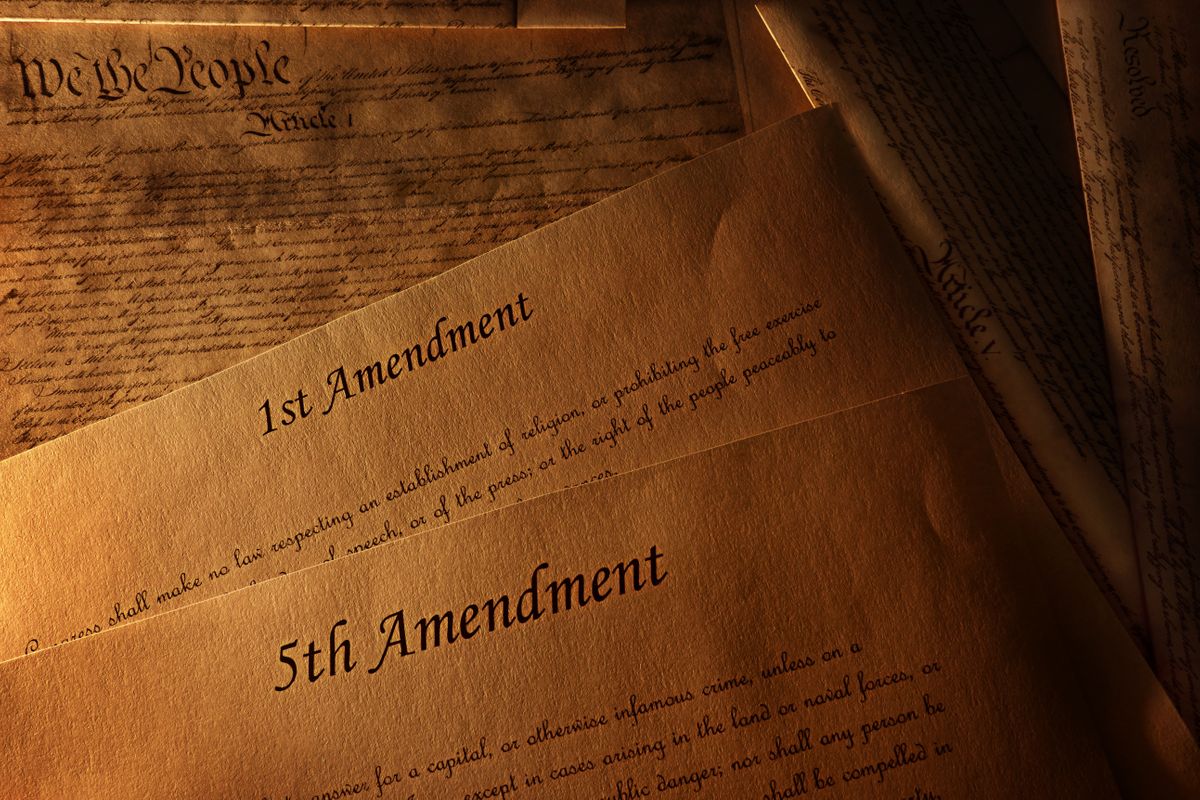
Powers not given to the federal government belong to the states or the people - the constitutional basis for federalism, and where courts have actually enforced it.