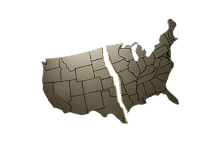
These events exposed the growing divide in how Americans see justice, democracy, and the role of government. They were not just political moments; they were emotional, visceral, and deeply personal for millions of people across the country.
The protests that erupted in 2020 following the murder of George Floyd were fueled by years of frustration over racial injustice and police violence. Supporters saw these demonstrations as a long-overdue demand for accountability, a fight for the country to live up to its promise of “liberty and justice for all.” Opponents, however, saw the riots, property damage, and violent clashes with police as evidence of lawlessness and chaos. The left largely viewed the protests as a necessary movement for civil rights, while the right saw them as a breakdown of law and order.
Just a few months later, protests of another sort developed in the country. These particular protests did not happen in streets, across the country, they took place in our nation’s capitol.
On January 6, 2021, thousands of Trump supporters stormed the U.S. Capitol in an attempt to overturn the results of the 2020 election. Many of those who participated believed they were defending democracy against a fraudulent election, acting on what they saw as patriotism. Others saw the attack as an act of domestic terrorism—an assault on the very foundation of American democracy. The right often framed the rioters as misguided but passionate Americans, while the left viewed them as a dangerous threat to the rule of law.
These two events were very different in nature, but they share something important: they illustrate how Americans live in vastly different realities depending on their political perspective.
If we ever hope to bridge the divides in our country, we must first understand them.
The Local Protest That Took Over The World
The tragic death of George Floyd became a flashpoint for deep-seated anger and frustration over racial injustice, police brutality, and systemic inequality. The 2020 Black Lives Matter protests highlighted the stark ideological divide between the political left and right in the United States.
George Floyd, a 46-year-old Black man, was murdered by a police officer in Minneapolis, Minnesota, during an arrest. Derek Chauvin, the officer in question, knelt on Floyd’s neck for over eight minutes, even as Floyd repeatedly begged for his life. The viral video of the killing sparked outrage across the U.S. and quickly spread to other parts of the world. Floyd’s death, combined with the long history of racial violence against Black Americans, became a symbol of systemic racism and a rallying cry for activists and ordinary people alike.
A Brief Timeline of Minneapolis Protests
The murder of George Floyd on May 25, 2020, in Minneapolis, Minnesota, ignited a series of protests and events that significantly impacted the city and resonated worldwide.
The story began with a report of a fake $20 bill. A report was made on the evening of May 25, 2020, when Mr. Floyd bought a pack of cigarettes from Cup Foods, a grocery store. Believing the $20 bill he used to be counterfeit, a store employee reported it to police.
At around 8:08 PM, two police officers arrived and approached Mr. Floyd, who was sitting with two other people in a car parked around the corner. After approaching the car, one of the officers, Thomas Lane, pulled out his gun and ordered Mr. Floyd to show his hands. Prosecutors do not explain why Mr. Lane thought it necessary to draw his gun.