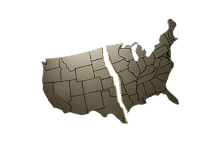
On virtually every political topic, the political right and left will provide details not simply tinged with their own particular bias—they often provide completely different facts. Simply asking each side who won the 2020 presidential election will yield different results depending on who you ask.
These differences reflect not just policy disagreements but also contrasting worldviews about the role of government, the nature of society, and the pursuit of social and economic progress. Over the past several decades, the economic landscape for the average American has undergone significant changes, particularly in areas such as wages, housing, and everyday living expenses.
Why Left and Right Seem Worlds Apart
America is a country built on debate. From the moment our founders gathered to draft the Constitution, there has never been a time when we all agreed on everything. The clash of ideas has always been part of who we are, and in many ways, it has helped us grow.
But today, something feels different. Our political disagreements no longer feel like healthy debate—they feel like a battle. Conversations about the future of our country quickly turn into arguments. Families avoid talking about politics at the dinner table. Friendships end over ideological differences. It seems like we’re not just disagreeing anymore; we’re speaking entirely different languages.
If you’ve ever wondered why a friend, family member, or coworker can look at the same set of facts and come to an entirely different conclusion, you’re not alone. Many Americans feel frustrated, confused, or even angry at those on the “other side.”
- Conservatives often see liberals as reckless, naive, or trying to change too much too quickly.
- Liberals often see conservatives as stubborn, heartless, or standing in the way of progress.
Both sides feel like they are fighting for the soul of the country, and both feel like the other side is dragging it in the wrong direction.
But what if the real problem isn’t that we want completely different things? What if the real divide isn’t about our goals but about how we frame them?
In reality, most Americans—whether they lean left or right—want many of the same things:
- Good jobs
- Safe communities
- A government that works for us rather than against us
- Opportunities for our children
- A strong economy
- A country that lives up to its highest ideals
The difference lies in the language we use and the ways we prioritize these goals:
- When conservatives talk about economic policy, they often emphasize personal responsibility, entrepreneurship, and limiting government interference.
- When liberals talk about the same issue, they might focus on fairness, systemic barriers, and the need for government action to ensure opportunity for all.
- When conservatives talk about crime, they may emphasize law and order, while liberals may focus on criminal justice reform.
Both want safer communities, but they have different ideas about how to achieve them.
For too long, these differences in language and approach have been used to divide us. Politicians, media outlets, and those in power have benefited from keeping Americans angry at each other rather than working together to solve problems.
Before we can solve the challenges facing our country, we must first understand why we disagree, where our beliefs come from, and how we can begin to talk to one another again. You may not change your mind on any given issue—but you will be better equipped to have conversations that don’t end in frustration or anger. And that, perhaps more than anything else, is the first step toward building a stronger, more united country.
What We Mean by Left and Right
The terms “left” and “right” in modern politics originated during the French Revolution in the late 18th century, specifically in the National Assembly of 1789.
- Right (conservatives): Members who supported the monarchy, aristocracy, and the Catholic Church occupied the right side of the Assembly. They sought to maintain the power structures of the Ancien Régime, resisted revolutionary changes, and prioritized stability and traditional hierarchies.
- Left (revolutionaries/progressives): Those who aimed to abolish the monarchy, dismantle aristocratic privilege, and establish a republic founded on liberty, equality, and fraternity occupied the left side. They sought to empower the working class, reduce the Church’s influence, and create a more democratic government.
Over time, the meanings of “left” and “right” evolved globally:
- Political Right: Links to conservatism, emphasizing traditional values, limited government intervention in the economy, and individual liberties. Often prioritizes national identity, law and order, and cultural norms. Some factions reflect far-right nationalism and authoritarianism.
- Political Left: Supports progressive social policies, wealth redistribution, government intervention in the economy, and reduced inequality. Encompasses moderate social democracy to more radical socialism or communism, generally prioritizing collective well-being over individual gain.
These terms continue to reflect the tension between tradition and progress, individualism and collectivism, and change versus preservation—a legacy of the French Revolution that remains relevant today.
The Three Biggest Words That Tear Americans Apart
For decades, Americans have been taught to fear socialism and communism while embracing capitalism as the only acceptable economic system. This narrative has been constructed to protect the wealth and power of the elite at the expense of the working class.
- Capitalism: Businesses are owned by individuals; all profits are kept by the owners.
- Socialism: Businesses are owned by workers; profits are shared among them.
- Communism: Businesses are owned by the government; profits are distributed to citizens.
While simplified, these definitions highlight the economic distinctions often misrepresented in political discourse.
Socialism, Capitalism, and American Ideals
Capitalism: Encourages innovation and economic growth but can lead to wealth inequality and corporate dominance.
Socialism: Emphasizes social welfare and equitable wealth distribution; examples in the U.S. include Social Security, public education, and Medicare.
Communism: Aims for a classless society; historically associated with authoritarian regimes rather than true communal ownership.
Socialism aligns with the American commitment to general welfare and ensuring citizens’ access to basic needs. Capitalism aligns with personal liberty and entrepreneurship, but without regulation, it risks undermining democracy. Democratic socialism offers a model that preserves freedoms while promoting economic fairness.
Countries like Sweden and Germany blend socialist policies with market economies, achieving high innovation and quality of life. Many American institutions—credit unions, worker cooperatives, public libraries, the postal service—already reflect socialist principles.
By embracing policies that balance capitalism with social welfare, the United States could strengthen the American Dream, ensuring prosperity is shared rather than concentrated.
Understanding the Political Spectrum
- Left (Communism, Socialism, Social Democracy): Focus on collective action, equality, and social welfare.
- Center (Liberalism, Centrism): Pragmatic balance, combining free markets with social safety nets.
- Right (Conservatism, Libertarianism, Fascism): Emphasis on tradition, personal responsibility, limited government, and—at the extreme—authoritarianism and nationalism.
How the Left and Right Took Shape in America
The Republican Party initially fought to end slavery and expand civil rights, while the Democratic Party was largely conservative. Over time, coalitions shifted:
- Progressive Era: Reforms to curb corporate power, improve workers’ rights.
- New Deal: Democratic expansion of government intervention for relief and reform.
- Civil Rights Movement: Party realignments leading to today’s ideological landscape.
Today:
- Democrats: Left, advocate government intervention for fairness, civil rights, environmental protection.
- Republicans: Right, favor limited government, free markets, traditional social values.
The Reality
Most Americans want the same outcomes—good jobs, economic stability, safety, and effective governance—but they differ on methods. Regional, cultural, and internal party differences make the political landscape more complex than simple left-right labels.