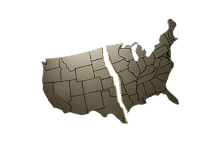
The same sun rose over the United States on January 6, 2021, as had risen during the summer of 2020.
The same flag flew. The same Constitution governed. Yet as protesters gathered at the Capitol in Washington, D.C., and as demonstrators filled streets across America months earlier, it seemed as though they lived in completely different countries.
The events of January 6 and the Black Lives Matter protests revealed not just policy disagreements but fundamentally different ways of seeing the same reality.
Two Events, Two Perspectives
Let’s start with what happened. In the summer of 2020, following the killing of George Floyd by a Minneapolis police officer, protests erupted across the country. Most demonstrators peacefully demanded police reform and racial justice, though some protests involved property damage and violence. Conservative media emphasized the destruction; liberal media emphasized the peaceful majority and the underlying grievances.
On January 6, 2021, as Congress met to certify the 2020 presidential election results, a crowd of protesters gathered in Washington.
Many remained peaceful, but others stormed the Capitol building, resulting in deaths, injuries, and property damage. Liberal media emphasized the threat to democracy; conservative media emphasized the peaceful majority and the underlying grievances.
Notice the parallel? Each side minimized violence when committed by their political allies and maximized it when committed by their opponents.
Each side emphasized the legitimacy of grievances they shared and questioned the legitimacy of grievances they didn’t share.
We don’t just have different opinions; we have different facts. We see different realities. And we judge similar actions differently depending on who’s doing them
This isn’t just hypocrisy or bad faith, though those certainly exist. It reflects something deeper: the left and right inhabit different moral and conceptual universes. They prioritize different values, fear different threats, and trust different sources. Understanding these differences is the first step toward
communicating across them.
How the Right Sees the World
For many conservatives, America represents a precious inheritance threatened by rapid change. They value tradition, stability, and earned authority. They see society as fundamentally fragile—civilization requires constant maintenance against the forces of chaos and moral decay.
We built something precious here in America. It isn’t perfect, but it’s worth preserving. We worry that people are tearing down institutions without appreciating what they give us—security, prosperity, freedom.
Conservatives often emphasize personal responsibility and the nuclear family as essential social building blocks. They tend to see hierarchies as natural and necessary—not everyone can be equal in ability or outcome, and pretending otherwise leads to dysfunction. Many conservatives view patriotism not as
blind loyalty but as appreciation for hard-won freedoms.
From this perspective, the January 6 events represented frustrated citizens responding to what they sincerely believed was a threat to constitutional governance.
They saw themselves as defending the republic, not attacking it—even though many other Americans, including many conservatives, viewed their actions as deeply misguided and destructive.
The Black Lives Matter protests, meanwhile, often appeared to conservatives as attacks on police, public safety, and national cohesion. They worried that legitimate grievances about specific police misconduct were being weaponized to undermine essential institutions and traditional values.
How the Left Sees the World
For many progressives, America represents an unfulfilled promise threatened by persistent inequality. They value inclusion, equity, and challenging unjust authority.
They see society as fundamentally resilient—able to withstand and benefit from change, criticism, and reform.
America was founded on revolutionary ideals, but we’ve never fully lived up to them. Our work is to keep extending liberty and justice to everyone, which means confronting uncomfortable truths about our past and present.
Progressives often emphasize social responsibility and community support as essential social building blocks. They tend to see hierarchies as often artificial and problematic— reflecting power rather than merit, and perpetuating inequalities across generations. Many progressives view dissent not as disloyalty but as the highest form of engagement with democratic ideals.
From this perspective, the Black Lives Matter protests represented citizens exercising constitutional rights to demand changes to a system that doesn’t value all lives equally.
They saw themselves as fulfilling America’s promise, not undermining it—even though many other Americans, including many progressives, were troubled by instances of violence and destruction.
The January 6 events, meanwhile, often appeared to progressives as an attack on democratic processes by people who couldn’t accept legitimate election results. They worried that frustration with specific election outcomes was being channeled into dangerous rejection of democracy itself.
The Communication Breakdown
These different worldviews lead to communication breakdowns. When conservatives talk about “law and order,” many progressives hear “maintaining unjust hierarchies.”
When progressives talk about “social justice,” many conservatives hear “undermining personal responsibility.” Each side suspects the other of having sinister motives rather than different but legitimate priorities.
People talk right past each other. They use the same words but mean completely different things. And they’re so quick to assume the worst about each other’s intentions.
The media environment worsens these dynamics. News outlets and social media platforms often profit from outrage and conflict, amplifying the most extreme voices and ignoring nuance.
Politicians have incentives to mobilize their base by demonizing the opposition rather than finding common ground.
Technology also lets us curate our information environments to reinforce our existing beliefs. Communications researcher Jennifer Adams explains:
We’ve moved from a society with three TV channels everyone watched to millions of specialized channels tailored to every perspective. We’re not even consuming the same basic information anymore.
The result is that many Americans live in separate realities. The January 6 events and the Black Lives Matter protests didn’t create this division, but they illuminated it with painful clarity.
Learning to Translate
So how do we talk to each other across this divide? The key is learning to translate between moral languages. This doesn’t mean changing your values or accepting views you find wrong.
It means making your case in terms the other side can understand and appreciate.
Consider policing reform. A progressive might advocate defunding police departments and redistributing resources to social services. To many conservatives, this sounds like abandoning law and order. But reframed in terms of fiscal responsibility, local control, and effective governance—all conservative values—the same proposal might find more receptive ears.
Similarly, a conservative might oppose certain diversity initiatives as unfair preferential treatment. To many progressives, this sounds like defending privilege and inequality. But reframed in terms of genuine merit, creating opportunity for all, and judging people as individuals rather than group members—all progressive values—the same position might be better understood.
Start by recognizing what the other side values. Conservatives care deeply about fairness and liberty, just like progressives do. But they understand these concepts differently. Find those shared values, then build your bridge from there.
Emma Chen suggests these translation principles:
- Recognize the legitimate moral concerns of the other side, even when you disagree with their conclusions. When discussing January 6, conservatives should acknowledge concerns about democratic processes. When discussing Black Lives Matter, progressives should acknowledge concerns about public safety and social cohesion.
- Frame arguments in terms the other side values. Progressives can discuss racial justice in terms of America living up to its founding ideals—ideas many conservatives cherish. Conservatives can discuss traditional values in terms of creating stable communities where all people can thrive—goals many progressives share.
- Avoid hot-button terms that trigger defensive reactions. “Defund the police” might make sense to progressives familiar with academic discussions of public safety, but it sounds alarming to many others. Similarly, dismissing racial justice concerns as “identity politics” might resonate with conservatives concerned about national unity, but it feels dismissive to those experiencing discrimination.
Translation in Action
A progressive discussing January 6 might say to a conservative friend:
I know you value constitutional processes and the peaceful transfer of power. That’s why I was troubled by what happened—not because I think everyone there was a bad person, but because I believe they were misled about election fraud in ways that threatened the very constitutional system they thought they were defending.
A conservative discussing Black Lives Matter might say to a progressive friend:
I believe in equal justice under law and oppose any abuse of police power. That’s why I’m concerned about some BLM messaging—not because I don’t care about Black lives, but because I worry that undermining policing will hurt the very communities that most need protection from crime, including many Black communities.
These approaches don’t guarantee agreement. But they create openings for actual conversation rather than mutual denunciation.
Margaret Wilson, who facilitates conversations between politically diverse groups in Tennessee, shares this success story:
We had a session where a BLM activist explained police reform in terms of accountability and good governance—values conservatives in the room strongly held. You could see the light bulbs going on. They still had questions and concerns, but they were engaging with the ideas rather than rejecting them outright.
Similarly, Wilson recalls a veteran explaining his concerns about immigration policy in terms of helping existing communities absorb change at a sustainable pace—a progressive value of care and inclusion applied differently.
Building Citizen-to-Citizen Connections
Political leaders and media figures often have incentives to inflame divisions rather than heal them. This means the work of translation often falls to ordinary citizens connecting person-to-person.
James Harris, who runs community conversations in a politically diverse Michigan suburb, suggests:
Find people who disagree with you but whom you respect for other reasons—maybe fellow parents from your kids’ school, or coworkers, or members of your faith community. Start conversations there, where you already have some basis for trust.
Harris emphasizes that the goal isn’t to win arguments but to understand different perspectives:
Ask sincere questions. Listen to the answers. Look for the legitimate concerns behind positions you disagree with. Share your own reasoning rather than just your conclusions.
These citizen connections humanize political opponents. It’s harder to demonize “the other side” when you regularly have coffee with someone from that side and know them as a complex individual rather than a caricature.
A conservative farmer and a progressive environmentalist might discover they both want clean water and sustainable land use, just for somewhat different reasons.
From Understanding to Problem-Solving
Translation and understanding aren’t ends in themselves. They’re foundations for actual problem-solving. The divides illuminated by January 6 and the Black Lives Matter protests won’t be resolved through better communication alone—they require substantive changes to address legitimate grievances on all sides.
Police reform offers an example:
- Community policing that builds relationships between officers and neighborhoods
- Better training in de-escalation and mental health response
- Accountability systems that remove bad officers while supporting good ones
- Violence prevention programs that address root causes of crime
Electoral reform offers another example:
- Secure but accessible voting methods that make it easy to vote but hard to cheat
- Transparent processes that build public confidence in results
- Nonpartisan administration that puts country above party
- Citizen involvement in drawing district boundaries to prevent gerrymandering
These solutions emerged from people willing to take multiple perspectives seriously and search for common ground.
The Path Forward
The events of 2020 and 2021 revealed deep divisions in how Americans see their country and one another. These divisions won’t disappear overnight. But they can become more productive and less destructive if we learn to communicate across our different moral languages.
This doesn’t mean abandoning your values or accepting harmful views. It means recognizing that many of your fellow citizens hold different but legitimate perspectives based on their own experiences and priorities.
It means making your case in terms they can understand rather than terms that alienate them.
Some differences will remain unbridgeable. Not all views deserve equal respect or accommodation. But many divisions that seem irreconcilable actually reflect different emphases and priorities rather than incompatible values.
On these issues, translation can open pathways to solutions that honor multiple perspectives.
As ordinary citizens, we can’t control what politicians or media figures do. But we can control our own approaches to political conversation. We can reject the easy satisfactions of righteous anger and group solidarity in favor of the harder but more rewarding work of understanding and problem-solving.
America has weathered deep divisions before. We’ve overcome them not by everyone adopting the same views, but by enough people committing to a shared project despite their differences. The American experiment has always been about creating unity from diversity—e pluribus unum, out of many, one.
Our political diversity can be a strength rather than a weakness if we learn to communicate across it. The different perspectives that divide us can also complement each other, creating a fuller picture of our complex reality than any single viewpoint could provide.
The path forward doesn’t require us to agree on everything. It requires us to recognize our shared citizenship and humanity even when we disagree. It requires us to translate our values for those who speak different moral languages.
The sun that rose over America on January 6, 2021, was the same sun that rose during the summer of 2020. The country it illuminated wasn’t two nations but one complex, imperfect, vital democracy still striving to realize its highest ideals.
By learning to talk to each other across our different moral languages, we can help that democracy survive and thrive in the challenging years ahead.