by Eric Wood
Share
The video transcript explores the question: how feasible is it to steal the 2024 U.S. presidential election, focusing specifically on Pennsylvania, a crucial swing state. The host investigates various potential fraud methods including impersonating voters, voting multiple times, hacking voting machines, and manipulating mail-in ballots. To get an informed perspective, the host interviews Kathy Boockvar, former Secretary of the Commonwealth of Pennsylvania (a Democrat), and Seth Bluestein, a longtime Republican election official in Philadelphia.
The video follows a fictional voter, Sylvester, through the in-person voting process in a small Pennsylvania county, illustrating the safeguards in place—from voter registration and ID checks to bipartisan poll workers and observers who monitor for irregularities. It highlights the rarity of voter impersonation fraud, citing stringent registration requirements and severe penalties. The video also explains the role of voting machines, emphasizing that while vulnerabilities exist, modern systems use voter-verifiable paper ballots and rigorous audits to ensure accuracy.
The mail-in voting process is also detailed, showing the security measures such as barcoded envelopes tied to voters, signature verification, and legal prohibitions against pre-processing ballots before Election Day. The narrative dispels myths about widespread mail ballot fraud and describes how the election results undergo multiple layers of verification, including risk-limiting audits that randomly check ballots by hand.
The video concludes that stealing an election is extraordinarily difficult due to decentralization, multiple checks, bipartisan oversight, and the paper trail. However, it stresses that the real threat is not fraud itself but the spread of misinformation and disinformation, which erodes public trust and fuels polarization, potentially destabilizing democracy. The host reflects that if someone wanted to interfere with elections, sowing doubt and confusion would be more effective than actual vote tampering.
Leave A Comment

[embedyt] https://www.youtube.com/watch?v=tQE0ldkiKo0[/embedyt] The video provides a historical overview of the federal minimum wage in the United States, beginning with its establishment in 1938 when President Franklin Roosevelt signed the Fair Labor Standards Act, setting the wage at 25 cents per hour. Importantly, the minimum wage is not automatically indexed to inflation; it only increases through
-
[embedyt] https://www.youtube.com/watch?v=3G3OmCMc1H4[/embedyt] The video transcript presents an in-depth historical and economic analysis of the minimum wage in the United States, its origins, evolution, and contemporary challenges. It begins by addressing common misconceptions about minimum wage laws, such as the belief that raising the minimum wage necessarily leads to job loss or economic downturn. It then
-
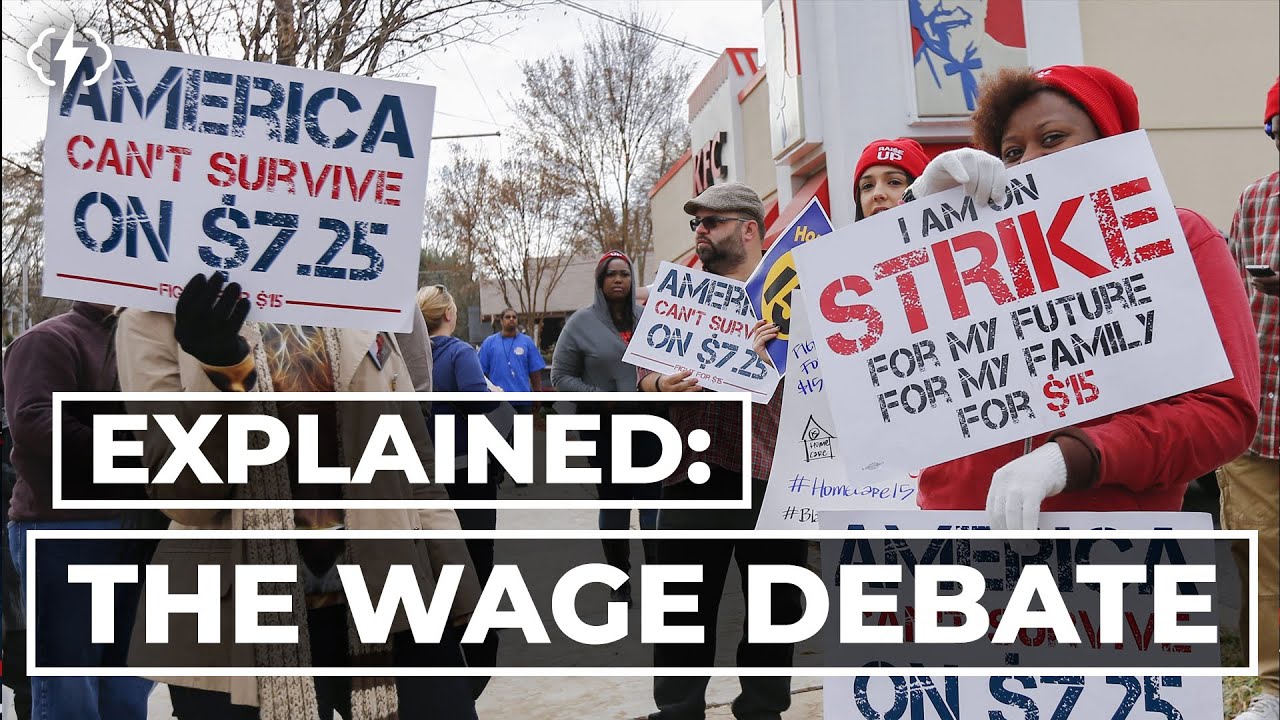
[embedyt] https://www.youtube.com/watch?v=hL5VOorY9pw[/embedyt] The video presents a comprehensive analysis of the U.S. federal minimum wage debate, exploring historical context, economic realities, common objections, and societal implications. It begins by outlining the origins of minimum wage legislation in the early 20th century, highlighting the exploitative conditions workers faced before laws like the Fair Labor Standards Act of
-
[embedyt] https://www.youtube.com/watch?v=v-8t0EfLzQo[/embedyt] The video transcript provides a comprehensive analysis of media bias, focusing on how mainstream media in Western capitalist democracies, particularly the UK and the US, do not merely report events neutrally but actively shape the interpretation and meaning of those events. Using the BBC’s 2020 Newsnight report on the English Channel migrant crossings