by Eric Wood
Share
This video explores the meaning of socialism, addressing common misconceptions and contextualizing socialism within historical and modern economic frameworks. It begins by acknowledging the growing interest in socialism among American millennials and the prevalent negative perceptions of the term. The presenter emphasizes that socialism fundamentally revolves around maximizing freedom for all people by ensuring rights such as education, healthcare, housing, and democratic participation, not just in theory but in practice.
The video contrasts socialism with previous economic systems, particularly feudalism and capitalism. Feudalism restricted freedom to a small noble class, with most people living under coercive control. Capitalism expanded freedom to more people by creating a class of free merchants and employers but maintained significant power imbalances between employers and workers. Today’s capitalism, while historically improving living standards, is increasingly failing many workers, as wealth is concentrated among a few while wages stagnate and economic security erodes.
Socialists argue that the problem lies in who owns and controls productive enterprises. Under capitalism, a few owners prioritize profit, often at the expense of workers’ wages and conditions. Socialism proposes collective, democratic ownership and decision-making, so that everyone affected by economic decisions has a voice. This approach aims to preserve capitalism’s benefits, like innovation and rising living standards, while eliminating exploitation and inequality.
The video also tackles misconceptions about socialism equating to government control or inefficiency, explaining that socialism means democratic control over production, which may or may not involve government structures. It highlights how current governments are shaped by capitalist interests and often fail ordinary people, and contrasts this with socialist goals of genuine democracy and equitable resource distribution.
Historical socialist experiments, such as Salvador Allende’s Chile, are examined to demonstrate that socialist policies can improve living conditions, though they have faced severe opposition, particularly from capitalist powers like the United States. The video acknowledges the challenges socialism faces in practice, including hostile global capitalism and geopolitical interference, but encourages imagining and working toward a better future. It concludes by inviting viewers to reconsider socialism beyond stereotypes and to engage in conversations about viable economic alternatives.
Leave A Comment

[embedyt] https://www.youtube.com/watch?v=tQE0ldkiKo0[/embedyt] The video provides a historical overview of the federal minimum wage in the United States, beginning with its establishment in 1938 when President Franklin Roosevelt signed the Fair Labor Standards Act, setting the wage at 25 cents per hour. Importantly, the minimum wage is not automatically indexed to inflation; it only increases through
-
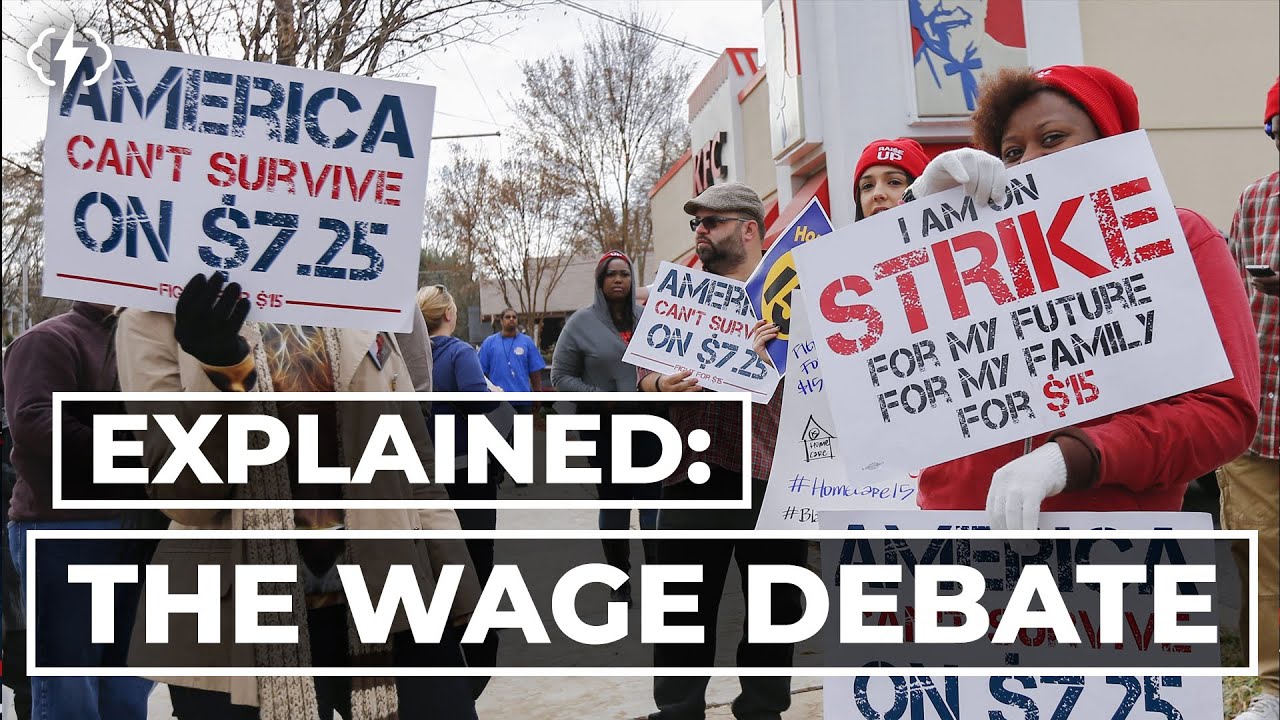
[embedyt] https://www.youtube.com/watch?v=3G3OmCMc1H4[/embedyt] The video transcript presents an in-depth historical and economic analysis of the minimum wage in the United States, its origins, evolution, and contemporary challenges. It begins by addressing common misconceptions about minimum wage laws, such as the belief that raising the minimum wage necessarily leads to job loss or economic downturn. It then
-
[embedyt] https://www.youtube.com/watch?v=hL5VOorY9pw[/embedyt] The video presents a comprehensive analysis of the U.S. federal minimum wage debate, exploring historical context, economic realities, common objections, and societal implications. It begins by outlining the origins of minimum wage legislation in the early 20th century, highlighting the exploitative conditions workers faced before laws like the Fair Labor Standards Act of
-
[embedyt] https://www.youtube.com/watch?v=v-8t0EfLzQo[/embedyt] The video transcript provides a comprehensive analysis of media bias, focusing on how mainstream media in Western capitalist democracies, particularly the UK and the US, do not merely report events neutrally but actively shape the interpretation and meaning of those events. Using the BBC’s 2020 Newsnight report on the English Channel migrant crossings