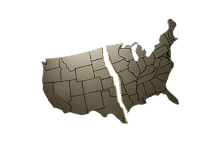
The Country We Actually Live In
By seven o’clock, the folding chairs have already formed two uneven arcs in the community room. A retired teacher sets a paper cup of coffee on the windowsill. A contractor keeps his jacket on because he expects to leave early. A young mother checks the time, then checks it again, because the babysitter said ten o’clock was the limit. Nobody came for a fight. They came because the road outside the school floods every spring, because the clinic closed on Saturdays, because the county website sends everyone in circles, because someone finally posted a notice that said public comment would be heard.
The first speaker says people here have been ignored for years. The second says taxes already eat the town alive. The third says the problem is not money but trust. The fourth says trust will not patch a culvert or reopen a clinic. By the time the chair calls the next name, the room has become a small map of the country: the same place, the same weather, the same agenda, and four different Americas trying to describe what they see.
American viewpoints often begin long before a person picks a party, chooses a news channel, or repeats a slogan. They begin in the commute that either takes twelve minutes or ninety. They begin in the school that calls parents by email or the school that calls only when something has already gone wrong. They begin in the job where overtime means opportunity or the job where overtime means the child care plan falls apart. People do not carry abstract ideology through the day. They carry receipts, delays, rules, memories, warnings, and the last thing a public office told them no about.
That does not make every belief equally accurate. It does mean every serious public conversation has to start with the evidence people believe they have earned. A farmer watching input costs rise, a renter refreshing apartment listings, a small business owner wrestling with payroll, a nurse charting through lunch, and a college student deciding whether to take on more debt can all hear the phrase “the economy” and picture completely different machinery. Each picture leaves something out. Each picture also contains something real.
The country becomes harder to govern when we treat those pictures as moral defects. A person who fears government overreach may have met government as a penalty, an inspection, a confusing letter, or a rule that made no room for common sense. A person who demands more public action may have met the market as a locked door, a medical bill, an employer with all the leverage, or a landlord who could raise the rent faster than wages. Each side can become blind to the injuries that shaped the other side’s instincts.
The public square fails when it asks people to abandon those instincts before speaking. It works better when it asks people to name where the instinct came from. What happened? Who held power? What choice did you have? What information did you trust at the time? Those questions do not eliminate disagreement, but they change its temperature. They move a conversation from accusation to evidence. They make room for the possibility that someone reached a flawed conclusion through an understandable route.
A healthy civic life needs more than empathy. It needs correction, comparison, and accountability. Lived experience can reveal what a spreadsheet misses, but it can also mislead when a personal story becomes a universal law. Data can reveal patterns, but it can also become cruel when it washes away the exception sitting in front of us. The work is to hold both: the room and the record, the story and the measurement, the neighbor’s memory and the public facts.
That work feels slow because it is. Cable arguments reward the fastest insult. Social media rewards the most certain sentence. Real citizenship rewards the patient question. What would I think if my town lost its hospital? What would I fear if every new rule threatened my shop? What would I notice if my rent climbed faster than my paycheck? What would I resent if every national debate described people like me as the problem?
The country we actually live in is not one argument. It is a crowded room of partial truths, old wounds, genuine conflicts, and shared dependencies. The contractor needs the teacher’s students to become skilled workers. The teacher needs the contractor’s tax base. The parent needs the road fixed and the clinic open. The retiree needs a town where younger families can stay. Their interests collide, but they also touch.
Before the next public conversation turns into another rehearsal of national contempt, try a different first move. Ask someone what their day has taught them about America. Then listen for the system hiding inside the answer. The point is not to agree before the meeting ends. The point is to leave with a larger map than the one you brought in.
The public question behind American Viewpoints is not merely whether people feel strongly about the issue. They do. The better question is where the pressure enters ordinary life and which institution has the power to relieve or worsen it. In The Country We Actually Live In, that pressure appears through a scene rather than a slogan because civic problems become clearest when someone has to make a decision with imperfect choices.
A reader can use the same lens locally. Look for the office, employer, market rule, public habit, or private contract that narrows the available options. Then ask who benefits from the present arrangement, who absorbs the risk, and what information remains hidden from the person making the hardest choice. That question turns American Viewpoints from an argument about attitude into an inquiry about design.
The narrative explainer format matters in The Country We Actually Live In because it keeps the focus on cause and consequence. A purely moral argument might produce applause, but it rarely shows where repair begins. A purely technical argument may identify a lever and forget the person standing next to it. The best public writing has to do both: preserve the human stakes and clarify the machinery that shapes them.
In The Country We Actually Live In, that machinery usually contains tradeoffs. Better rules can create costs. Faster help can require better verification. More local control can protect community voice or preserve exclusion. More market freedom can encourage innovation or deepen imbalance. The useful move is not to pretend tradeoffs disappear. It is to name them early enough that citizens can decide which burden belongs where.
The practical invitation is to carry one sharper question into the next conversation about American Viewpoints: what would have to change for the person in this story to have a real option, not just a different form of pressure? The answer may be a policy, a habit, a public record, a workplace rule, a local meeting, or a better-designed doorway. Whatever the tool, the first step is locating the point where life and power meet.