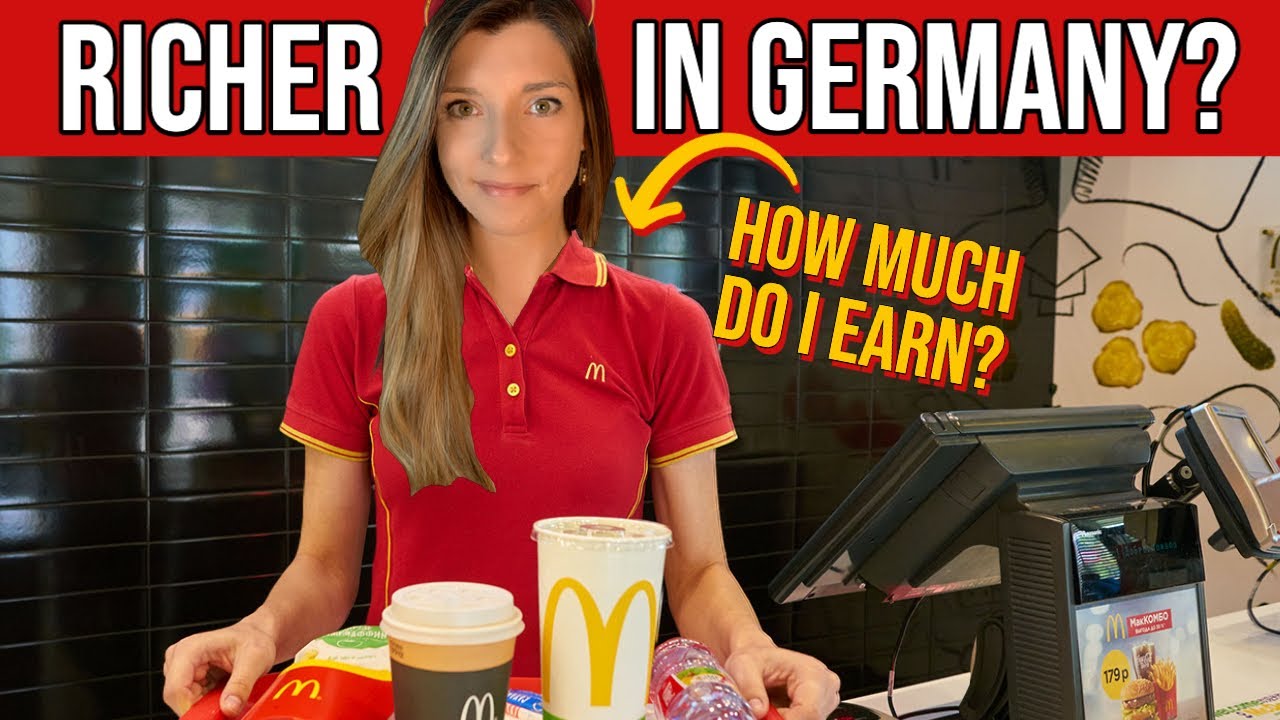
“McJob” USA vs. GERMANY: Hourly Wages, Taxes, Contributions & More of Minimum Wage Workers

This video offers a detailed comparison of wages, taxes, social contributions, and living standards between minimum-wage McDonald’s workers and their families in the United States and Germany. The analysis begins by contextualizing McDonald’s as a global employer with a franchise business model, highlighting its presence in both countries and the nuances in wages due to local economic factors. It explores entry-level crew member wages and progresses to family scenarios where one partner is a shift manager and the other a general manager. Key differences emerge not only in gross earnings but also in benefits such as paid time off, healthcare, unemployment insurance, and childcare costs.

The video carefully accounts for taxes, social contributions, and mandatory benefits that influence net income and overall quality of life. While U.S. McDonald’s workers may earn slightly higher gross wages in some states, German workers benefit from comprehensive social safety nets including universal healthcare, paid holidays, and stronger unemployment insurance. Childcare costs and education expenses are also factored in, revealing significantly lower burdens for German families compared to their American counterparts.

Ultimately, the video argues that evaluating wages without considering social benefits and living costs provides an incomplete picture. Although Americans may take home more cash, Germans enjoy greater financial security and peace of mind due to the social market economy. The video concludes by teasing an upcoming discussion on housing and food insecurity, which are critical to understanding the true living standards of minimum-wage workers.

Let’s talk about UBI and living wages…

In this video, the speaker addresses a common argument against Universal Basic Income (UBI) — that providing people with a fixed monthly income would disincentivize work.
Although the speaker is not an outright supporter of UBI, they find this argument deeply flawed and harmful because it perpetuates damaging stereotypes about poor and minimum wage workers.
The video dismantles the notion that people would stop working if given a basic income, illustrating that people generally seek to improve their lives through work, education, and career advancement, regardless of receiving supplemental income.
The speaker highlights the stagnation of wages despite rising productivity and emphasizes that minimum wage workers are often trapped in poverty not because of laziness or poor character, but due to systemic economic exploitation. The argument against UBI and wage increases often serves to justify paying workers less than a living wage, forcing them to rely on government assistance, which in turn subsidizes corporate profits.
Ultimately, the video calls for recognizing poverty as a lack of cash, not character, and urges society to stop blaming those at the bottom of the socioeconomic ladder for structural inequalities.

Why America REFUSES To Raise Minimum Wage

The minimum wage debate in the United States continues to spark national controversy as the gap between wages and the cost of living grows wider each year. For millions of Americans working low wage jobs, particularly in fast food, retail, and other entry level positions, the current job market offers little financial security. Even as the broader U.S. economy expands and unemployment remains relatively low, full-time workers across the country are still struggling to meet basic expenses like rent, healthcare, and education. This ongoing disconnect raises important questions about what the minimum wage is truly meant to represent in a modern economy.

At the center of the issue is the growing frustration among working-class Americans who find themselves stuck in stagnant, low-paying jobs despite increased productivity and record corporate profits. While advocates argue that raising the federal minimum wage is essential to match the rising cost of living, opponents warn that doing so could reduce job opportunities, increase automation, and put pressure on small businesses. This divide reflects broader tensions in the labor force—between what workers need to survive and what employers are willing to provide.

Entry level jobs, once seen as temporary stepping stones, have now become permanent roles for many people across the country. In cities and rural communities alike, these jobs often fail to offer a livable income, forcing workers to take on multiple positions just to get by. With inflation rising and the cost of essentials continuing to climb, the value of a minimum wage paycheck has diminished significantly. This has led to renewed calls for wage reform and a reevaluation of how the labor market supports—or fails to support—the people who fuel it.

The refusal to raise the minimum wage is no longer just an economic decision—it’s a reflection of how the U.S. economy treats its most vulnerable workers. In an era where many full-time employees are earning less than what it takes to cover basic needs, the idea of fair compensation is being tested. Meanwhile, job seekers face a market saturated with low wage opportunities but limited upward mobility, adding to the stress and burnout that is now common across industries.

As policymakers, business owners, and everyday Americans debate the future of wage laws, the minimum wage remains a symbol of deeper systemic issues. From job quality to income inequality, labor rights to economic growth, the fight over wage increases touches nearly every aspect of modern life. Whether the solution lies in federal policy, state action, or corporate accountability, one thing is clear: the structure of the job market must evolve to reflect the realities of today’s workforce. Until then, low wage jobs will continue to define the financial limits of millions of workers in the richest country on Earth.

A History Of The Minimum Wage

The video provides a historical overview of the federal minimum wage in the United States, beginning with its establishment in 1938 when President Franklin Roosevelt signed the Fair Labor Standards Act, setting the wage at 25 cents per hour.

Importantly, the minimum wage is not automatically indexed to inflation; it only increases through congressional and presidential action. Since its inception, the wage has been raised 22 times by the government.

The video also highlights the changing real value of the minimum wage over time by adjusting past wages to today’s dollars, revealing how its purchasing power has fluctuated. Notably, the peak real value of the minimum wage was in 1968, equivalent to $10.75 in today’s currency, a time when earning minimum wage could cover a full week’s groceries. In contrast, the current minimum wage falls short of that purchasing power, meaning minimum wage workers today can afford fewer essentials than those in the past.

The video underscores the disconnection between nominal wage increases and true economic value for workers over decades.

History of the U.S. Minimum Wage (Not a Living Wage?)

The video transcript presents an in-depth historical and economic analysis of the minimum wage in the United States, its origins, evolution, and contemporary challenges. It begins by addressing common misconceptions about minimum wage laws, such as the belief that raising the minimum wage necessarily leads to job loss or economic downturn. It then traces the roots of wage struggles back to the Gilded Age, a period marked by rapid industrialization, extreme wealth inequality, and exploitative labor conditions like sweatshops. The narrative moves through the Roaring Twenties, the Great Depression, and the New Deal era, highlighting how Franklin D. Roosevelt’s administration introduced the Fair Labor Standards Act and the nation’s first minimum wage to combat poverty and stimulate economic recovery.

The transcript emphasizes that the minimum wage was originally intended as a living wage, designed to ensure workers could meet basic needs and participate fully in the economy. Despite this, the minimum wage has not kept pace with inflation or the rising cost of living, stagnating since 2009 at the federal level. This stagnation has led to growing economic hardship for minimum wage earners, particularly in housing affordability, as exemplified by the 2023 data showing that multiple full-time minimum wage jobs are required to rent modest apartments in many U.S. cities.

The video also discusses current debates around raising the minimum wage, highlighting state-level initiatives like California’s progressive wage policies, while acknowledging the complexity of factors influencing cost of living and poverty. It concludes with critical questions about economic inequality, legislative responsibility, and the moral imperative for wages to cover basic human needs in a wealthy nation. The overall tone is reflective, encouraging viewers to think critically about the minimum wage’s future and its role in social justice.

Robert Reich Destroys Minimum Wage Myths

The federal minimum wage in the United States has remained at $7.25 an hour since 2009, marking the longest period without an increase since its inception. This stagnation has significantly diminished the real value of the minimum wage, making it insufficient for workers to afford basic living expenses, such as a two-bedroom rental anywhere in the country. Despite growing productivity, minimum wage workers have not seen proportional wage increases; if wages had kept pace since 1968, the minimum wage would be $24 an hour today. The video argues strongly for raising the minimum wage to at least $15 an hour, presenting this as both a moral imperative and an economic necessity.

It addresses and debunks four common myths opposing minimum wage increases: the fear of job losses, the inability of small businesses to afford higher wages, the risk of runaway inflation, and the misconception that most minimum wage earners are teenagers who don’t need higher pay. Research consistently shows that raising the minimum wage does not reduce employment levels, but rather improves worker productivity, reduces turnover, and benefits businesses by attracting and retaining motivated employees. Furthermore, price increases due to wage hikes are minimal and temporary, and raising wages would stimulate economic growth by increasing consumer spending.

The video also highlights the social implications of a low minimum wage, noting that many minimum wage workers are adults supporting families, including a significant number of Black, Hispanic, and female workers whose economic disparities could be reduced through wage increases. It underscores the taxpayer burden of subsidizing low wages through social safety nets, costing an estimated $107 billion annually. Ultimately, raising the minimum wage is presented as a necessary step toward economic justice, fairness, and respect for workers in the wealthiest nation on earth.

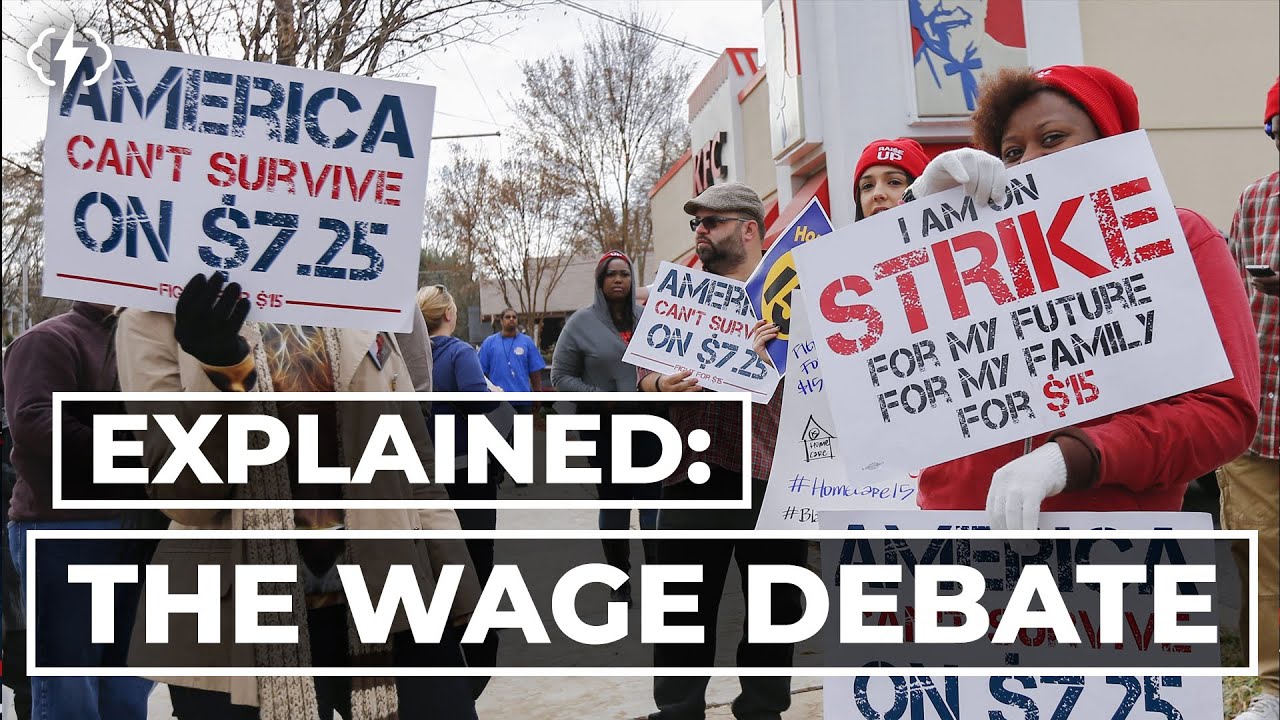
The Minimum Wage Debate Explained

The video presents a comprehensive analysis of the U.S. federal minimum wage debate, exploring historical context, economic realities, common objections, and societal implications. It begins by outlining the origins of minimum wage legislation in the early 20th century, highlighting the exploitative conditions workers faced before laws like the Fair Labor Standards Act of 1938, which introduced the first federal minimum wage and banned child labor. The video emphasizes that despite periodic nominal increases, when adjusted for inflation and productivity, the real value of the minimum wage today is significantly lower than it was in the 1960s. This decline means minimum wage workers earn far less purchasing power than previous generations.

The discussion challenges common narratives that the minimum wage is only for inexperienced workers or that raising it will lead to higher prices or business failures. It refutes the claim that raising minimum wages causes housing price inflation, noting that housing costs have risen dramatically despite stagnant minimum wages. The video also cites a 2020 study on the 1966 minimum wage increase, which found no negative impact on employment, but rather an increase in earnings and a reduction in racial wealth gaps.

The speaker critiques the division among workers—those earning slightly above minimum wage often oppose raises for lower-paid workers—arguing this undermines collective worker power and benefits the wealthy capitalist class. The video calls for a shift in mindset from hyper-individualism and “pull yourself up by your bootstraps” attitudes to greater class consciousness. It advocates for a living wage indexed to inflation, like systems in other developed countries where minimum wages are adjusted annually.

Finally, the video connects the minimum wage debate to broader societal issues such as wealth inequality, corporate profits, military spending, and political corruption, asserting that the struggle is between the working class and the wealthy owners who prioritize profits over fair compensation. It ends with a call for solidarity among workers and for a renewed understanding of class struggle as essential to achieving economic justice.