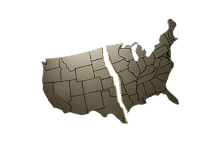
Consider the practical impacts we’re already witnessing:
- During the COVID-19 pandemic, health disinformation led many Americans to reject protective measures and vaccines, resulting in preventable deaths and prolonged economic disruption. Entire communities made life-or-death decisions based on fabricated claims about treatments and government intentions.
- Electoral integrity faces unprecedented challenges as false claims about voting systems spread rapidly. Elections officials across the country report receiving threats fueled by disinformation campaigns. The ability to conduct and peacefully transfer power—a cornerstone of democracy—now faces significant threats.
- Public trust in institutions continues to erode as Americans are repeatedly told that scientists, journalists, educators, and public health officials are engaged in elaborate conspiracies. This breakdown in trust makes addressing any collective challenge nearly impossible.
- Community cohesion suffers as neighbors view each other with increasing suspicion. Families find themselves divided not just by differing opinions but by entirely separate perceptions of reality.
“When we can’t agree on what’s happening, we can’t possibly agree on what to do about it,” noted former Republican congressman Michael Stevens. “Governance becomes impossible when half the population believes problems don’t exist, or conversely, sees catastrophes where there are none.”
Despite these challenges, there are concrete steps we can take to address disinformation while preserving the free exchange of ideas that democracy requires. The solution isn’t censorship—it’s building a more resilient information environment where quality information can thrive and citizens have the tools to distinguish fact from fiction.
Strengthening Media Literacy
Perhaps the most direct approach to fighting disinformation is equipping Americans with stronger critical thinking skills. Media literacy education teaches people to evaluate sources, recognize manipulation techniques, and approach information with appropriate skepticism.
The state of Illinois recently mandated media literacy education in all public high schools. The curriculum teaches students to ask key questions: Who created this content? What is their motivation? What evidence supports their claims? What perspectives might be missing?
“We’re not telling students what to think,” explained curriculum developer Jasmine Williams. “We’re teaching them how to think—how to evaluate claims independently rather than accepting information at face value.”
Media literacy initiatives shouldn’t stop with young people. Community programs across the country are bringing these skills to adults through library workshops, continuing education courses, and online resources. The National Association of Media Literacy Education has developed toolkits specifically designed for senior citizens, who are often targeted by disinformation campaigns.
Rebuilding Local Journalism
The decline of local news has left a dangerous void in America’s information ecosystem. When communities lose their newspapers, they lose a shared source of verified information about local government, businesses, and events.
Promising models are emerging to fill this gap:
- In Pennsylvania, the nonprofit Spotlight PA provides investigative reporting on state government, sharing its stories with a network of local outlets.
- Community-owned cooperatives have saved dozens of local newspapers from closure.
- Public media stations are expanding their local coverage, often partnering with journalism schools to train the next generation of reporters.
These efforts require support—both financial resources and audience engagement. Subscribing to local publications, supporting public media, and engaging with community journalism projects are concrete steps individuals can take to strengthen information infrastructure.
Platform Accountability and Transparency
The digital platforms where most Americans now encounter news were not designed with information integrity as a priority. Their business models reward engagement above all else, inadvertently promoting the most divisive and emotionally provocative content regardless of its accuracy.