Eighty-five essays written under one shared pen name to win over a skeptical New York - who actually wrote them, why the secrecy, and why courts still cite them today.
Why the Declaration of Independence isn't a legal document, what it actually argues, and how its language has shaped American rights movements ever since.
The Declaration of Independence, The Federalist Papers, and the Constitution and Bill of Rights - three documents, three different jobs, and how they relate to each other.
Powers not given to the federal government belong to the states or the people - the constitutional basis for federalism, and where courts have actually enforced it.
-
Rights not listed in the Constitution are still retained by the people - why Madison added this amendment, and why it remains one of the least settled parts of constitutional law.
-
Excessive bail, excessive fines, and cruel and unusual punishment - and why courts read this amendment's meaning as evolving rather than fixed to 1791.
-
The right to a jury trial in federal civil cases, why it rarely applies to state courts, and what the twenty-dollar threshold actually means today.
-
Speedy trial, impartial jury, confronting witnesses, and the right to a lawyer - including how Gideon v. Wainwright created the public defender system.
-
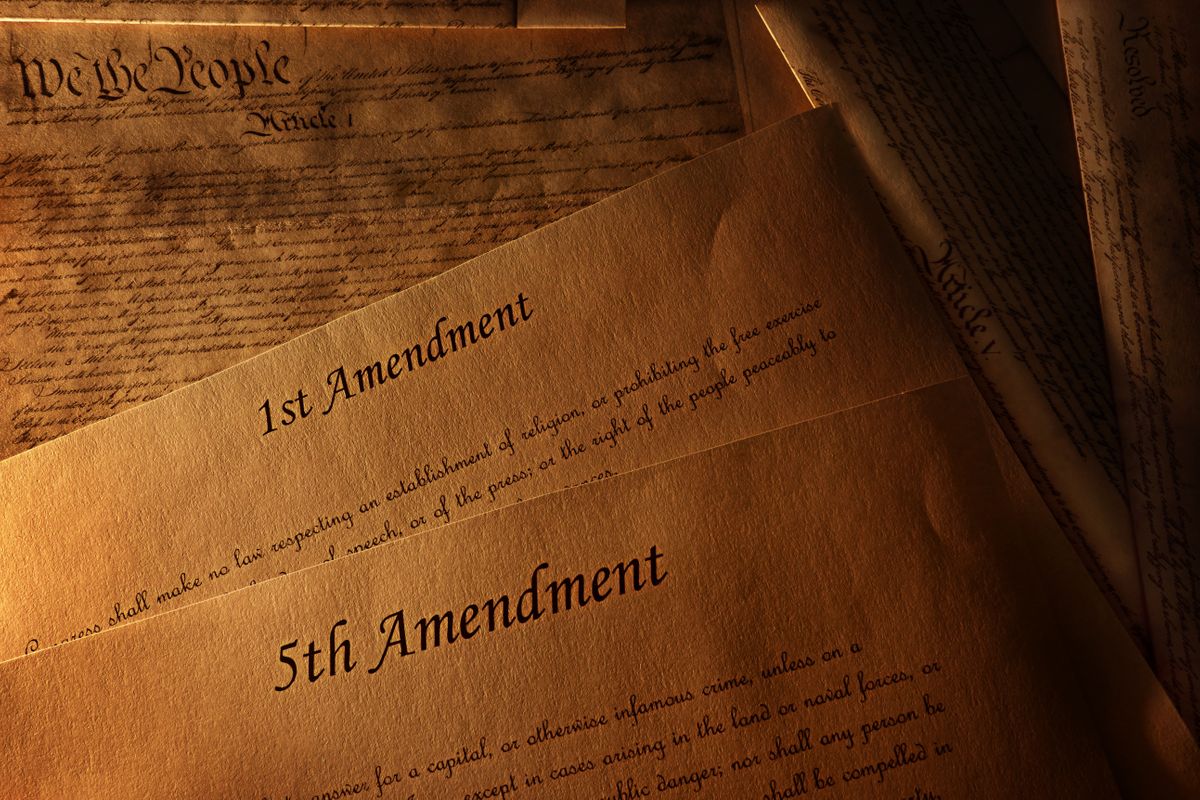
Grand juries, double jeopardy, self-incrimination, due process, and just compensation - the five protections packed into one amendment, and where Miranda rights actually come from.
-
Unreasonable searches and seizures, warrants and probable cause, and how the amendment now applies to cell phones and digital records it was never written for.