by Eric Wood
Share
This video offers a detailed comparison of wages, taxes, social contributions, and living standards between minimum-wage McDonald’s workers and their families in the United States and Germany. The analysis begins by contextualizing McDonald’s as a global employer with a franchise business model, highlighting its presence in both countries and the nuances in wages due to local economic factors. It explores entry-level crew member wages and progresses to family scenarios where one partner is a shift manager and the other a general manager. Key differences emerge not only in gross earnings but also in benefits such as paid time off, healthcare, unemployment insurance, and childcare costs.
The video carefully accounts for taxes, social contributions, and mandatory benefits that influence net income and overall quality of life. While U.S. McDonald’s workers may earn slightly higher gross wages in some states, German workers benefit from comprehensive social safety nets including universal healthcare, paid holidays, and stronger unemployment insurance. Childcare costs and education expenses are also factored in, revealing significantly lower burdens for German families compared to their American counterparts.
Ultimately, the video argues that evaluating wages without considering social benefits and living costs provides an incomplete picture. Although Americans may take home more cash, Germans enjoy greater financial security and peace of mind due to the social market economy. The video concludes by teasing an upcoming discussion on housing and food insecurity, which are critical to understanding the true living standards of minimum-wage workers.
Leave A Comment

[embedyt] https://www.youtube.com/watch?v=tQE0ldkiKo0[/embedyt] The video provides a historical overview of the federal minimum wage in the United States, beginning with its establishment in 1938 when President Franklin Roosevelt signed the Fair Labor Standards Act, setting the wage at 25 cents per hour. Importantly, the minimum wage is not automatically indexed to inflation; it only increases through
-
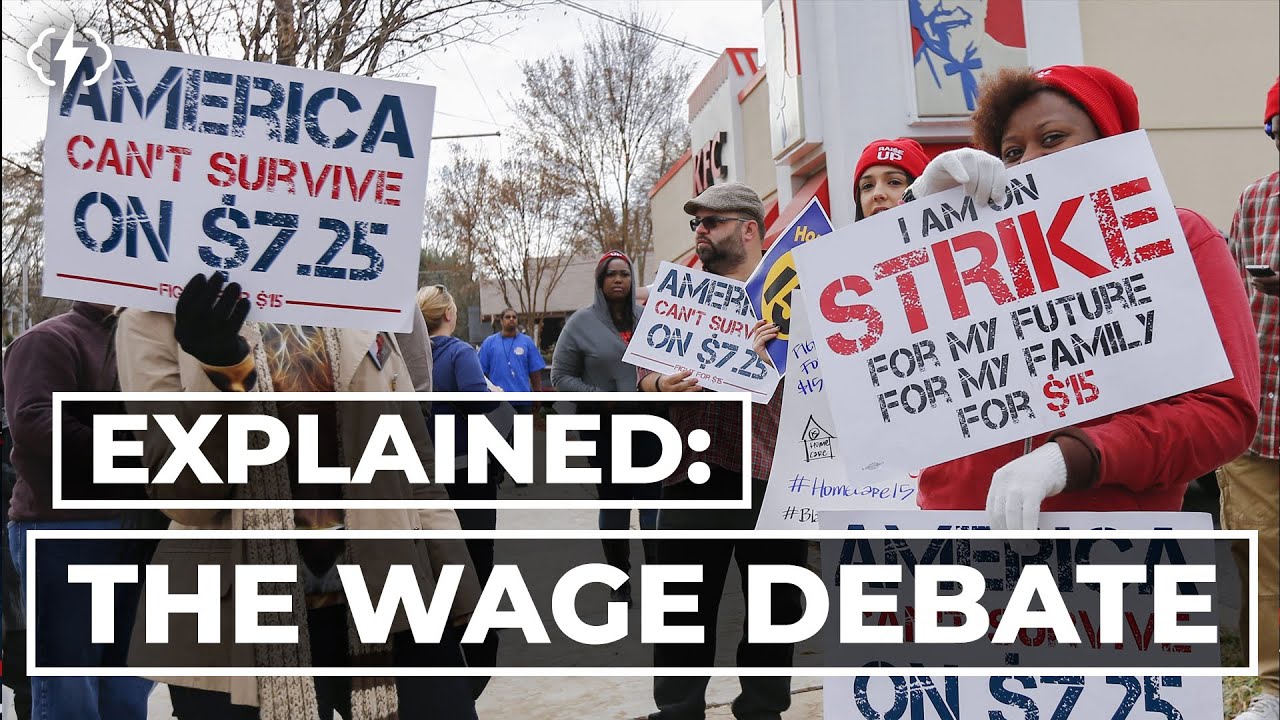
[embedyt] https://www.youtube.com/watch?v=3G3OmCMc1H4[/embedyt] The video transcript presents an in-depth historical and economic analysis of the minimum wage in the United States, its origins, evolution, and contemporary challenges. It begins by addressing common misconceptions about minimum wage laws, such as the belief that raising the minimum wage necessarily leads to job loss or economic downturn. It then
-
[embedyt] https://www.youtube.com/watch?v=hL5VOorY9pw[/embedyt] The video presents a comprehensive analysis of the U.S. federal minimum wage debate, exploring historical context, economic realities, common objections, and societal implications. It begins by outlining the origins of minimum wage legislation in the early 20th century, highlighting the exploitative conditions workers faced before laws like the Fair Labor Standards Act of
-
[embedyt] https://www.youtube.com/watch?v=v-8t0EfLzQo[/embedyt] The video transcript provides a comprehensive analysis of media bias, focusing on how mainstream media in Western capitalist democracies, particularly the UK and the US, do not merely report events neutrally but actively shape the interpretation and meaning of those events. Using the BBC’s 2020 Newsnight report on the English Channel migrant crossings