by Eric Wood
Share
A few years ago, those who warned us about the risks of technological unemployment were labelled as luddites, crazy, or techno-pessimists. Now some of the greatest economists agree that automation poses a serious threat to the economy, with jobs disappearing and inequality on the rise.
Today, those proposing radically new ideas to deal with this problem are being called crazy and idealistic. Old ideologies are outdated in the face of exponential change; we need to embrace a more holistic and adaptive system.
I believe experiments with unconditional basic income, coupled with the utilization of crypto currencies and blockchain-based technologies, will help us find the answers.’ Federico Pistono is a futurist, social entrepreneur, hacktivist, public speaker, founder and CEO of konoz – a startup that curates and organizes educational videos, whose mission is to become the largest online community for free learning in the world – and he’s author of the best-selling book “Robots Will Steal Your Job,
But That’s OK: How to Survive the Economic Collapse and Be Happy”, which has been translated into Spanish, German, and Italian.
He lectures regularly at Universities and Fortune 500 companies about the future of humanity. This talk was given at a TEDx event using the TED conference format but independently organized by a local community
Leave A Comment

[embedyt] https://www.youtube.com/watch?v=tQE0ldkiKo0[/embedyt] The video provides a historical overview of the federal minimum wage in the United States, beginning with its establishment in 1938 when President Franklin Roosevelt signed the Fair Labor Standards Act, setting the wage at 25 cents per hour. Importantly, the minimum wage is not automatically indexed to inflation; it only increases through
-
[embedyt] https://www.youtube.com/watch?v=3G3OmCMc1H4[/embedyt] The video transcript presents an in-depth historical and economic analysis of the minimum wage in the United States, its origins, evolution, and contemporary challenges. It begins by addressing common misconceptions about minimum wage laws, such as the belief that raising the minimum wage necessarily leads to job loss or economic downturn. It then
-
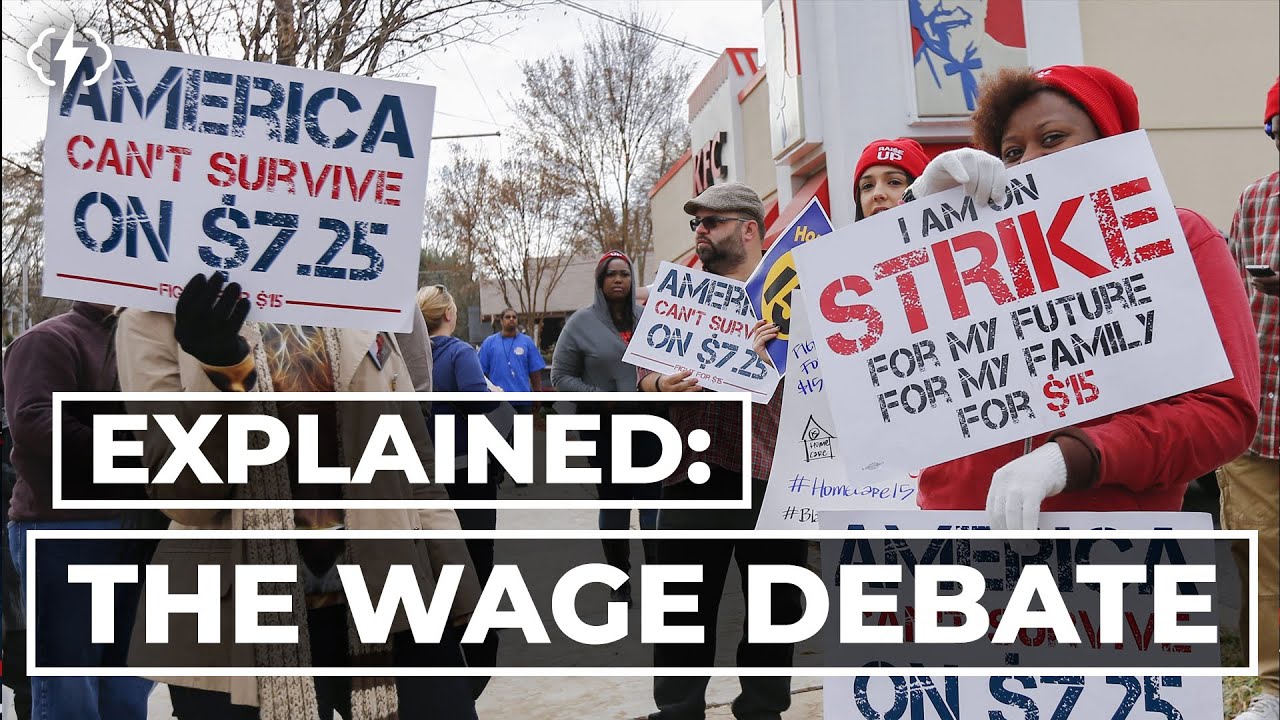
[embedyt] https://www.youtube.com/watch?v=hL5VOorY9pw[/embedyt] The video presents a comprehensive analysis of the U.S. federal minimum wage debate, exploring historical context, economic realities, common objections, and societal implications. It begins by outlining the origins of minimum wage legislation in the early 20th century, highlighting the exploitative conditions workers faced before laws like the Fair Labor Standards Act of
-
[embedyt] https://www.youtube.com/watch?v=v-8t0EfLzQo[/embedyt] The video transcript provides a comprehensive analysis of media bias, focusing on how mainstream media in Western capitalist democracies, particularly the UK and the US, do not merely report events neutrally but actively shape the interpretation and meaning of those events. Using the BBC’s 2020 Newsnight report on the English Channel migrant crossings