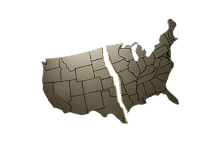
A look at the United States today shows a country that is very divided. Key to understanding that divide is a look at two major events in recent history, the Black Lives Matter protests of 2020 and the Capitol Protests of January 6, 2021. Each event provides a unique look at how the differences have manifested themselves in America today.
Understanding the Events That Shook the Nation
In times of crisis, the true character of a nation is revealed. Over the past few years, the United States has faced deep political and social upheaval, but few moments have tested our national identity like the Black Lives Matter protests of 2020 and the January 6th Capitol riot.
These events exposed the growing divide in how Americans see justice, democracy, and the role of government. They were not just political moments; they were emotional, visceral, and deeply personal for millions of people across the country.
The protests that erupted in 2020 following the murder of George Floyd were fueled by years of frustration over racial injustice and police violence. Supporters saw these demonstrations as a long-overdue demand for accountability, a fight for the country to live up to its promise of “liberty and justice for all.” Opponents, however, saw the riots, property damage, and violent clashes with police as evidence of lawlessness and chaos.
The left largely viewed the protests as a necessary movement for civil rights, while the right saw them as a breakdown of law and order.
Just a few months later, protests of another sort developed in the country. These particular protests did not happen in streets across the country—they took place in our nation’s capitol. On January 6, 2021, thousands of Trump supporters stormed the U.S. Capitol in an attempt to overturn the results of the 2020 election.
Many of those who participated believed they were defending democracy against a fraudulent election, acting on what they saw as patriotism. Others saw the attack as an act of domestic terrorism—an assault on the very foundation of American democracy. The right often framed the rioters as misguided but passionate Americans, while the left viewed them as a dangerous threat to the rule of law.
These two events were very different in nature, but they share something important: they illustrate how Americans live in vastly different realities depending on their political perspective. The way these moments were covered in the media, discussed in communities, and understood by individuals was shaped not just by facts but by the broader ideological lenses through which we see the world.
In this section, we will first attempt to take an objective look at both events—what happened, how they unfolded, and their impact on the nation. Then, we will go deeper into how the left and right interpreted them. Why did one side see the BLM protests as a fight for justice, while the other saw them as riots? Why did one side view the Capitol riot as an insurrection while the other saw it as a justified protest?
By examining these questions, we will begin to understand not just the events themselves but the deeper political and cultural divides that shape modern America. This is not about determining which side was “right” or “wrong.” It is about understanding why people saw these events so differently—and what that tells us about the challenges we face as a nation. If we ever hope to bridge the divides in our country, we must first understand them.
The Local Protest That Took Over The World
The tragic death of George Floyd became a flashpoint for deep-seated anger and frustration over racial injustice, police brutality, and systemic inequality. The 2020 Black Lives Matter protests highlighted the stark ideological divide between the political left and right in the United States.
For the left, the protests were a powerful call for justice, police reform, and an end to systemic racism. For the right, the protests represented a breakdown of law and order and were often seen as an expression of radical leftist ideology that posed a threat to societal stability.
The protests not only spotlighted racial inequalities within the United States but also helped bring attention to the ways in which racism operates in different parts of the world. George Floyd, a 46-year-old Black man, was murdered by a police officer in Minneapolis, Minnesota, during an arrest. Derek Chauvin, the officer in question, knelt on Floyd’s neck for over eight minutes, even as Floyd repeatedly begged for his life. The viral video of the killing sparked outrage across the U.S. and quickly spread to other parts of the world.
Floyd’s death, combined with the long history of racial violence against Black Americans, became a symbol of systemic racism and a rallying cry for activists and ordinary people alike.
While the BLM movement had been active for years prior to Floyd’s death, particularly after the killings of Trayvon Martin, Michael Brown, Eric Garner, and others, the scale and intensity of the 2020 protests were unprecedented. Demonstrations erupted not only in major American cities but also in countries around the globe. People of all races, backgrounds, and nationalities marched together in solidarity, calling for justice for George Floyd, demanding an end to police brutality, and protesting against racial inequality in their own countries.
The worldwide protests were not just about George Floyd. They were about a collective reckoning with racism, injustice, and inequality. The protests reflected a growing global awareness that racism is not confined to one country but is a universal issue. They also underscored the ways in which the U.S. civil rights struggle has inspired and influenced social movements around the world.
A Brief Timeline of Minneapolis Protests
The murder of George Floyd on May 25, 2020, in Minneapolis, Minnesota, ignited a series of protests and events that significantly impacted the city and resonated worldwide. It is virtually impossible to lay out every event occurring in the protests; the Washington Post provides an excellent compilation of cell phone videos gathered throughout the protests (source).
The story began with a report of a fake $20 bill. A report was made on the evening of May 25, 2020, when Mr. Floyd bought a pack of cigarettes from Cup Foods, a grocery store. Believing the $20 bill he used to be counterfeit, a store employee reported it to police.
At around 8:08 PM, two police officers arrived and approached Mr. Floyd, who was sitting with two other people in a car parked around the corner. After approaching the car, one of the officers, Thomas Lane, pulled out his gun and ordered Mr. Floyd to show his hands. Prosecutors do not explain why Mr. Lane thought it necessary to draw his gun (source).
The arrest escalated when Derek Chauvin arrived and restrained Mr. Floyd by kneeling on his neck for more than nine minutes. Mr. Floyd was pronounced dead about an hour later at Hennepin County Medical Center (source).
Protests spread nationwide, some peaceful and others violent, resulting in property damage and clashes with police (source).
The Attack On The Capitol
On January 6, 2021, the United States Capitol in Washington, D.C., was stormed by supporters of then President Donald J. Trump. This unprecedented event aimed to disrupt the certification of the 2020 presidential election results, in which Joe Biden was declared the winner.
The political right tends to view the people who orchestrated the attack, who were later prosecuted for their actions, as political hostages. The political left views the orchestrators of the attack as insurrectionists who attempted to overthrow the results of a free and fair election.
The assault interrupted a joint session of Congress that had been called to certify the presidential election results. It was broadly viewed as an insurrection or an attempted coup d’état. The FBI and various law enforcement agencies classified the incident as an act of domestic terrorism (source).
How the Left and the Right View the Capitol Attack
The Left Sees:
The left’s perspective frames the event as not only a violent uprising but also an existential threat to American democracy, driven by the refusal to accept the legitimacy of the 2020 election results. They believe the attack exposed the rise of far-right extremism, including white nationalism and conspiracy theories, and unanimously condemn the violence.
The Right Sees:
The right emphasizes political polarization, a belief in widespread election fraud, and skepticism about the government’s response. Many continue to believe the 2020 election was stolen, despite evidence to the contrary, and some describe the riot as “mostly peaceful.”
Comparing BLM Protests to the Attack on the Capitol
The narrative of George Floyd’s death depends greatly on perspective. Some right-wing narratives falsely suggest Antifa instigated riots, while the majority of protests were peaceful. Court records indicate that more than 93% of BLM protests were nonviolent (source).
Meanwhile, many Jan. 6 defendants received pardons from President Trump despite involvement in violent assaults on police. Comparisons between the two events highlight differences in race, political bias, and media coverage shaping public perception.
How the Media Continues to Shape Public Opinion
Liberal media largely frame the Capitol attack as a threat to democracy, emphasizing Trump’s role in inciting violence. Conservative outlets focus on claims of election fraud, often spreading misinformation despite legal defeats such as Fox News paying $787.5 million in a 2024 lawsuit. Both sides agree that political violence should not be condoned, though they differ on scale and motivation.