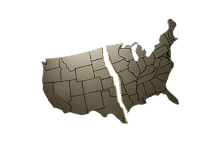
Throughout this book, we’ve explored the challenges facing our great American experiment: from the widening gaps in wealth to the struggle for affordable housing, from the battle against disinformation to the quest for economic dignity for working families. Now it’s time to pull these threads together and chart a course toward the America we know is possible—an America that lives up to its founding promise of life, liberty, and the pursuit of happiness for all.
“We shall nobly save, or meanly lose, the last best hope of earth.” – Abraham Lincoln
These words echo across time, reminding us that each generation of Americans faces its own test. Our response to today’s challenges will determine whether we advance or retreat from our highest ideals.
The American Landscape Today
Take a drive through any American community and you’ll see the contradictions of our current moment. Gleaming new luxury developments stand within sight of apartments where families work multiple jobs just to make rent. Young college graduates with promising futures struggle under mountains of student debt. Workers who help generate record corporate profits wonder why their paychecks barely cover the basics.
We’ve examined how income inequality has reached levels not seen since the Gilded Age, with the wealthiest Americans capturing an ever-larger share of our national prosperity while working families struggle to maintain their footing. We’ve seen how the basic building block of the American Dream—homeownership—has slipped beyond reach for millions as housing costs skyrocket in communities across the country.
We’ve explored how our fractured information landscape makes it increasingly difficult for Americans to develop a shared understanding of the challenges we face and the potential solutions. Media consolidation has concentrated power in fewer hands, while social media algorithms drive us toward information that confirms our existing beliefs rather than challenging us to consider new perspectives.
We’ve discussed how our political divisions often reflect not just different policy preferences but fundamentally different ways of seeing the world. When the political left and right talk past each other rather than with each other, we miss opportunities to find common ground and practical solutions.
“The arc of the moral universe is long, but it bends toward justice.” – Martin Luther King Jr.
Our history is one of continually striving to live up to our founding ideals, even when we fall short.
Universal Solutions for Universal Challenges
One thread running through our discussions has been the power of universal programs to address common challenges. When we create solutions available to all Americans rather than limiting them to narrow categories, we build broader support and eliminate the stigma and complexity of means-tested approaches.
Consider how Social Security and Medicare transformed the lives of older Americans across all walks of life. These programs work because they’re simple to understand, efficient to administer, and unite Americans around a common purpose rather than dividing us into those who qualify and those who don’t.
We’ve seen how this universal approach could revolutionize higher education through free public college for all Americans. Beyond eliminating the crushing burden of student debt, this investment would create a more skilled workforce, drive innovation, and level the playing field for Americans from all backgrounds.
“The test of our progress is not whether we add more to the abundance of those who have much; it is whether we provide enough for those who have too little.” – Franklin D. Roosevelt
Universal programs meet this test by lifting all boats while paying special attention to those most in need of support.
Economic Democracy: Sharing Power and Prosperity
We’ve examined how countries like Germany have thrived by including workers on corporate boards, creating a model of economic democracy that reduces conflict between labor and management while leading to more sustainable business practices.
We’ve explored innovative models for worker ownership that allow employees to build wealth through ownership of the businesses where they work. From Employee Stock Ownership Plans to worker cooperatives, these approaches align the interests of workers and owners while spreading prosperity more broadly.
We’ve considered proposals to share corporate profits more equitably with the workers who help create them, ensuring that when companies succeed, employees share in the rewards rather than seeing gains flow primarily to executives and shareholders.
“No man should receive a dollar unless that dollar has been fairly earned.” – Theodore Roosevelt
Today’s challenge is ensuring that the dollars generated in our economy are fairly distributed among all who contribute to creating them.
Reinvigorating Democracy
Democracy requires more than just casting a vote every few years. We’ve discussed how citizen assemblies can bring everyday Americans into the policy process, tapping the wisdom of diverse perspectives and breaking through political gridlock.
We’ve examined how tackling disinformation and breaking up media monopolies could create a healthier information environment where facts matter and diverse viewpoints can thrive. A democracy cannot function without an informed citizenry, and rebuilding trusted sources of information is essential to addressing our shared challenges.
We’ve explored how improving communication across political divides might help Americans recognize our common interests despite our differences. By focusing on values we share rather than positions that divide us, we can find unexpected areas of agreement and pragmatic solutions.
“A people that values its privileges above its principles soon loses both.” – Dwight D. Eisenhower
Our democratic principles must guide us through today’s challenges if we hope to preserve the privileges of American citizenship for future generations.
Your Role in Building a Better America
Throughout American history, change has rarely started in Washington. It begins in communities across the country, with ordinary citizens who refuse to accept the status quo and instead work to build something better.
Here are concrete steps you can take to be part of America’s next chapter:
- Start conversations in your community about the challenges we’ve discussed. Host a neighborhood gathering to discuss affordable housing in your area. Form a book club to explore different perspectives on economic issues. Create spaces where people can share their experiences and brainstorm local solutions.
- Support local journalism that holds power accountable. Subscribe to your local newspaper. Attend city council meetings and share what you learn with neighbors. Help build the informed citizenry that democracy requires.
- Get involved with organizations working on issues you care about. Whether it’s affordable housing, campaign finance reform, or economic opportunity, your time and energy can multiply the impact of these efforts.
- Practice bridging political divides in your own interactions. Listen genuinely to those with different views. Look for shared values beneath disagreements about policies. Model the kind of respectful dialogue our country needs.
- Use your economic power mindfully. Support businesses that treat workers fairly and contribute positively to your community. Consider moving your money to community banks or credit unions that reinvest locally.
- Vote at every level of government, from school board to presidency, based on candidates’ commitment to building an economy and democracy that works for all Americans. Then hold elected officials accountable between elections by staying engaged and vocal.
“Ask not what your country can do for you—ask what you can do for your country.” – John F. Kennedy
Each generation of Americans has answered this call in different ways. Our generation’s answer will determine whether we overcome today’s challenges or pass them, unresolved, to our children.
America’s Finest Hours
When we look back through American history, our proudest moments have come when we confronted our greatest challenges. We built transcontinental railroads connecting a vast nation. We electrified rural America when the market alone wouldn’t. We emerged from the Great Depression to help save the world from fascism. We built an interstate highway system, sent astronauts to the moon, and created technologies that transformed human possibility.
These achievements didn’t happen because America avoided big challenges. They happened because Americans embraced them, understanding that a nation grows stronger by solving difficult problems together.
“Change will not come if we wait for some other person or some other time. We are the ones we’ve been waiting for. We are the change that we seek.” – Barack Obama
Creating a Roadmap for Tomorrow
The specific challenges facing America will evolve, but the principles that guide us remain constant. We must continually ask: Are we creating a society where every American has a fair shot at a dignified life? Are we protecting the democratic institutions that allow citizens to shape their future? Are we building an economy where prosperity is broadly shared?
By addressing today’s challenges of inequality, housing affordability, education access, corporate power, and democratic decline, we’ll develop the muscles needed to tackle whatever comes next. The solutions we’ve explored aren’t quick fixes but investments in America’s long-term vitality.
“Shining city on a hill.” – Ronald Reagan
This vision of America at its best—a beacon of hope and opportunity—remains powerful precisely because it acknowledges both our achievements and our aspirations. The gap between what America is and what America could be drives us forward.
One Nation, Indivisible
The preamble to our Constitution begins with three powerful words: “We the People.” Not some of the people, not the wealthy or well-connected people, but all of us together, united in the project of forming a more perfect union.
That project continues today. The challenges we’ve explored in this book—from economic inequality to democratic dysfunction—won’t be solved by any single policy or one-time fix. They require a renewed commitment to the American idea that we rise or fall together, that each generation builds upon the work of those who came before.
“A republic, if you can keep it.” – Benjamin Franklin
By tackling today’s challenges with courage and compassion, we honor those who built this imperfect but remarkable nation and create new possibilities for generations to come. The American story continues, and all of us have a role to play in ensuring that its next chapter brings us closer to the ideals of liberty, equality, and opportunity that have guided us from the beginning. Let’s get to work.