by Eric Wood
Share
Losing at a federal circuit court doesn’t guarantee a Supreme Court hearing - it barely improves the odds. The Court agrees to hear only a small fraction of the cases appealed to it each year, and the process for choosing which ones is almost entirely within the justices’ own discretion.
The certiorari process
A party seeking Supreme Court review files a petition for a writ of certiorari, formally asking the Court to hear the case. The Court receives several thousand such petitions each year and grants only a small percentage of them - typically resulting in around sixty to eighty full opinions issued per term. Four of the nine justices must agree to hear a case for certiorari to be granted, an internal practice known as the “Rule of Four,” which isn’t written into any formal law but has been the Court’s own consistent working practice.
What actually makes the Court take a case
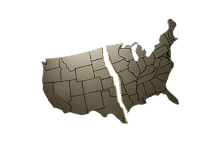
The Court doesn’t take cases simply because a lower court got something wrong in the justices’ view - if it did, its docket would be enormous. Cases involving a genuine circuit split, where different federal circuits have reached conflicting conclusions on the same legal question, are among the most common reasons for the Court to grant review, since resolving that kind of split creates a single, uniform rule of law nationwide instead of leaving federal law meaningfully different depending on which circuit a case happens to fall in.

Worth knowing
Denial of certiorari isn’t a ruling on the merits of a case at all - it simply means the Court chose not to hear it, and carries no legal weight as precedent. The lower court’s ruling stands, but the Supreme Court hasn’t actually endorsed or rejected its reasoning by declining to take the case.
Why it still matters
Understanding how selective this process actually is helps explain why so many significant, actively contested legal questions remain formally unresolved at the national level for years, sometimes creating genuinely different rules of federal law depending on which part of the country a case originates in, simply because the Supreme Court hasn’t yet chosen to take up that specific question.

Leave A Comment

The power to strike down unconstitutional laws isn't in the Constitution's text at all - how Marbury v. Madison established it, and how far it's expanded since.
-
Presidential nomination, Senate confirmation, and lifetime tenure - why Hamilton argued judicial independence required insulating judges from political pressure.
-
District courts try cases, circuit courts review for legal error, and the Supreme Court hears only a small fraction of what's appealed to it - the three tiers and what each one actually does.
-
Article III establishes only 'one supreme Court' directly - how Congress built the rest of the federal court system, and what each level actually does.